
Lieferung heute & morgen

Qualitätsgarantie

Willkommens-Angebote freischalten: KOSTENLOSE Lieferung | Bis zu 80 % RABATT | Kostenlose 30-Tage-JoyPlus-Testphase
App herunterladen
A car phone holder should position your smartphone securely, enable navigation and, depending on the model, also support wireless charging. In practice, however, the systems differ significantly. A holder that works well on an air vent will not necessarily fit every vehicle. Similarly, a magnetic phone holder is not automatically compatible with every smartphone or protective case.
As a Joybuy Product Recommendation Officer, I provide an objective overview of the key differences. This can help you avoid common poor purchases, whether you are looking for a phone holder for your car, a mount for your bike or a solution for an e-scooter.
The term universal phone holder often refers only to a specific size range. The device’s width, height and thickness are what really matter. A smartphone with a particularly thick case may fall out of a clamp or fail to lock into place fully.
You also need to check your vehicle when choosing a phone holder for an air vent. Some models require horizontal slats, while others are suitable only for certain vent shapes. A heavy smartphone can also put strain on the slats or pull the holder downwards.
A magnetic phone holder will not necessarily hold your device without additional accessories. MagSafe-compatible smartphones or cases may already have a built-in magnetic ring. Other devices often require a metal plate or an additional magnetic ring.
A phone holder with wireless charging also requires a power supply. With a Qi charging holder, you should check whether your smartphone supports the Qi standard and which charging output is actually compatible. The specification “up to 15 W” describes the charger’s possible maximum output, not necessarily the charging power supported by every smartphone.
A 360° rotating phone holder makes it easier to switch between portrait and landscape orientation. However, it is only practical if the ball joint, suction cup, clip or clamp is firmly secured. In vehicles with strong vibrations or on uneven roads, the mounting method and contact surfaces are more important than having the greatest possible range of adjustment options.
The holder must not obstruct your view or interfere with airbags, the steering wheel, pedals or controls. Its position should be adjusted before setting off. Changes to the smartphone or holder should never be made while driving.
Pay attention to specific measurements rather than relying solely on brand specifications. For example, the Segway-Ninebot holder is designed for smartphones 58 to 90 mm wide and up to 10 mm thick. According to the product specifications, its handlebar mount fits diameters of 20 to 22.2 mm.
For car holders, models such as the Wozinsky WCHBK7 are stated to accommodate smartphones from 4.7 to 6.9 inches. Another universal holder may be designed for devices from 4.7 to 7.0 inches. The inch measurement refers to the screen diagonal and does not replace checking the device’s actual dimensions.
With a Qi holder, you will generally need a suitable cable and a USB port or compatible adapter in the vehicle. Check that the supplied cable has the required connector. Direct sunlight and high temperatures can affect the performance of adhesive pads, suction cups and charging electronics.
A charging holder should not be covered or operated with an incompatible power adapter. If the smartphone or holder becomes unusually hot, stop charging and investigate the cause.
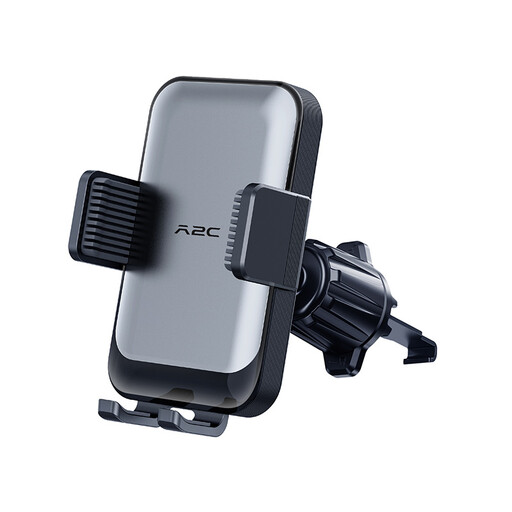
Why this product suits this profile: This compact air-vent phone holder is designed for easy installation and one-handed operation. It is suitable for smartphones from 4.7 to 6.9 inches and, according to the product specifications, can also be used with thicker cases.
The air-vent clip’s double locking mechanism reduces the risk of a loose fit. You should still check before buying whether your vehicle’s slats are suitable.
Automatic clamping, silicone pads and support for several smartphone sizes.
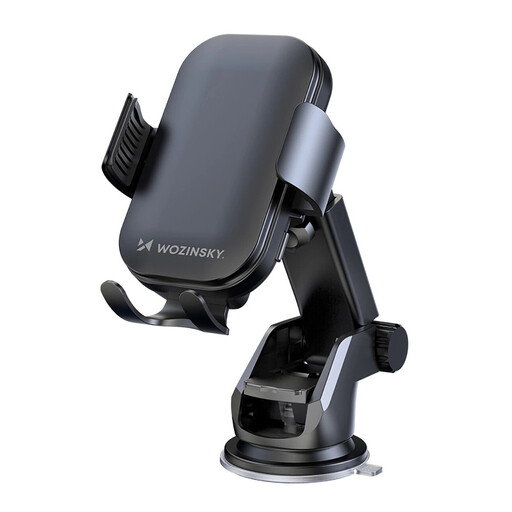
Why this product suits this profile: This model combines an automatic holder with Qi charging and a suction-cup mount for the dashboard. The charging output is specified as 5 W, 7.5 W, 10 W and up to 15 W.
The product specifications mention intelligent temperature monitoring. Nevertheless, the smartphone, case and power adapter must be Qi-compatible for charging to work as intended.
Automatic clamping, 360° adjustment and several specified charging outputs.
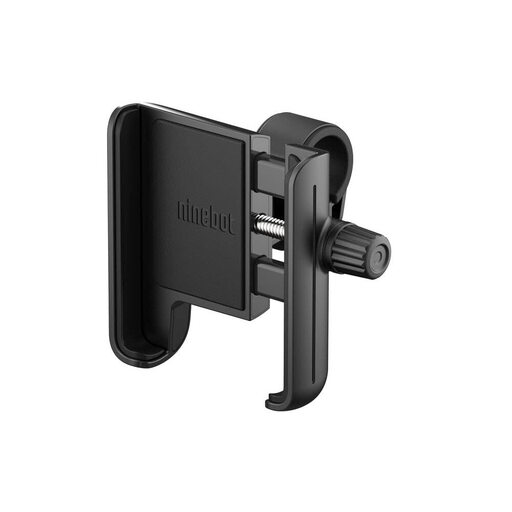
Why this product suits this profile: This holder is aimed at cyclists and e-scooter riders who use navigation or tracking apps. It is designed for devices 58 to 90 mm wide and up to 10 mm thick.
The specified handlebar range of 20 to 22.2 mm clearly limits compatibility. The mount is tightened using the supplied hex key and should be checked before every ride.
360° rotation, non-slip pads and a polypropylene construction described as waterproof.
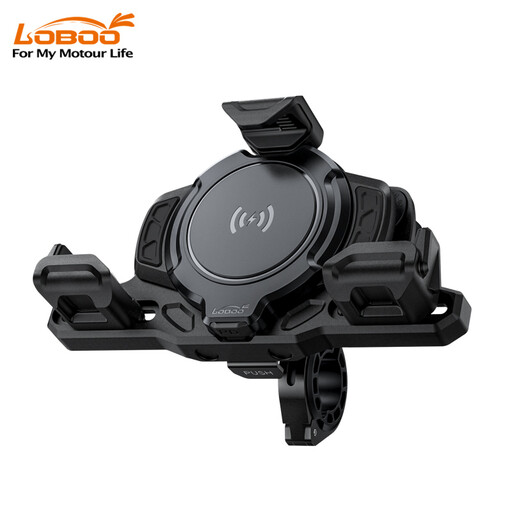
Why this product suits this profile: This model combines a motorcycle mount with a specified 15 W wireless charging function and anti-vibration design. The charging version must be connected to the battery or an ACC power source.
The anti-vibration design addresses the typical strain experienced on motorcycles. Before installation, you must ensure that the handlebar, power connection and cable routing are suitable for your vehicle.
Specified anti-vibration function and wireless charging of up to 15 W according to the product description.
We have put together a complete, regularly updated list of products that fully meet these strict selection criteria and the safety regulations applicable in the EU.
That depends on the vehicle and smartphone. If you want to keep the dashboard clear, a phone holder for an air vent may be practical. With irregular or delicate vent slats, a suction-cup holder for the dashboard or windscreen may be a suitable alternative. Always check the device dimensions, mounting surface and field of vision.
Its lifespan depends on the material, load, temperature and installation. Adhesive pads may lose their grip after removal. Suction cups should be cleaned regularly and checked to ensure they remain firmly attached. Clamps and screw connections should also be inspected before longer journeys, particularly after driving on uneven roads.
A Qi charging holder only requires power when it is connected to the vehicle’s electrical supply. Actual consumption depends on the charging output, the smartphone’s battery level and the charging electronics. Before use, check that the USB port or adapter provides the required output.