
Lieferung heute & morgen

Qualitätsgarantie

Willkommens-Angebote freischalten: KOSTENLOSE Lieferung | Bis zu 80 % RABATT | Kostenlose 30-Tage-JoyPlus-Testphase
App herunterladen
A car phone holder is designed to keep your smartphone visible and within reach for navigation, hands-free calls or music control. In practice, however, car phone holders vary considerably in terms of mounting, compatibility and everyday usability. An inexpensive solution can become impractical if it slips on the air vent, restricts your view or does not work with your smartphone case.
The term “universal” says little about actual compatibility. What matters is the supported smartphone size, the width including the case and the shape of the device. A car smartphone holder with a stated range of 4.7 to 6.8 inches will accommodate many models, but may still reach its limits with particularly thick protective cases.
A phone holder attached to an air vent puts strain on the slats due to the combined weight of the holder and smartphone. With delicate or movable slats, the position may shift. A dashboard phone holder or windscreen phone holder, on the other hand, often uses a suction cup or adhesive surface. These require a clean, smooth surface and may lose grip due to heat, dust or frequent repositioning.
A phone holder with wireless charging requires not only a Qi-compatible smartphone, but also a suitable power source in the vehicle. Stated values such as 15 W describe the possible maximum output, not necessarily the power actually reaching the smartphone. The smartphone, power adapter, cable and charging protocol all need to work together. With magnetic solutions, you should also check whether the phone or case has a compatible magnetic ring.
The right car phone holder depends on the vehicle interior and your individual usage requirements:
The mounting position must not obstruct your view, steering wheel, pedals, controls or the deployment area of airbags. Adjustments and inserting the smartphone should always be carried out before setting off.
Automatic clamp holders grip the phone at the sides or corners. Look for non-slip silicone pads, a sufficiently deep smartphone support and a release mechanism that cannot be triggered accidentally.
With magnetic holders, the holding strength depends on the distance, magnetic surface, case and weight of the smartphone. Thick, metal or heavily textured cases can weaken the connection. Magnetic accessories may also interfere with wireless charging. Credit cards, access cards with magnetic strips and certain medical devices should be kept away from the magnetic area.
A 360-degree phone holder can often be rotated between portrait and landscape orientation. An adjustable ball joint or damped pivot helps you set the viewing angle to suit your seating position and dashboard. It is important that the holder does not shift due to vibrations once adjusted.
With a Qi car holder, check the following points:
Charging performance should always be assessed using the manufacturer’s specifications for the smartphone, holder and power adapter.
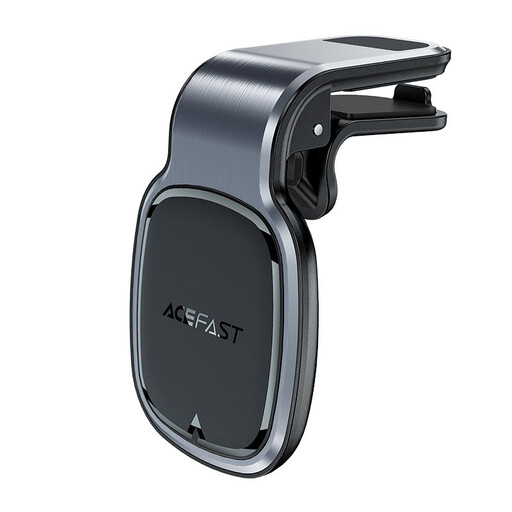
Why this product suits the profile: This compact magnetic holder attaches to the air vent and, according to the product description, does not require MagSafe technology. It is suitable for users looking for a simple solution without charging functionality.
The universal air-vent clip and 360-degree rotation are clearly specified. Before buying, you should still check whether the slats can support the weight.
Magnetic attachment without requiring a MagSafe system; compact housing and 360-degree adjustment.
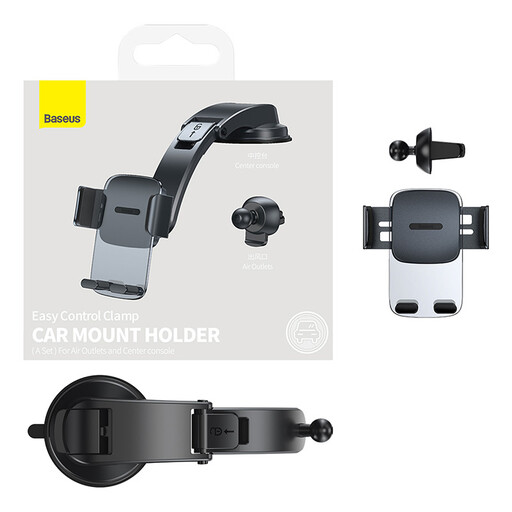
Why this product suits the profile: This model offers mechanical clamping, accessories for air vents and dashboards, and stated compatibility with smartphones from 4.7 to 6.7 inches.
The mechanical holder does not depend on magnets or a special smartphone case. The size specification makes it easier to check compatibility before ordering.
One-handed operation, silicone pads and several mounting options according to the product description.
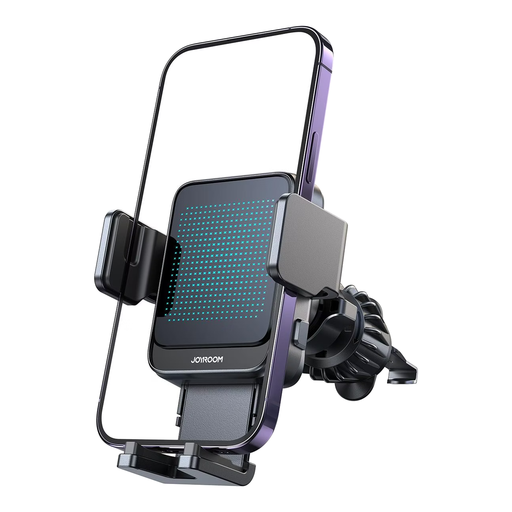
Why this product suits the profile: Commuters and professional drivers with Qi-enabled smartphones get automatic clamping and wireless charging via the air vent.
The product data specifies smartphone sizes from 4.7 to 6.8 inches and several possible charging outputs. A suitable QC or PD car adapter is required for up to 15 W.
Automatic locking and release, USB-C input and Qi charging output of up to 15 W according to the manufacturer.
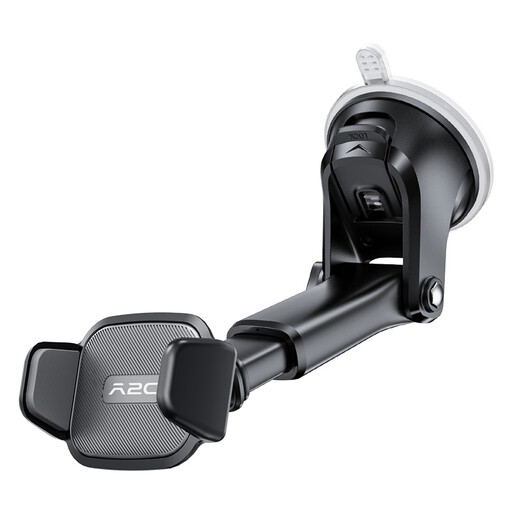
Why this product suits the profile: The 3-in-1 design supports mounting on the dashboard, windscreen and air vent. This is practical if you use several vehicles or have different interior layouts.
The mounting options are clearly listed. According to the product description, the suction cup is washable and reusable; the grip should nevertheless be checked regularly.
Automatic clamping, non-slip silicone support and three installation options.
We have put together a complete, regularly updated list of products that fully meet these strict selection criteria and the safety regulations applicable in the EU.
That depends on the vehicle and the viewing angle you want. An air vent phone holder saves space, but may put strain on the slats. A suction cup for the dashboard or windscreen offers greater flexibility, but requires a suitable, clean surface. Before mounting, you must consider your field of vision, airbag areas and controls.
There is no standard lifespan. It depends, among other things, on the material, mechanical stress, heat, UV radiation and frequency of use. Suction cups should be cleaned regularly and checked to ensure they are firmly attached. With adhesive surfaces, frequent repositioning can reduce the grip. Air-vent clips should also be checked occasionally to ensure they remain securely attached.
The holder usually receives its power through the vehicle’s 12-volt socket. Actual power consumption depends on the charging output, the smartphone’s battery level and the charging electronics. A stated maximum output of 15 W does not indicate continuous power consumption. After switching off the vehicle, check whether the socket continues to supply power; if necessary, disconnect the charging cable.