
Lieferung heute & morgen

Qualitätsgarantie

Willkommens-Angebote freischalten: KOSTENLOSE Lieferung | Bis zu 80 % RABATT | Kostenlose 30-Tage-JoyPlus-Testphase
App herunterladen
A car phone holder should keep your smartphone clearly visible and securely in place while you’re driving. In practice, problems are often caused not by a lack of extra features, but by an unsuitable mounting method, poor compatibility or weakening grip. Check a few technical details before you buy to avoid unnecessary expense and adjustments later.
A magnetic car phone holder won’t necessarily work with every smartphone. Many models need a metal plate or magnetic ring. With thick, heavily padded cases, the distance between the magnet and the holder can affect how securely the phone is held. iPhones that support MagSafe have a compatible magnetic ring built into the phone or case; many Android smartphones, on the other hand, need an additional ring.
Before you buy, check:
A dashboard phone holder with an adhesive pad or suction cup needs a surface that’s as smooth and clean as possible. Textured, dusty or heavily curved surfaces can reduce grip. A vent-mounted phone holder is compact, but depending on your vehicle, it may put pressure on individual slats or affect airflow.
Position matters too: the holder must not obstruct your view, airbags or controls, or restrict your movement. Only adjust the viewing angle when the vehicle is stationary.
A wireless charging phone holder needs a USB power supply and a smartphone that supports wireless charging. The ‘up to 15 W’ rating describes the charger’s possible output, not necessarily the actual charging power for every device. The smartphone model, power adapter, cable, temperature and case can all affect performance.
When choosing a Qi car charging holder, also check:
Adhesive holders are suitable for a permanent position on a flat surface. A suction cup phone holder can be positioned more flexibly on the windscreen or dashboard, but it needs a suitable surface and regular checks. Vent holders are space-saving and quick to fit. Check the shape of your air vents beforehand: are they horizontal, vertical or particularly deep?
Models with several mounting options can be useful if you switch between vehicles. The important thing is that each mounting method holds securely and the holder stays clear of the airbag deployment area.
There are three common systems:
A universal car phone holder will only be a good fit if its size range, suitability for your case thickness and mounting system are right for your device.
A 360-degree phone holder lets you position your phone in portrait or landscape orientation. Look for a joint that locks in place, so vibrations don’t change the viewing angle. ABS plastic, metal parts and silicone pads are often combined. Specific material details are more useful than general claims about stability.
Clean adhesive and suction cup surfaces to remove grease before fitting the holder. Stop using it if it’s visibly damaged, comes loose or loses its grip.
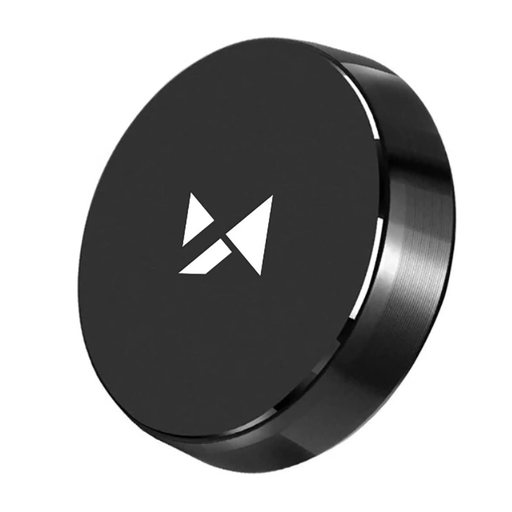
Why it suits this user: This compact magnetic holder is designed for mounting on a flat surface. It’s a good choice if you want a simple solution without a charging function.
The product details clearly state that a metal plate or compatible case is needed. This means you can check magnetic compatibility before buying.
32 mm diameter, 8 mm thickness, designed for flat surfaces and supplied with a metal plate.
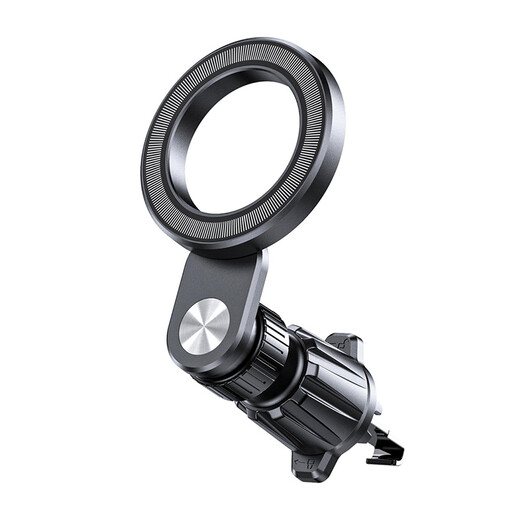
Why it suits this user: The dual-locking system, with a metal clip and twist lock, is designed to keep the holder firmly attached to the air vent.
Rather than relying on a simple clip alone, the product description specifies a combined clip-and-twist locking system.
N52 magnet, 360-degree rotation, support for MagSafe and metal rings, compact design.
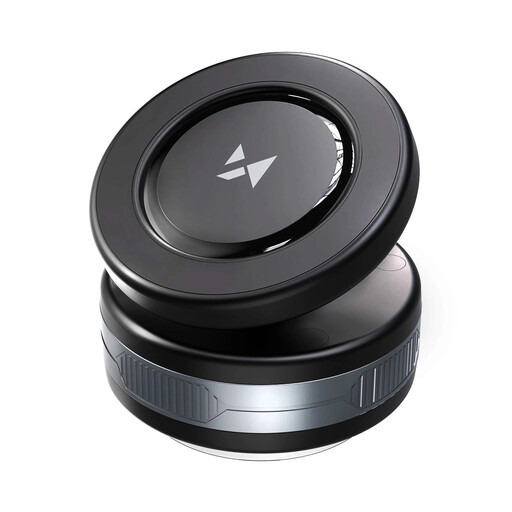
Why it suits this user: For commuters and frequent drivers, this model combines magnetic mounting, wireless charging and flexible positioning.
The product details list the mounting method, Qi compatibility, USB-C power supply and magnetic case requirements separately.
Suction cup for the windscreen or dashboard, Qi charging up to 15 W and 360-degree adjustment.
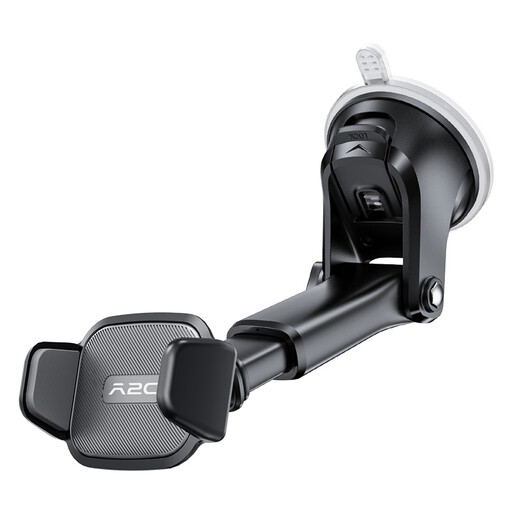
Why it suits this user: With mounting options for the dashboard, windscreen and air vent, this holder is suited to different vehicles and situations.
The reusable suction cup base and three mounting options mean you’re less reliant on a single unsuitable surface.
Automatic clamping, non-slip silicone pad, triangular locking system, and material specified as UV- and heat-resistant.
We’ve put together a complete, regularly updated list of products that meet these strict selection criteria and the safety regulations in force in the EU.
Adhesive holders, suction cup holders and models with a specially designed base can all be used on a dashboard. The surface should be smooth, clean and reasonably flat. Before fitting the holder, take the driver’s view, controls and airbag areas into account.
Its lifespan depends on the surface, temperature, exposure to sunlight and care. Check regularly that the suction cup is secure. If it starts to lose its grip, reposition or clean it. There’s no reliable one-size-fits-all estimate for every vehicle and situation.
The charging holder only draws power when connected via USB or another vehicle power supply. Actual power use depends on the charging rate, smartphone, battery level and charging electronics. On longer journeys, keep the phone and holder away from direct heat.