
Lieferung heute & morgen

Qualitätsgarantie

Willkommens-Angebote freischalten: KOSTENLOSE Lieferung | Bis zu 80 % RABATT | Kostenlose 30-Tage-JoyPlus-Testphase
App herunterladen
A car phone holder should keep your smartphone visible and stable without obstructing your view, controls or airbags. In practice, problems often arise not from the concept itself, but from choosing the wrong mounting method, insufficient compatibility or overblown marketing claims.
When selecting a phone holder for the car, you shouldn't just focus on a low price or phrases like "extra strong". What really matters is the mounting surface, the size of your smartphone, the design of the holding arms and how it operates when the vehicle is stationary.
A vent-mounted phone holder can save space, but depending on its design it may put strain on the slats. With heavy smartphones or thick cases, the clip can come loose. A dashboard mount, on the other hand, needs a suitable, smooth surface. Textured or heavily curved areas can reduce adhesion.
A suction cup phone holder isn't automatically suitable for every position either. On dusty, porous or uneven surfaces, the vacuum can weaken. Always check the mount before setting off.
A magnetic car phone holder only works directly if your smartphone or case has a compatible magnetic ring. For other devices, a metal plate is usually required. Very thick, metallic or heavily padded cases can reduce the holding strength between the phone and the holder.
Magnetic holders should also not be used near cards, sensitive magnetic strips or medical devices. Always follow the manufacturer's instructions.
A 360° rotatable phone holder lets you switch between portrait and landscape orientation. However, more joints also mean more moving parts. What matters is whether the joint can be tightened sufficiently and whether the holder stays in place during braking or on uneven roads.
The stated size ranges must be followed strictly. Models with compatibility of, for example, 4.7 to 6.7 inches cover many common smartphones, but aren't automatically suitable for every particularly wide device or protective case. If you're looking for a universal car phone holder, also check the width of the holding arms and the depth of the cradle.
One-handed operation can make inserting and removing your phone easier. It should only be used when the vehicle is stationary. An adjustable ball joint or 360° hinge is practical for navigation and hands-free use, but must not be positioned in a way that restricts your view of the road.
A phone holder with Qi charging needs a power supply via USB-C or another suitable connection. Your smartphone must support Qi; for magnetic charging mounts, the compatibility of the magnetic ring is also relevant. Charging speed, cable connection and heat generation can vary depending on the device. A Qi charger doesn't replace checking that your smartphone is correctly positioned.
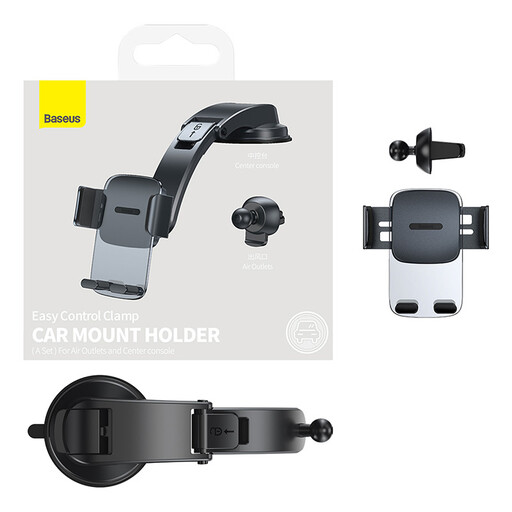
Why this product fits the profile: This holder supports clamp mounting as well as accessories for air vents and the dashboard. It's designed for smartphones from 4.7 to 6.7 inches and offers one-handed operation.
The mechanical holding arms don't require a magnetic case. Silicone pads reduce direct contact between the smartphone and the clamp.
Clamping mechanism, two intended mounting areas and an adjustable joint.
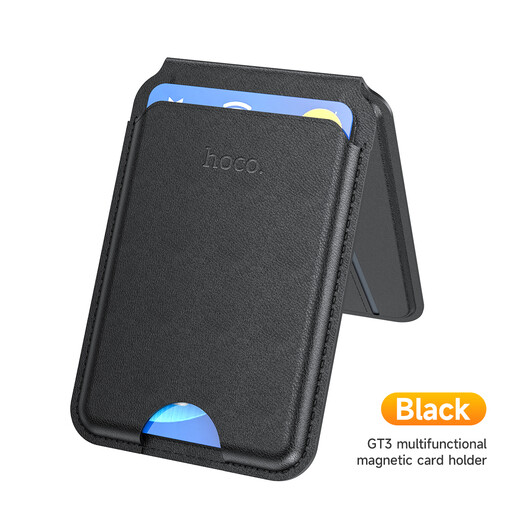
Why this product fits the profile: This holder features a 360° ball joint adjustment, an adhesive base and N52 neodymium magnets. A metal plate is included for non-magnetic smartphones.
The installation instructions recommend a 24-hour waiting period for the adhesive base to cure. This reduces the risk of premature loading.
Metal and silicone components, 360° adjustment and included metal plate.
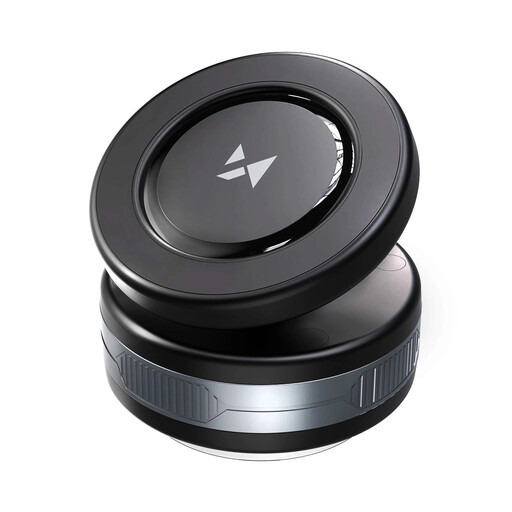
Why this product fits the profile: This magnetic suction cup holder combines 360° adjustment with Qi charging up to 15 W. It's suitable for Qi-compatible smartphones and compatible magnetic cases.
The product specifications clearly state the required Qi compatibility and use on smooth surfaces. This helps avoid false expectations about charging function and grip.
Qi output up to 15 W, USB-C power supply and 360° orientation.
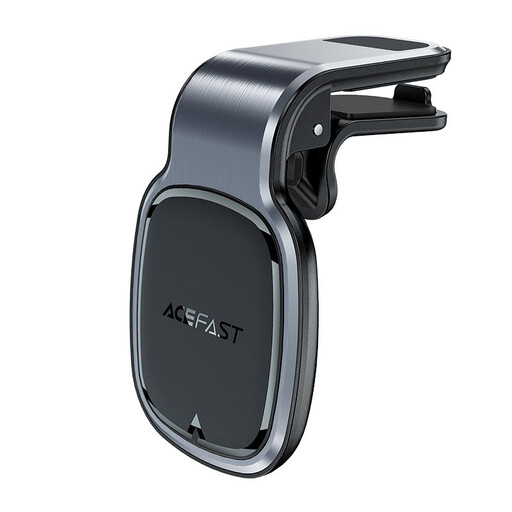
Why this product fits the profile: This compact magnetic smartphone holder attaches to the air vent and, according to the product information, doesn't require MagSafe. The 360° hinge allows both portrait and landscape orientation.
The mount uses a clip on the air vent rather than an adhesive surface. Before use, check whether the slats can support the weight.
No MagSafe required, compact design and 360° rotation.
We've put together a full, regularly updated list of products that fully meet these strict selection criteria and the safety regulations in force in the EU.
That depends on the mounting method. Mechanical clamp holders are often suitable for various smartphones as long as the dimensions are right. Magnetic models need either an integrated magnetic system or a compatible metal plate. With a Qi holder, your smartphone must also support wireless charging.
The holder should be positioned so that your view, airbags, steering wheel, pedals and controls remain unobstructed. The dashboard, air vent or windscreen can be suitable areas, provided the surface and vehicle construction allow mounting. Check the final position before driving.
There's no fixed lifespan. Temperature, direct sunlight, dust, surface material and frequent repositioning all affect adhesion. Keep suction cups clean and check regularly that they're secure. Depending on the product, adhesive pads are often designed for single use; after removal, their grip may weaken.