
Lieferung heute & morgen

Qualitätsgarantie

Willkommens-Angebote freischalten: KOSTENLOSE Lieferung | Bis zu 80 % RABATT | Kostenlose 30-Tage-JoyPlus-Testphase
App herunterladen
A car phone holder should keep your smartphone securely in place and easy to see while you’re driving. In practice, problems often arise not from the phone itself but from a holder that isn’t right for your car. The clip may not fit the air vent, the suction cup may lose its grip in hot or cold weather, or a magnetic ring may prevent wireless charging later on.
This buying guide from the Joybuy Product Recommendation Officer explains which technical details to check before you buy, which marketing claims to treat with caution, and which car phone holder may suit different needs.
A universal phone holder may work with many smartphones, but it won’t necessarily suit every car. With an air vent phone holder, the shape and strength of the vent slats matter. Round or very flexible slats may bend under the weight of your phone. For a dashboard phone holder, it’s important to check whether the surface is smooth, dry and large enough for the adhesive pad or suction cup.
You should also check the stated smartphone size range. Phone cases, camera modules and particularly heavy devices can affect the actual fit.
A magnetic car phone holder needs a suitable contact surface. MagSafe-compatible iPhones and cases usually have a suitable magnetic ring built in. Other smartphones may need a metal plate or an additional magnetic ring.
There are two potential drawbacks to bear in mind:
Magnet strength alone also says little about how practical a holder will be day to day. The position of the plate, the thickness of your case and the stability of the holder arm all matter too.
A phone holder with wireless charging needs to be powered by your car. The actual charging speed depends on your smartphone, power adapter, cable, Qi standard and temperature. A rating such as “up to 15 W” is a maximum, not a guarantee of that charging speed in every car.
For longer journeys, also check that your phone sits in the centre of the charging coil. A thick case or a magnetic ring in the wrong position can affect power transfer.
Here are the main options:
The holder must not obstruct your view of the road, interfere with the controls or prevent airbags from deploying. Only adjust your smartphone while the car is stationary.
Check the stated size range, for example 4.7 to 6.9 inches. With clamp holders, you should also check the maximum device width and the thickness of your case. For magnetic models, check whether a magnetic ring is included.
A 360° swivel lets you use your phone in portrait or landscape orientation. However, it doesn’t automatically mean the holder will stay vibration-free in every position. The longer the arm and the heavier the smartphone, the more strain there is on the suction cup, clip and joint.
Material descriptions such as ABS, PC, aluminium alloy or zinc alloy can help you compare products, but they don’t replace information about how the holder attaches. The key things to look for are:
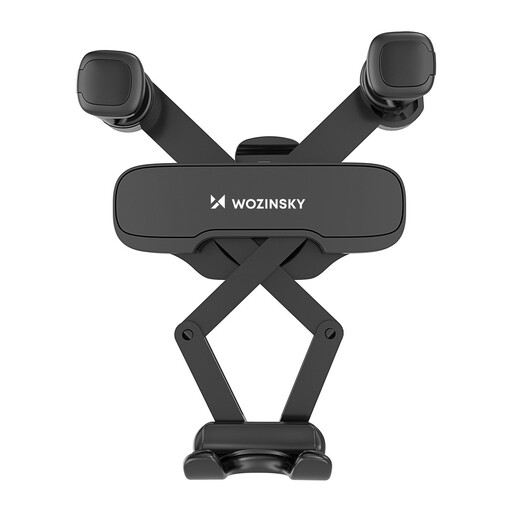
Why it suits this type of buyer: The gravity clamp is a good choice if you want to attach your smartphone to the air vent without using a suction cup or adhesive pad. It is designed to fit devices from 4.7 to 6.9 inches.
It needs neither a magnetic ring nor a power supply. Before fitting it, though, check that your car’s air vent is sturdy enough to support the holder.
360° rotation, an automatic gravity clamp and contact surfaces made from non-slip materials, according to the product description.
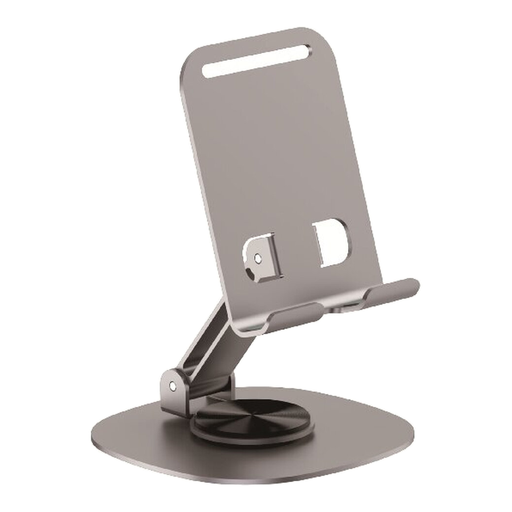
Why it suits this type of buyer: Combining metal and PC components with a 360° swivel mechanism, this holder is aimed at drivers who value a sturdy design and flexible positioning.
The product details specify a metal base and a non-slip mount. Before buying, check the mounting position and whether it is compatible with your car.
Aluminium alloy, PC material and 360° adjustment, according to the manufacturer; designed for one-handed operation.
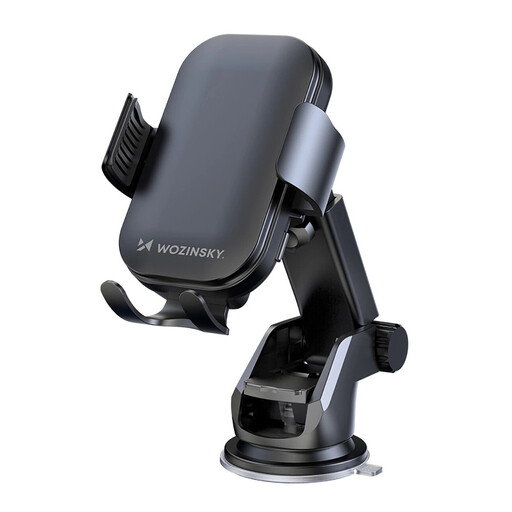
Why it suits this type of buyer: An integrated Qi charger can be handy for commuters, frequent drivers and professional drivers who want to keep their smartphone powered on longer journeys.
The specifications list several charging outputs from 5 to 15 W, as well as temperature protection. You’ll need a Qi-compatible smartphone and a suitable power source to use it.
Suction cup mount for the dashboard, adjustable arm length and Qi charging with a stated output of up to 15 W.
We’ve put together a complete, regularly updated list of products that meet these strict selection criteria and fully comply with the safety regulations applicable in the EU.
It depends on your car and smartphone. If your air vent is sturdy, a clamp or gravity holder may be suitable. Suction cup models work well on smooth surfaces. If you want to attach your phone quickly, you could choose a magnetic car phone holder. Before buying, check your device dimensions, case thickness and mounting position.
Choose a position that gives you a clear view of the road and doesn’t obstruct airbags, controls or your view through the windscreen. The best mounting position depends on your car model and the holder. Adjust the viewing angle while the car is stationary, before setting off.
There’s no one-size-fits-all answer. Heat, direct sunlight, frequent repositioning and heavy smartphones all put strain on the suction cup, adhesive pad and joints. Clean the contact surfaces regularly and check the mount before longer journeys. Replace the holder if you notice cracks, reduced grip or a loose joint.