
Lieferung heute & morgen

Qualitätsgarantie

Willkommens-Angebote freischalten: KOSTENLOSE Lieferung | Bis zu 80 % RABATT | Kostenlose 30-Tage-JoyPlus-Testphase
App herunterladen
A car phone holder should keep your smartphone secure, visible and positioned without causing unnecessary distraction while driving. In practice, however, problems are often caused not by the smartphone itself, but by an unsuitable mounting method, weak magnetic connections or unclear compatibility. By checking a few technical details before buying, you can avoid unsuitable purchases and find a smartphone holder for your car that suits both your vehicle and the way you use it.
The term universal car phone holder says little on its own about whether a product is actually suitable. A model may accommodate many smartphone sizes but still not fit every air vent, case or dashboard. Specific details such as device width, screen size, holder type and mounting surface are what really matter.
With a clamp holder, you should be able to insert your smartphone without applying excessive pressure. With a magnetic holder, devices without a built-in magnetic connection usually require a metal plate or a suitable case. A very thick protective case can reduce the holding force further.
A phone holder with wireless charging requires not only a compatible smartphone but also a power supply in the vehicle. Details such as “up to 15 W” describe the maximum output under certain conditions. You may therefore need a suitable USB-C cable and a USB power adapter with sufficient output.
With MagSafe models, you also need to distinguish between magnetic mounting and certified charging functionality. A MagSafe car holder can hold your smartphone securely without automatically charging it at full power. Before buying, you should therefore check the charging protocol, smartphone model and case compatibility.
A phone holder for an air vent is compact, but its grip can vary depending on the shape of the slats and the weight of the smartphone. A dashboard phone holder often gives you more freedom when positioning it, but requires a suitable, clean surface. A suction-cup model can be attached to smooth surfaces, but its grip should be checked regularly.
A rotating design is no substitute for correct installation. The holder must not obstruct your field of vision, steering wheel, pedals, controls or the potential deployment area of airbags.
The main options can be categorised as follows:
Compare the stated device size with your smartphone, including its case. Some models are designed for 4.7 to 6.7 inches, while others support 4.7 to 11 inches. With tablets and games consoles, the weight is also important. A dashboard holder is not automatically suitable for a tablet.
With magnetic models, you should also check:
A rotating phone holder with a 360-degree joint usually allows you to switch between portrait and landscape orientation. This is practical for navigation and hands-free calling. The viewing angle should be adjusted before setting off. Do not adjust the holder or smartphone while driving.
Mechanical clamps can be a sensible choice for users who switch between different devices. Magnetic systems are quicker to use, but require a suitable back or an additional plate.

Why this product suits this profile: The mechanical holder is suitable for smartphones from 4.7 to 6.7 inches and, depending on the accessories, can be attached to an air vent or dashboard.
The active clamp does not require a magnetic plate and secures the device gradually. Silicone pads on the clamps are designed to protect against direct pressure.
One-handed operation, portrait and landscape orientation, plus two intended mounting options.

Why this product suits this profile: This magnetic air-vent holder is ideal for users who prefer a compact design with 360-degree adjustment.
The stated compatibility covers most air vents and smartphones. Nevertheless, you should check the clip and magnetic connection before setting off.
Silicone-coated contact surfaces, 360-degree rotation and one-handed operation.
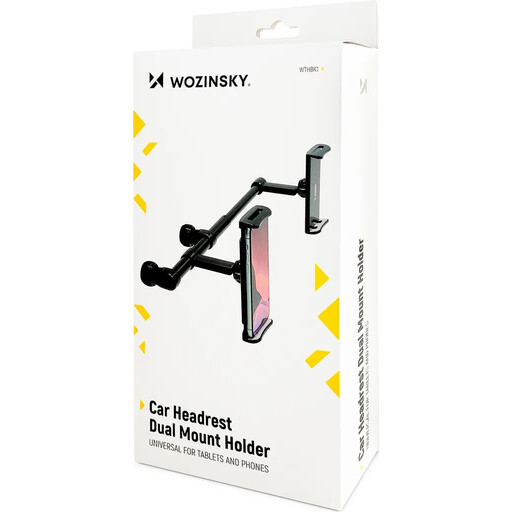
Why this product suits this profile: This headrest holder is aimed at families and passengers who want to use smartphones, tablets or games consoles during longer journeys.
It is designed to be used behind the headrest, outside the driver’s field of vision. The size specification of 4.7 to 11 inches clearly defines which devices it can accommodate.
Tool-free installation, extendable arms from 18 to 48 cm and 360-degree adjustable holder heads.
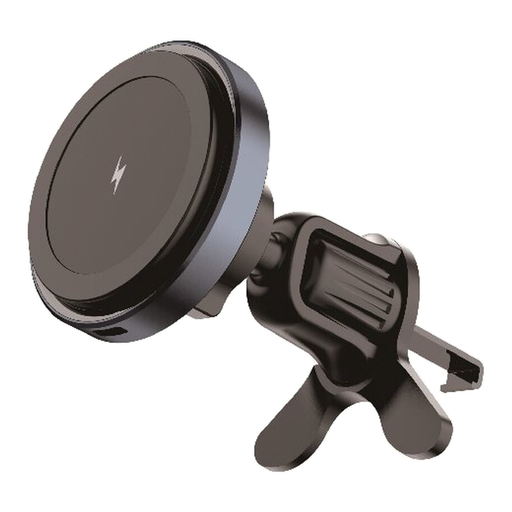
Why this product suits this profile: This model combines a magnetic air-vent holder with Qi wireless charging and is designed for MagSafe-compatible smartphones from the relevant product ranges.
The listed charging outputs are 5, 7.5, 10 and up to 15 W. A suitable power source and compatible adapter are required for maximum output.
Qi charging up to 15 W, USB-C connection, 360-degree rotation, plus safety features such as overcurrent and overvoltage protection according to the product details.
We have put together a complete, regularly updated list of products that fully meet these strict selection criteria and the safety regulations applicable in the EU.
Install the holder before setting off and test that it is secure over a short distance. The smartphone should not extend into an airbag deployment area or restrict your view of the road, mirrors or displays. For navigation and hands-free calling, choose a position that allows brief glances without requiring you to operate the device while driving.
With suction cups and adhesive pads, a grease- and dust-free surface is recommended. After applying adhesive pads, allow sufficient time for them to cure. Air-vent holders must not permanently deform the slats. You should also regularly check the joints, clamps, suction cup and cables for signs of wear.
That depends on the vehicle and smartphone. An air-vent holder saves space, while a dashboard or suction-cup holder can offer greater flexibility when positioning the device. The key requirements are an unobstructed field of vision, a stable viewing angle and installation away from safety-critical areas.
There is no single answer that applies to every situation. Grip and service life are affected by the surface texture, dust, heat, direct sunlight and frequent repositioning. The suction cup should be checked for a secure hold before every journey.
In addition to the purchase price, you may need a suitable USB-C adapter for the vehicle and, in some cases, an additional cable. The actual charging output depends on the smartphone, charging protocol, power adapter and case used.