
Lieferung heute & morgen

Qualitätsgarantie

Willkommens-Angebote freischalten: KOSTENLOSE Lieferung | Bis zu 80 % RABATT | Kostenlose 30-Tage-JoyPlus-Testphase
App herunterladen
A car phone holder should keep your smartphone visible and securely positioned while you are driving. In practice, however, not every car phone holder is suitable for every vehicle or phone. The key factors are the mounting location, device size, attachment method and whether you need a charging function.
A phone holder for the air vent can be practical, but depending on its design, it may put strain on individual vent slats. Grip may be limited on very narrow, deeply recessed or movable air vents. A dashboard holder, on the other hand, needs a sufficiently smooth and stable surface.
Suction cups do not adhere equally well to every surface either. Dust, texture, heat and direct sunlight can affect the grip. Before buying, you should therefore check whether the specified mounting method is suitable for your vehicle’s interior.
A universal phone holder is often designed for specific device sizes. The specifications may refer, for example, to 4.7 to 6.7 inches. However, a particularly thick smartphone case, a raised camera module or a battery case can still affect the grip.
Magnetic models also require a magnetic ring or a compatible protective case. Without a suitable magnetic surface, the smartphone will not stay securely attached to the holder.
A magnetic car phone holder with Qi functionality needs a USB power supply. The actual charging power depends on the smartphone, power adapter, cable and Qi standard. A specification such as 15 W describes the possible output power of the charging holder, not necessarily the continuously achievable power on every device.
With wireless charging holders, the smartphone and case must be correctly aligned. Metal parts, thick cases or high temperatures can affect the charging process. A charging holder also does not automatically replace a suitable car power adapter.
The holder must not obstruct your field of vision, controls or the deployment area of an airbag. The smartphone should be inserted and positioned before you set off. Adjusting settings while driving is not safe practice.
Compare the smartphone’s dimensions with the specified clamping range. A holder for 4.7 to 6.9 inches may be suitable for many devices, but width, thickness and the case are also important. Silicone or rubber pads can help prevent scratches and improve grip.
For families, a car tablet holder with a larger range of, for example, 4 to 11 inches may be a useful option. It is usually attached to the headrest and should be able to support the device’s weight securely.
A 360-degree phone holder allows you to use portrait or landscape orientation and adjust the device to avoid reflections. The rotation mechanism should still be sufficiently firm so that vehicle vibrations do not alter the device’s position.
Clamp holders, gravity holders and magnetic mounts differ in how the smartphone is inserted. Automatic clamping can make operation easier, while with magnetic holders, compatibility with the case and phone is more important than the magnetic specification alone.
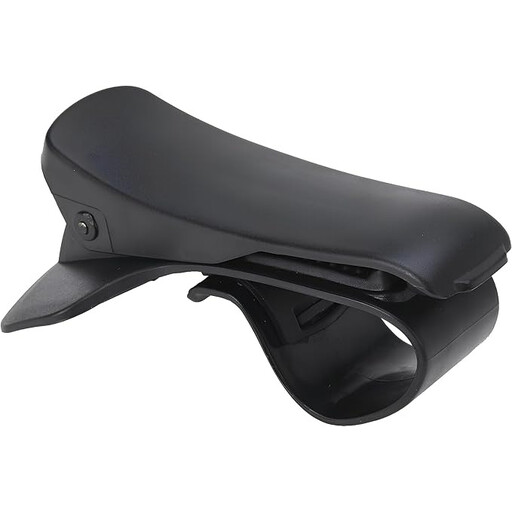
Why this product suits this profile: This compact car phone holder attaches to the air vent without tools. Measuring 14 x 8 x 6 cm, it is designed as a straightforward basic solution.
The product description clearly specifies the mounting location, ABS material and 360-degree rotation instead of simply making a general universal claim.
ABS construction, air-vent mounting and an adjustable viewing angle.
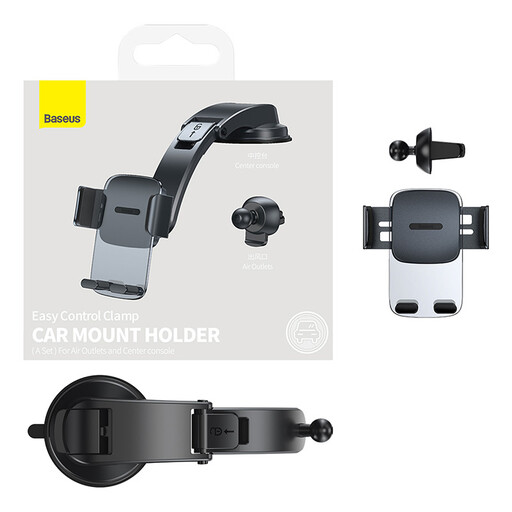
Why this product suits this profile: Depending on the accessories supplied, this model can be attached to the air vent or dashboard. It is suitable for smartphones from 4.7 to 6.7 inches.
The mechanical clamping mechanism and silicone pad specifications make it clear how the phone is held and protected from friction.
One-handed operation, adjustable height and two available mounting options.
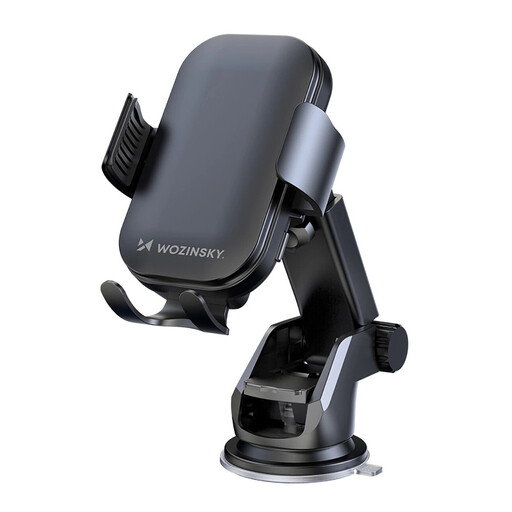
Why this product suits this profile: If you frequently use navigation and want to charge at the same time, this phone holder offers a charging function, automatic clamping and a suction cup for the dashboard.
The specifications list charging profiles of 5 W, 7.5 W, 10 W and 15 W. Temperature monitoring is also specified, but this does not replace the usage instructions.
Qi charging up to 15 W, automatic clamping and adjustable arm length.
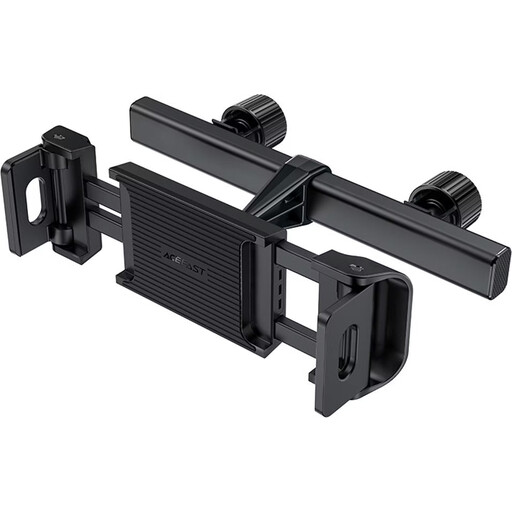
Why this product suits this profile: This headrest holder is designed for devices measuring 135 to 230 mm in width, making it suitable for smartphones, tablets and portable consoles in the rear seats.
The adjustable width is clearly specified. Before setting off, you can check whether the headrest spacing, device size and holding clip are compatible.
Clip-on installation, a horizontally swivelling holder and materials including metal, plastic and silicone.
We have put together a complete, regularly updated list of products that fully meet these strict selection criteria and the safety regulations applicable in the EU.
That depends on your vehicle and the viewing angle you want. A phone holder for the air vent saves space and can usually be fitted quickly. For a higher viewing position, a dashboard phone holder or windscreen holder may be suitable. In every case, the position must leave your field of vision, controls and airbag areas unobstructed.
There is no generally applicable service life. Factors include the material, heat, UV radiation, vibrations and how often the holder is installed. Suction cups should be checked regularly for dirt and grip. Adhesive pads may leave residue when removed later. If you notice visible cracks, loose joints or reduced clamping force, replacement is advisable.
Yes. A wireless car charging holder requires energy from the vehicle while charging, usually via the 12-volt socket or a USB connection. The charging unit will not work without a connected cable. Power consumption and charging speed depend on the model, smartphone and power adapter used. Before buying, check the Qi compatibility and the stated maximum charging power.