
Lieferung heute & morgen

Qualitätsgarantie

Willkommens-Angebote freischalten: KOSTENLOSE Lieferung | Bis zu 80 % RABATT | Kostenlose 30-Tage-JoyPlus-Testphase
App herunterladen
A car phone holder should secure your smartphone safely, keep navigation clearly visible and, depending on the model, also support wireless charging. In practice, however, it quickly becomes clear that not every phone holder for cars is suitable for every vehicle or smartphone. An unsuitable holder may wobble on the air vent, come loose in high temperatures or interrupt inductive charging.
This buying guide from the Joybuy Product Recommendation Officer explains what drivers in Germany should look for in 2026 and which models are suitable for different requirements.
A magnetic phone holder does not work with every smartphone without additional accessories. iPhones from the iPhone 12 generation onward generally support MagSafe, provided that an unsuitable or excessively thick case is not being used. Many Android devices, by contrast, require a suitable magnetic ring or metal plate.
It is also important to distinguish between a purely magnetic mount and a holder with wireless charging. A magnet keeps the phone in place, but it does not automatically supply power.
A universal smartphone holder can accommodate smartphones in different sizes. However, this says little about how it will attach inside the vehicle. Air vents vary in shape, slat thickness and load capacity. A phone holder for air vents may become unstable when used with heavy smartphones or vertical slats.
A dashboard phone holder also requires a clean, level and suitable surface. Textured plastics or strongly curved surfaces can reduce adhesion.
The specification “up to 15 W” describes the potential output under suitable conditions. The decisive factors are the smartphone, charging protocol, power adapter and cable being used. Some models require a compatible USB-C or QC/PD charger separately.
Thick protective cases, metal plates and incorrectly positioned magnetic rings can reduce charging performance or increase heat generation. A Qi car charger should therefore only be used with Qi-compatible devices and in accordance with the manufacturer’s instructions.
The three most common variants have different requirements:
A 360-degree phone holder makes it easier to position the device in portrait or landscape mode. Nevertheless, check that the selected position does not obstruct your field of vision, airbags, steering wheel, pedals or controls. The smartphone should not be manually adjusted while driving.
Check the specified size range, for example 4.0 to 7.2 inches. With clamp holders, the maximum device width is also important. A thick outdoor or battery case may make it harder to insert the phone.
With magnetic models, the contact area must be sufficiently large and correctly positioned. For iPhone models with MagSafe, a MagSafe car holder is particularly convenient. Other devices may require a metal ring. According to the product specifications, the Baseus MagPro II does not include this ring for incompatible models.
When choosing a phone holder with wireless charging, compare the following specifications:
Actual charging speed may vary depending on the smartphone and power supply. During long journeys, the holder should not be exposed to intense, direct sunlight, as heat can slow down charging.
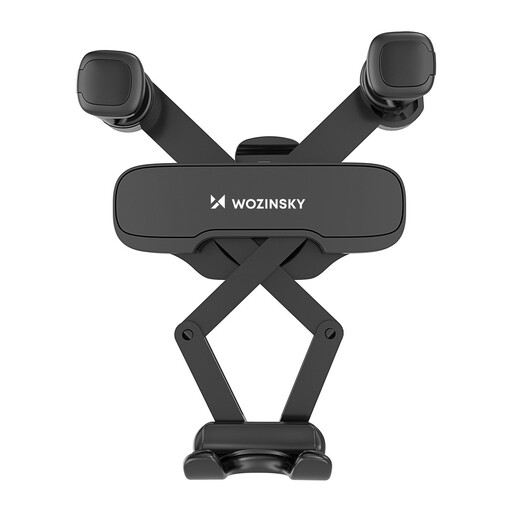
Why it’s a good fit: For users looking for a straightforward holder without charging functionality or additional magnetic accessories.
The smartphone is secured mechanically by its weight. No magnetic ring or Qi charger is required.
Specified for smartphones from 4.7 to 6.9 inches; 360-degree rotation and one-handed operation thanks to the gravity mechanism.
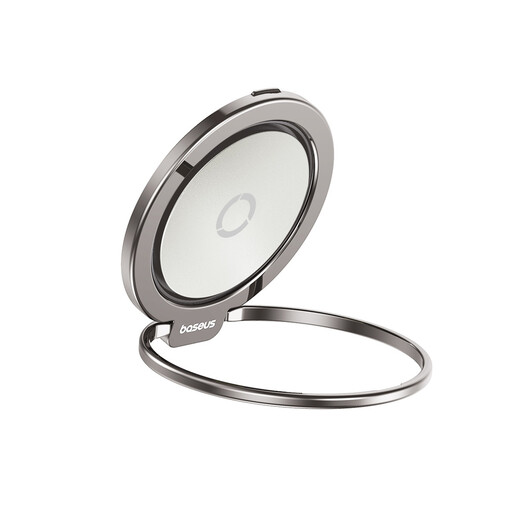
Why it’s a good fit: This compact magnetic solution is suitable for iPhone models from iPhone 12 onward with MagSafe support and can also be used as a stand outside the car.
The product specifications explicitly state MagSafe compatibility. Other smartphones require a metal ring, which is not included.
360-degree rotation, 180-degree folding and two N52 magnetic layers with a specified holding force of 10 N.
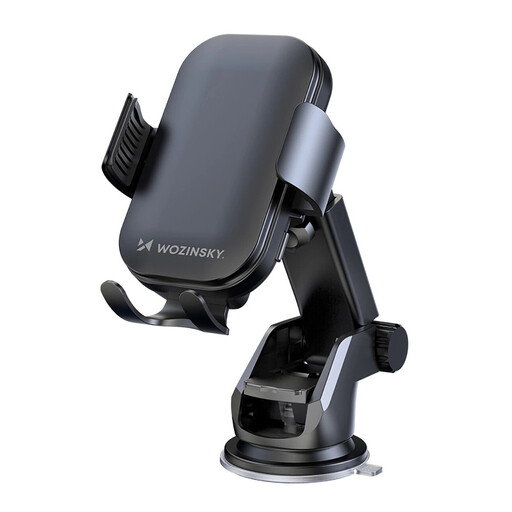
Why it’s a good fit: For regular journeys involving navigation, when the smartphone needs to be secured and charged at the same time.
The holder uses a suction cup for dashboard mounting and, according to the product specifications, features a temperature-monitoring chip.
Automatic clamping, adjustable arm length and Qi charging at 5 W, 7.5 W, 10 W or up to 15 W according to the specifications.
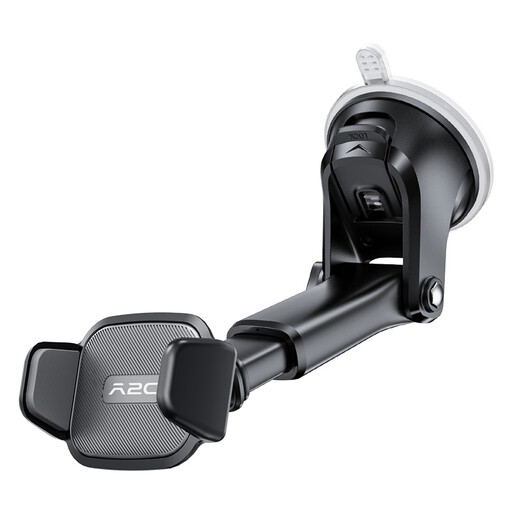
Why it’s a good fit: An option for drivers who want to switch between the dashboard, windscreen and air vent.
The available mounting options are clearly listed. Nevertheless, the reusable suction cup must be mounted on a suitable, clean surface.
3-in-1 mounting, automatic clamping, non-slip silicone surfaces and stated compatibility with smartphones from 4.7 to 7 inches.
Clean suction cups and mounting surfaces regularly with a suitable lint-free cloth. With adhesive pads, decide on the mounting position before attaching them, as adhesion may decrease after removal. Before every longer journey, check that both the holder and smartphone are securely in place.
Magnetic models should be kept away from magnetic cards and sensitive magnetic data carriers. If a Qi charger becomes unusually hot, disconnect it from the power supply. The holder must not obstruct your view, airbags or vehicle controls.
Explore the full selection of phone holders for different mounting types, smartphone sizes and charging requirements.
That depends on the vehicle and smartphone. An air-vent holder saves space, while a suction-cup or dashboard solution can offer more flexible positioning. The key is to keep the display clearly visible without obstructing your view or access to the controls.
There is no universally applicable service life. Temperature, direct sunlight, dust and the condition of the mounting surface all affect adhesion. Regular cleaning and a level mounting surface can help maintain reliable performance.
A Qi charger draws power from the 12-volt socket or a USB port. Actual consumption depends on the charging power, smartphone battery and charge level. To achieve maximum output, the charger, cable and smartphone must be compatible with one another.