
Lieferung heute & morgen

Qualitätsgarantie

Willkommens-Angebote freischalten: KOSTENLOSE Lieferung | Bis zu 80 % RABATT | Kostenlose 30-Tage-JoyPlus-Testphase
App herunterladen
A Type 2 EV charger needs to be compatible with your vehicle, your existing electrical installation and where you plan to use it. Choosing the wrong charging power isn’t the only common buying mistake. Cables that are too short, missing safety features or an unsuitable home connection can also make everyday use more difficult.
An 11 kW or 22 kW EV charger won’t automatically deliver that power to every electric car. The key factors are the vehicle’s on-board charger, the number of phases and the electrical installation. A vehicle with a single-phase AC charger may only be able to use some of the stated power when connected to a three-phase charging station.
A Schuko EV charger is flexible and suitable for occasional charging from a suitable 230-volt socket. For regular charging at higher power, a permanently installed Type 2 wallbox or a suitable CEE connection is often more practical. A standard household socket shouldn’t be under a continuous heavy load without first checking the installation.
A long cable makes parking easier, but it can be more difficult to store. With portable chargers, adjustable current, temperature monitoring, residual current protection and earthing protection are also important factors to consider. IP54 or IP65 ratings apply to the relevant part of the product and don’t replace the need for a sheltered installation location.
Here are the main options at a glance:
Before you buy, check the vehicle’s documentation to make sure your electric car or plug-in hybrid supports the AC charging power you want.
A portable PHEV charger with a Schuko plug can be used at home and on the go. Models with a CEE plug require a suitable red 5-pin CEE socket and a correctly rated installation. A wallbox is usually permanently installed and connected by a qualified electrician.
Installation requirements include local regulations, circuit protection, earthing and the necessary residual current protection. The network operator may also have requirements, depending on the charging power. So don’t order a 22 kW wallbox without first checking the connection requirements.
Look for clearly explained features such as:
A wallbox with app control can schedule charging and show status information. An RFID wallbox lets you authorise charging with a card, which can be useful in shared parking areas. Network features aren’t essential if you mainly plan to operate the charging station locally.
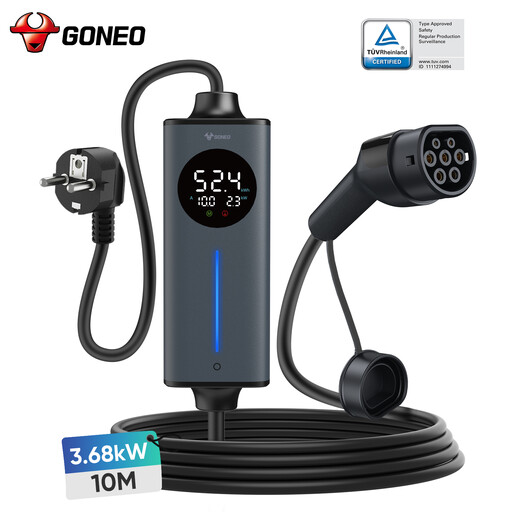
Why it suits this profile: This portable electric car charger is used with a suitable 230-volt Schuko socket and comes with a 10-m cable for flexible parking arrangements.
You can adjust the current to suit the socket. Earthing detection and AC and DC residual current protection are also listed.
Up to 3.68 kW, timer function, LED display and Type 2 connection compliant with IEC 62196-2.
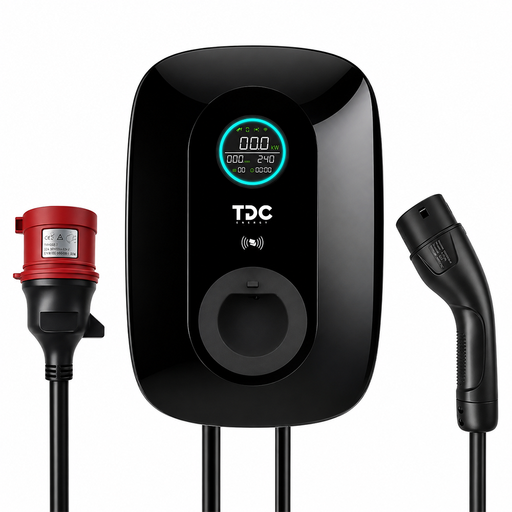
Why it suits this profile: This three-phase charging station is aimed at drivers with a compatible 400-volt connection who want to combine status updates, RFID access and app features.
The specifications state 16 A, 400 V and a 5-pin CEE connection, and say that qualified installation is required. This makes it easier to check compatibility before you buy.
5-m cable, 3-inch display, app and RFID controls, plus stated AC and DC residual current protection.
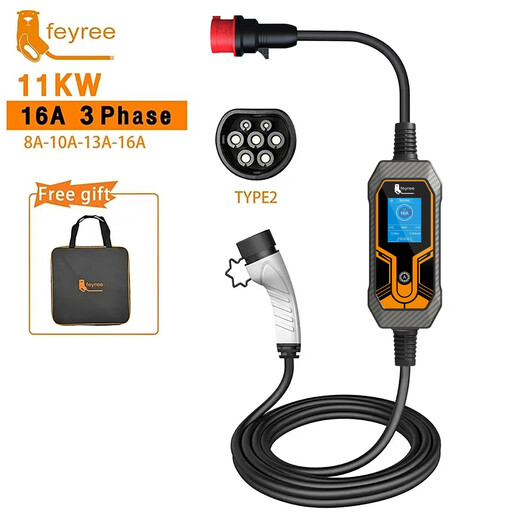
Why it suits this profile: This CEE EV charger is designed for drivers who want to use a portable electric car charging station with several suitable 400-volt connections.
The CEE connection and maximum current of 16 A are clearly stated. Use is limited to suitable sockets with the correct circuit protection.
LCD display, adjustable charging power, stated IP65 rating and several safety features according to the product description.
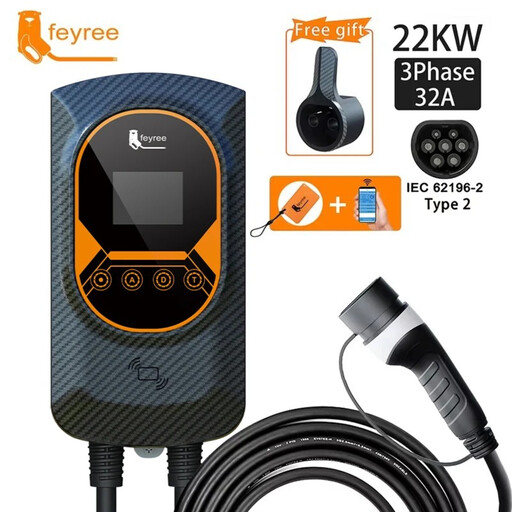
Why it suits this profile: This three-phase wallbox is aimed at households whose vehicle and home connection support 22 kW and who want to use app control with scheduled charging.
You can adjust the current in several steps from 8 A to 32 A. Check the available connection power, circuit protection and any approval requirements before use.
Tuya app, scheduling, RFID function, energy monitoring according to the description and stated IP66 rating.
We’ve put together a complete, regularly updated list of products that meet these strict selection criteria and fully comply with the safety regulations in force in the EU.
No. The socket, circuit and circuit protection must be suitable for the intended continuous load. If you have an older installation, ask an electrician to check the socket and wiring. An adjustable current setting can reduce the load, but it doesn’t replace an inspection of the installation.
Its lifespan depends on how often you charge, how it’s stored, strain on the cable, exposure to moisture and the quality of the electrical installation. Check the cable and plug regularly for cracks, deformation or unusual heat. Don’t continue to use damaged equipment.
Your running costs depend mainly on your electricity tariff, your vehicle’s energy consumption and charging losses. Timer or app features can shift charging to cheaper tariff periods, but they can’t guarantee a particular saving. The stated charging power mainly affects charging time; it doesn’t automatically change the price per kilowatt-hour.