
Lieferung heute & morgen

Qualitätsgarantie

Willkommens-Angebote freischalten: KOSTENLOSE Lieferung | Bis zu 80 % RABATT | Kostenlose 30-Tage-JoyPlus-Testphase
App herunterladen
A reliable car phone mount is essential for safely using navigation apps, taking hands-free calls, or controlling your music. According to traffic regulations, a driver may only handle an electronic device while the vehicle is stationary and the engine is off. A mount allows for compliant operation with only brief glances away from the road.
But the market is saturated, and many products don't live up to their promises. As your Joybuy Product Recommendation Officer, I'm here to help you identify the common pitfalls and make an informed decision.
Before you make a purchase, you should be aware of the weak points that often appear in low-quality models after just a few weeks or months.
To prevent these issues, you should check three core parameters. These are crucial in determining the functionality and durability of your mount.
The mounting location affects both stability and the driver's line of sight. Each method has specific pros and cons.
How the smartphone is secured in the mount itself is crucial for ease of use.
For commuters and on long trips, a phone mount with a charging function is a smart addition.
Based on the criteria above, we have identified several products that offer a suitable solution for different user needs.

Why This Fits Their Persona: Ideal for drivers who want a straightforward yet stable solution for daily use. The focus is on quick, secure operation without unnecessary features.
The quick-release button enables true one-handed operation, avoiding the trap of complicated handling. The reinforced suction cup or vent clip option ensures stability and prevents wobbling.
Universal compatibility for smartphones from 4.7 to 7 inches, even with thick cases. 360-degree ball joint for flexible positioning.
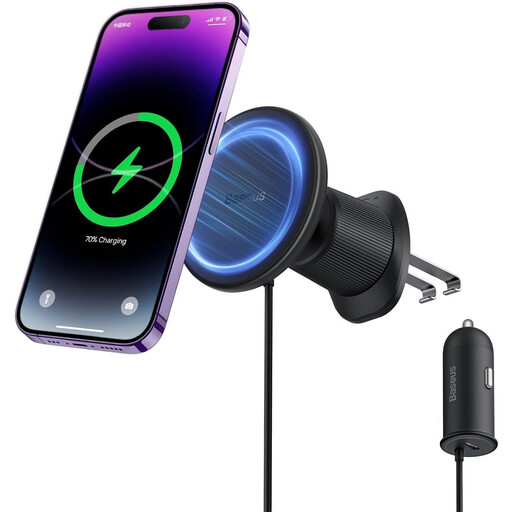
Why This Fits Their Persona: Perfect for professional commuters and frequent drivers who use their smartphone intensively for navigation and communication and rely on a constant power supply.
The combination of a mount and a powerful charger (up to 40W total output) solves the problem of a dead battery on long drives. MagSafe compatibility ensures a strong magnetic hold, preventing the device from falling.
Integrated fast charging (15W magnetic, 25W via USB-C). Stable air vent attachment with simple magnetic mounting.
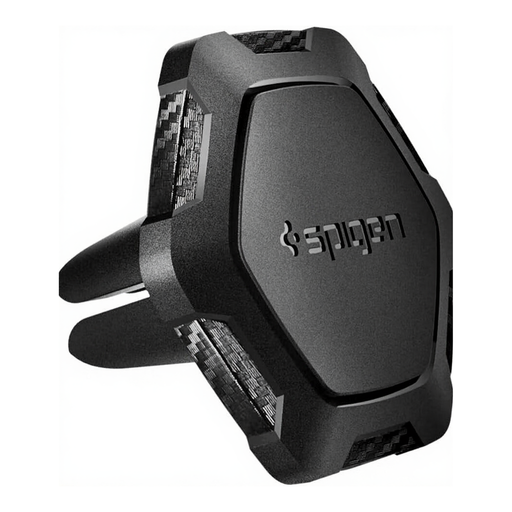
Why This Fits Their Persona: For drivers who prefer a discreet, low-profile, yet highly functional solution. Ideal for frequent car changes or use in rental cars, as it can be quickly installed and removed.
The rubberised mounting prongs protect the air vent fins from scratches and damage. Strong neodymium magnets provide a secure hold, counteracting the pitfall of unstable mounts.
Very compact and slim design that blends seamlessly into the car's interior. Universal compatibility thanks to the included metal plates.
We have compiled a complete, up-to-date list of products that fully meet these strict selection criteria and safety regulations.
Are car phone mounts legal? Yes, using a car phone mount is generally permitted and even recommended. The key is that the mount must be installed in a way that does not obstruct the driver's view of the road. According to traffic laws, operating the device must only require a brief glance that is appropriate for the current traffic conditions.
How long does a suction cup last on the dashboard? The durability of a suction cup depends on the quality of the material, the texture of the surface, and the temperature conditions. For an optimal hold, the surface must be completely clean, dry, and free of grease. If the suction power weakens, rinsing the suction cup with lukewarm water and letting it air dry can often restore its grip.
Can a magnetic phone mount damage my smartphone? No, the magnets used in modern phone mounts are not strong enough to damage a smartphone's internal components, such as the memory, processor, or GPS receiver. However, caution is advised with items that have magnetic strips (e.g., credit cards) or older mechanical hard drives that are in close proximity. For individuals with pacemakers, it is recommended to maintain the minimum distance suggested by the manufacturer as a safety precaution.