
Lieferung heute & morgen

Qualitätsgarantie

Willkommens-Angebote freischalten: KOSTENLOSE Lieferung | Bis zu 80 % RABATT | Kostenlose 30-Tage-JoyPlus-Testphase
App herunterladen
Using your smartphone while driving is often restricted by law, permitted only with a proper hands-free system or mount to ensure road safety. A good car phone mount is therefore not just a matter of convenience, but a necessity. However, the market is flooded with models whose marketing claims often don't hold up in practice. Before you make a decision you'll later regret, it's crucial to understand their common pitfalls.
Many drivers invest in a mount, only to find it useless after just a few weeks. The most common problems include:
To avoid a bad purchase, base your decision on three objective criteria. These factors determine stability, compatibility, and everyday ease of use.
The mounting location directly impacts the driver's line of sight and the stability of the mount.
How the smartphone is secured in the mount is crucial for daily use.
For commuters and on long trips, a constantly charged smartphone is essential. A phone mount with a charging function integrates wireless charging (usually via the Qi standard) directly into the mount. This eliminates the need to plug in a separate charging cable and reduces cable clutter in the cockpit. Check the charging power (in watts) to ensure your device charges effectively even while using navigation apps.
Based on the criteria above, we have identified several models that represent a well-thought-out solution for specific needs and user profiles.
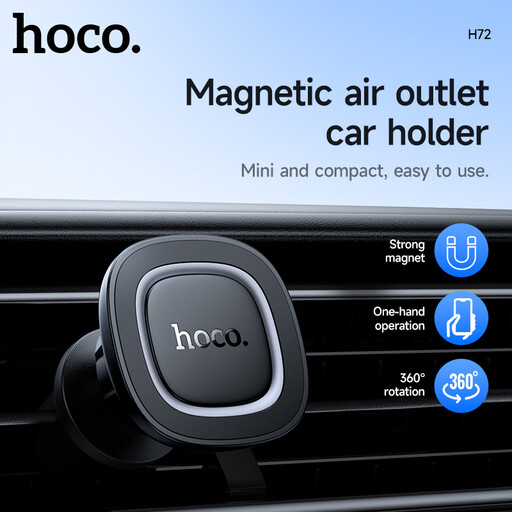
Why This Fits Their Persona: Ideal for drivers seeking a straightforward, reliable, and budget-friendly solution for navigation. The air vent mounting keeps the field of view clear, and the magnetic attachment allows for quick, one-handed operation.
The sturdy clamp for the vent fins is engineered to ensure a tight, wobble-free fit while protecting the fins—a common issue with cheaper models.
Strong neodymium magnet for a secure hold; 360-degree ball joint for flexible orientation; compact design made of aluminium alloy and ABS.
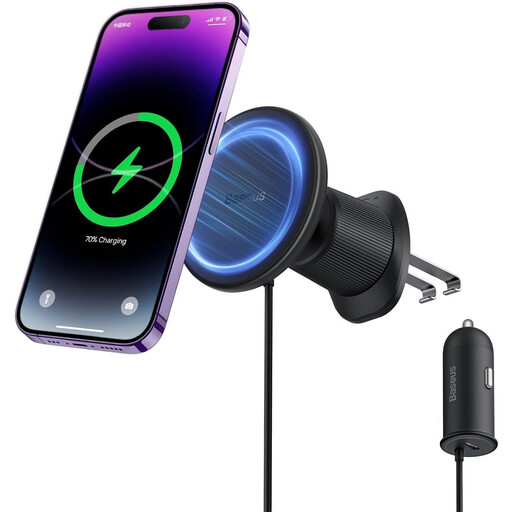
Why This Fits Their Persona: Perfect for users of modern smartphones (especially iPhones) who want a seamless integration of a mount and fast charging, ensuring they are always fully charged on their daily commute or business trips.
Solves the "weak magnet" problem with a MagSafe-compatible mount that provides a strong hold, and combines it with a powerful charging function, eliminating separate cable clutter.
Integrated phone mount with charging function (15W magnetic) and an additional 25W USB-C port on the charger; all in one elegant package.

Why This Fits Their Persona: The solution for parents or passengers on long car trips. It securely holds tablets or two smartphones for rear-seat entertainment, ensuring a quiet and pleasant journey for everyone.
This isn't a compromise solution for the dashboard, but a dedicated tablet car mount for the headrest that is stable and safe for passengers and doesn't distract the driver.
Holds two devices simultaneously (smartphones and tablets up to 11 inches); tool-free installation; 360-degree rotation for optimal viewing angles.
We have compiled a complete, up-to-date list of products that fully meet these strict selection criteria.
High-quality models use rubberised or silicone-coated clamps to prevent scratches and damage. It's important to choose a mount designed for your smartphone's weight that offers a stable, vibration-free attachment. Before purchasing, check compatibility with your air vents, as not every clamp is suitable for every fin shape.
The holding power depends on the quality and number of magnets used. Models with strong neodymium magnets typically offer a very high adhesive force, sufficient even over bumps or during hard braking. For an optimal connection, especially with heavier devices, it's recommended to use a thin case or attach the included metal plate directly to the smartphone. A MagSafe car mount provides an exceptionally secure and perfectly aligned magnetic connection for compatible iPhones.
Most adhesive pads from reputable manufacturers are designed to be removed without leaving residue. It is recommended to gently and slowly heat the pad before removal (e.g., with a hair dryer on a low setting) to soften the adhesive. Then, pull the mount off slowly and parallel to the surface, rather than yanking it, to avoid surface damage.