
Lieferung heute & morgen

Qualitätsgarantie

Willkommens-Angebote freischalten: KOSTENLOSE Lieferung | Bis zu 80 % RABATT | Kostenlose 30-Tage-JoyPlus-Testphase
App herunterladen
A car phone mount should keep your smartphone securely in place and clearly visible while you’re driving. In practice, though, not every model suits every vehicle, every air vent or every phone case. Particularly for navigation, hands-free calls and longer commutes, it’s worth checking the mounting type, compatibility and power supply carefully before you buy.
A universal smartphone mount may work with many devices, but smartphones still differ in weight, case thickness and size. A mount designed for 4 to 7 inches, for example, isn’t necessarily built for a particularly heavy phone with a robust protective case. With clamp-style mounts, you should also check whether the side arms cover the buttons or the charging port.
A magnetic car phone mount attaches the device quickly, often with one hand. For this to work, your smartphone needs either built-in magnets – as with compatible MagSafe models – or a suitable metal plate or magnetic ring. A metal plate can affect the use of wireless charging. Keep credit cards, access cards and magnetically sensitive devices away from the magnetic area.
With a magnetic phone mount that includes charging, the actual charging speed depends on several factors: your smartphone, its case, the cable, the car adapter and the temperature. Claims like “up to 15 W” describe the maximum output under ideal conditions. A Qi car charger also needs a suitable power source. For the 3MK Car MagCharger mount, for example, a USB-C cable or a compatible connection is required; with this model, the cable is not included in the box.
A dashboard phone mount is usually attached with an adhesive pad or suction cup. The surface should be smooth, clean, dry and free from grease. With adhesive mounting, a curing time of up to 24 hours may be needed. Textured dashboards can affect adhesion.
An air vent phone mount requires stable slats and a suitable clip design. The weight of the phone can pull the vent slat downwards. In vehicles with delicate or very narrow slats, a model with an additional locking mechanism is a good idea.
A windscreen phone mount often offers flexible positioning thanks to a suction cup. However, it must not obstruct your field of vision, airbag zones or any controls. Always check the final position with the vehicle parked.
Clamp mounts hold the phone mechanically and work well with devices that don’t have a magnetic ring. Self-clamping models, like the ACEFAST D9, open and close the holding arms using a mechanism. Pay attention to the device size and maximum weight specified by the manufacturer.
Magnetic models allow you to attach and remove the phone quickly. Check whether your phone supports MagSafe or needs a metal plate. With thick protective cases, the magnetic connection may be weaker.
A 360° rotatable phone mount lets you switch between portrait and landscape orientation. What matters is whether the ball joint stays firmly in place after adjustment. One-handed operation is convenient, but it shouldn’t encourage you to adjust the phone while driving. Set up the mount and angle before you set off.
A wireless car charging mount with Qi support reduces cables inside the cabin. To use it, you’ll need a compatible smartphone, a suitable car adapter and often a USB-C cable. If your phone gets unusually warm while charging, stop the charging process and check the cause. Direct sunlight, a thick case and high outside temperatures can all affect charging performance.
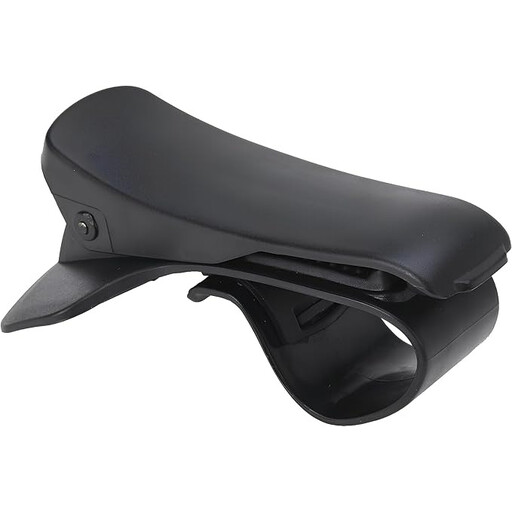
Why This Fits Their Persona: Ideal for drivers who want a straightforward air vent phone mount without a charging function. It can be fitted without any tools.
The mounting type is clearly stated: attachment to the air vent. Before buying, compare the slat shape and your smartphone’s dimensions.
ABS construction, 360° rotation and stated dimensions of 14 × 8 × 6 cm.
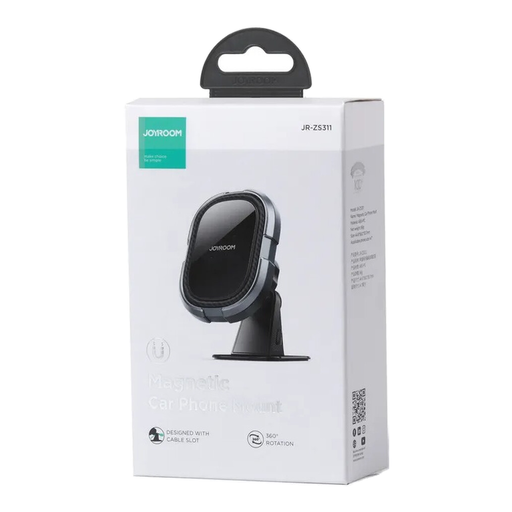
Why This Fits Their Persona: For those who prefer a compact dashboard phone mount with magnetic attachment and flexible viewing angle.
The product details mention 3M nano adhesive tape, 4 to 7 inch compatibility and two metal plates. This lets you check suitability before mounting.
360° rotation, ABS-PC housing and mounting accessories including cleaning kits.
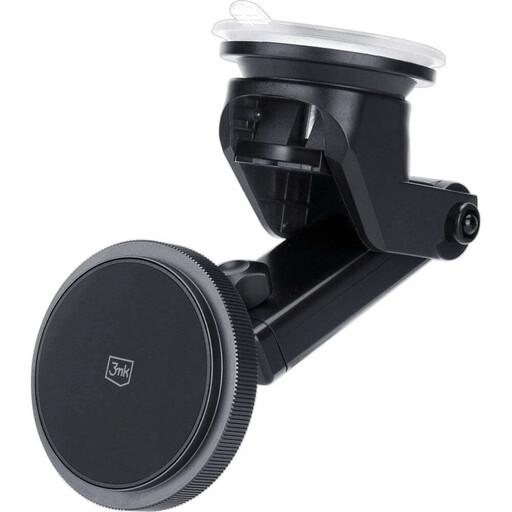
Why This Fits Their Persona: Suited to commuters and frequent drivers who want a magnetic phone mount with charging and 360° adjustment combined.
The maximum Qi output of up to 15 W is stated alongside the required USB-C connection and compatible adapter.
MagSafe compatibility, 360° ball joint and overcurrent, overvoltage and overtemperature protection according to the product details.
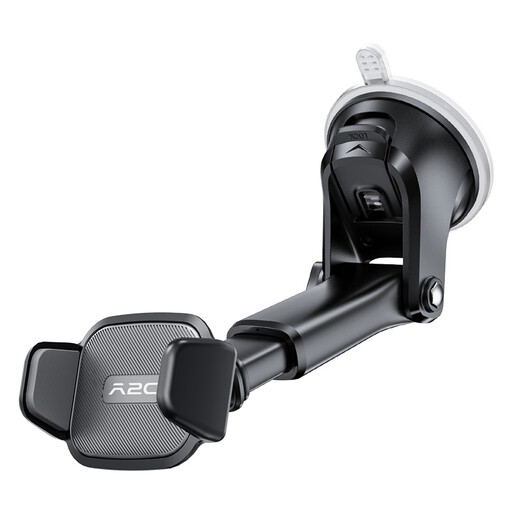
Why This Fits Their Persona: Useful for vehicles where you want to switch between the dashboard, windscreen and air vent depending on your needs.
The three stated mounting options reduce the risk of the mount only working in one unsuitable spot in the vehicle.
Automatic clamping, reusable suction cup and stated UV and heat resistance of the material.
We’ve put together a full, regularly updated selection of products that take these vehicle-use selection criteria into account.
Never attach a car phone mount in an area that obstructs your field of vision, the steering wheel, any controls or the deployment of an airbag. After mounting, check the grip with the vehicle stationary. With adhesive surfaces, follow the recommended curing time. Regularly inspect the clip, suction cup, joint and adhesive point for wear.
Do not adjust your smartphone manually while driving. Set up navigation and hands-free functions before you start your journey. A mount is for securing your phone, but it doesn’t replace your attention on the road.
A MagSafe car mount is designed for compatible iPhone models and magnetic cases. Check whether wireless charging is also integrated and whether the stated power matches your charging adapter. With older devices, a suitable magnetic ring may be required.
That depends on your vehicle. An air vent mount is usually quick to fit, but it can put strain on the slats and affect the airflow. A dashboard mount offers a fixed position but needs a suitable, preferably smooth surface. Your field of vision and airbag zones take priority with both options.
It’s not possible to give a fixed lifespan. Temperature, UV radiation, surface texture, cleaning and the weight of your smartphone all affect adhesion. Clean the surface before mounting, allow the curing time and check the adhesive point regularly for any signs of lifting.