
Lieferung heute & morgen

Qualitätsgarantie

Willkommens-Angebote freischalten: KOSTENLOSE Lieferung | Bis zu 80 % RABATT | Kostenlose 30-Tage-JoyPlus-Testphase
App herunterladen
A car phone mount should secure your smartphone safely, keep your navigation visible and charge it when needed. In practice, however, differences often only become apparent after purchase: the mount works loose, the magnet doesn’t hold reliably through a thick case, or wireless charging is slower than expected.
This buying guide from the Joybuy Product Recommendation Officer objectively assesses the most important features and shows which car phone holder suits which usage profile.
A dashboard car phone mount needs a clean, as flat a surface as possible. Textured, dusty or heavily curved surfaces can reduce the adhesion of the adhesive pad or suction cup. With a windscreen mount, you also need to check whether it obstructs your field of view.
Air vents are not all the same either. A car phone mount for air vents does not automatically fit vertical, round or particularly narrow slats. Before buying, you should compare your own vehicle’s design with the mounting method.
A magnetic base will only hold a smartphone directly if the device or case has a suitable magnetic structure. With other devices, a metal plate is usually required. This can impair or prevent wireless charging.
With a MagSafe car mount, you should therefore check whether the iPhone or case supports MagSafe. For Android devices, a compatible case or magnetic ring is often needed. Very thick, metallic or heavily padded cases can reduce the holding force.
The specification 15 W describes the maximum possible charging power under suitable conditions. What also matters are the smartphone, the charging standard, the USB power adapter and the cable. A Qi2 car charger needs a suitable power source; the power can be reduced when the device temperature is high or components are incompatible.
Pay attention to the specified device size, for example 4 to 7 inches, and take the weight of the case into account. With magnetic systems, the position of the metal plate and the distance between the smartphone and the magnetic surface are relevant.
A 360-degree joint allows orientation in portrait or landscape format. This is practical for navigation and phone calls, but does not replace a secure mount. Your eyes should remain on the road; only adjust settings on the device when the vehicle is stationary.
With a car phone mount with wireless charging, three points are important:
Metal plates between the smartphone and the charging coil can interfere with induction. If you notice visible overheating, stop the charging process and check the cause.
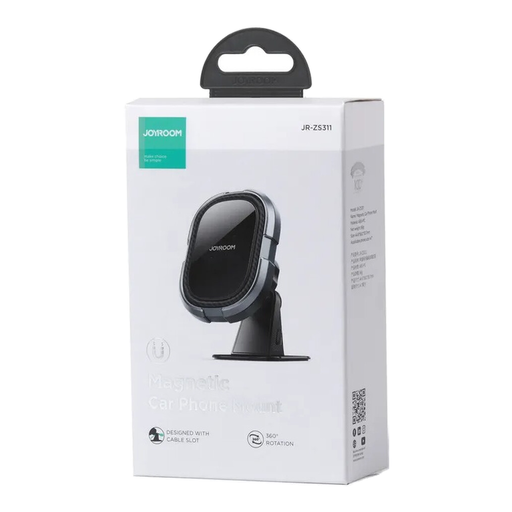
Why this product fits the profile: The compact magnetic dashboard mount is designed for basic navigation and supports smartphones from 4 to 7 inches. Metal plates are included for non-magnetic devices.
The instructions specify thorough cleaning and a 24-hour setting time for the 3M nano tape. This allows you to check the adhesive bond before your first drive.
360-degree rotation, ABS-PC construction and two metal plates included.
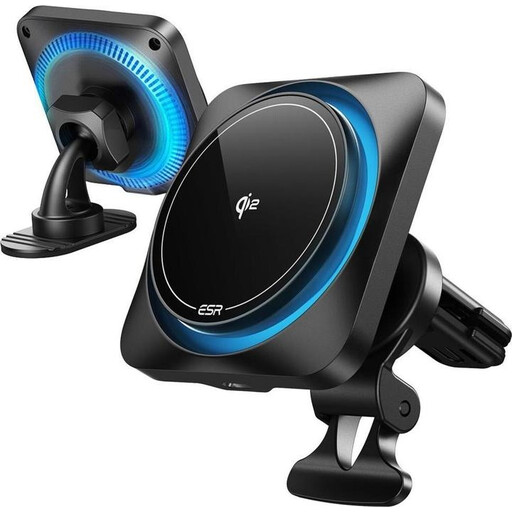
Why this product fits the profile: This model combines MagSafe attachment with Qi2 charging up to 15 W and can be mounted on the dashboard or air vent using the included adapters.
The Qi2 specification makes the charging standard clear. The integrated CryoBoost system is designed for heat dissipation; the cooling surface must remain unobstructed.
Qi2 charging power up to 15 W, USB-C connection and two mounting options.
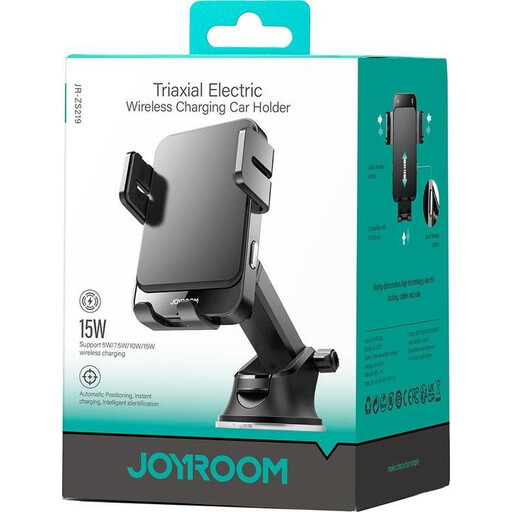
Why this product fits the profile: For commuters and frequent drivers, the set includes a dashboard mount and an air vent mount. The automatic clamping is designed for smartphones from 4.7 to 6.8 inches.
The automatic clamping does not require a metal plate between the smartphone and the charging coil. However, a compatible QC 2.0 or QC 3.0 car charger is needed for fast charging.
15 W Qi charging, 360-degree adjustment, automatic clamping arms and two mounting options.
We have put together a complete, regularly updated list of products that fully meet these strict selection criteria and the safety regulations in force in the EU.
Before mounting, clean the surface of dust and grease with a suitable cleaning cloth. Adhesive mounts often require a waiting time before they can be loaded. Suction cups must be fully seated and the locking mechanism must be closed.
Avoid positions:
Keep magnetic mounts away from magnetic stripe cards and sensitive devices. For medical implants, follow the respective manufacturer’s instructions.
A mount with a 360-degree joint allows orientation in portrait and landscape format. Dashboard and windscreen models usually offer a well-adjustable viewing angle. What matters is that the smartphone does not obstruct your view of the road.
Durability depends on the surface, temperature, sunlight exposure and load. Before mounting, the dashboard must be clean and dry. With adhesive pads, the recommended curing time should be observed. Extreme heat can reduce adhesion.
The mount itself needs power from the USB port or a suitable car charger. The running costs are normally low in everyday use; what matters more is buying a suitable power adapter and a compatible cable. The actual charging power depends on the smartphone, standard and power adapter.