
Lieferung heute & morgen

Qualitätsgarantie

Willkommens-Angebote freischalten: KOSTENLOSE Lieferung | Bis zu 80 % RABATT | Kostenlose 30-Tage-JoyPlus-Testphase
App herunterladen
Choosing a child car seat is one of the most important decisions parents make for their child's safety. However, the market can be overwhelming, filled with marketing promises that create more confusion than clarity. As your Joybuy Product Recommendation Officer, I'll help you understand objective criteria and find a seat that truly fits your needs, without falling into typical traps.
Many well-intentioned purchases turn out to be impractical or even unsuitable in daily life. Pay attention to these three points to avoid a costly mistake:
Instead of being swayed by advertising slogans, you should focus on three objective core parameters. These form the basis for a safe and suitable choice.
The most important feature of a child car seat is its safety certification. The current European standard is UN R129, better known as i-Size. Compared to the older ECE R44/04 standard, it offers crucial advantages:
A car seat with ISOFIX connects directly to the vehicle's chassis. The system consists of two locking arms on the child seat that click into corresponding anchor points located between the car's seat cushion and backrest.
The advantages are clear:
An all-in-one car seat can be an economical solution, but only if the fit is correct at every stage of growth. Consider the usage period in phases:
Some models, such as seats with an impact shield, bridge phases 2 and 3, offering a long service life from approximately 15 months to 12 years.
Here are some models that represent a considered choice for different needs and life stages, based on their objective features.
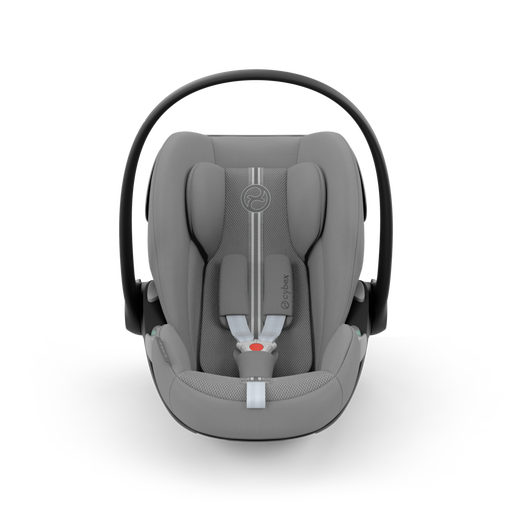
Why it's a great fit: Ideal for newborns and the first 24 months. The carrier is lightweight, clicks onto strollers, and offers an ergonomic recline position that is crucial for spinal development.
This is a specialist, not a compromise solution. Instead of an ill-fitting "jack-of-all-trades," this infant carrier provides the exact protection and comfort features that are critical for the smallest passengers.
Meets the strict i-Size standard. Offers a recline function both in and out of the car. Part of a modular system (Base G) that is compatible with a next-stage seat.
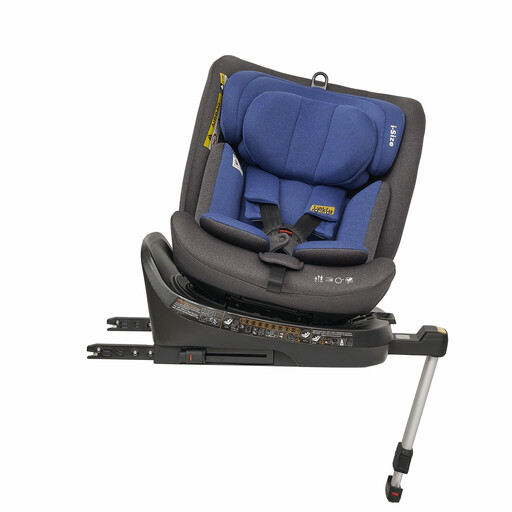
Why it's a great fit: For parents who want a single solution for the entire duration of use and value convenience. The 360° rotation makes buckling and unbuckling much easier, which saves your back, especially on frequent short trips.
This seat combines a long usability span with a stable ISOFIX and load leg installation. The rotation is not a gimmick but a well-designed feature that doesn't compromise safety.
Certified to i-Size (ECE R129). Covers the entire period from 40 to 150 cm. The 360° rotation feature makes it easy to switch between forward and rear-facing positions.
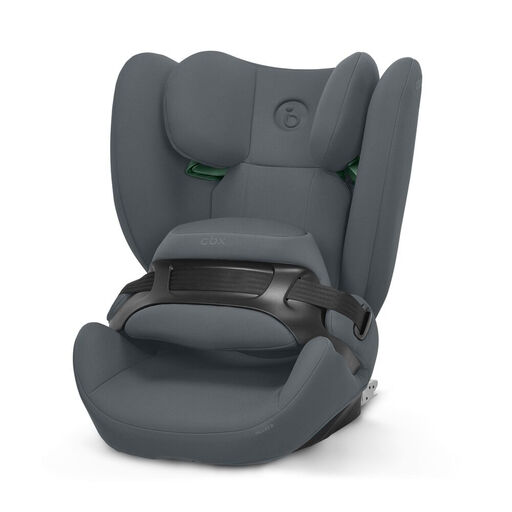
Why it's a great fit: A 2-in-1 solution for parents looking for a single follow-up seat to last for the next 10 years after the infant carrier. The impact shield offers an alternative restraint method to the 5-point harness.
This seat is not a compromise, but a well-thought-out 2-in-1 system. It uses an impact shield for the younger age group and later converts into a fully-fledged high-back booster seat, ensuring appropriate safety for each phase.
Extremely long usability (76–150 cm, approx. 10 years). The adjustable impact shield distributes frontal impact forces over a large area. Simple installation with ISOFIX and Top Tether.
We have compiled a complete, up-to-date list of products that fully meet these strict selection criteria and European safety regulations.
1. How long does my child have to travel in a rear-facing car seat? According to the i-Size standard (UN R129), rear-facing travel is legally required until 15 months of age and a height of 76 cm. However, safety experts recommend keeping children rear-facing for as long as possible, ideally up to the age of 4. A rear-facing seat offers significantly better protection for the head and neck in a frontal collision.
2. Does every i-Size car seat fit in any car with ISOFIX? Not necessarily. Although i-Size aims for a universal fit in all i-Size certified vehicles, there are exceptions. Always check the car seat manufacturer's vehicle compatibility list before purchasing. You can find this on the brand's website. This ensures that the seat not only fits your car in theory but also in practice.
3. When should I switch from a car seat to a booster seat? The switch should be made as late as possible. A high-back booster seat is designed for children from approx. 100 cm to 150 cm (approx. 4 to 12 years). The backrest and side wings provide crucial protection in a side impact, which a simple backless booster cannot offer. The switch is only appropriate once your child has reached the maximum weight or height limit of their previous seat (e.g., one with a 5-point harness or impact shield).