
Lieferung heute & morgen

Qualitätsgarantie

Willkommens-Angebote freischalten: KOSTENLOSE Lieferung | Bis zu 80 % RABATT | Kostenlose 30-Tage-JoyPlus-Testphase
App herunterladen
Choosing a car seat is one of the most important decisions you'll make for your child's safety in the car. However, the market is vast and confusing, which makes the choice difficult. Many well-intentioned purchases turn out to be impractical or don't fit properly. To help you make an informed decision, we'll highlight the most common pitfalls and the crucial criteria you should look for.
A poor investment is not only a waste of money but can also compromise safety and daily convenience. These three points are often overlooked:
To avoid these traps, it's helpful to focus on the core technical and functional features. These parameters define a model's safety and real-world usability.
The most current and stringent approval standard for child car seats is UN R129, better known as i-Size. Compared to the older ECE R44 standard, it offers several advantages:
The method of installation in the vehicle is a central safety factor.
The decision between a seat for a specific life stage and an all-in-one model depends on your individual needs.
Instead of presenting an overwhelming list, we have selected models that meet the specific needs of families and purposefully avoid the pitfalls mentioned earlier.

Why This Fits Their Persona: Ideal for the start of life's journey. This seat offers a safe and comfortable solution from birth (40 cm) up to approx. 4 years. The newborn inlay ensures an ergonomic position, while the 360° rotation makes placing and buckling in the baby easy on your back.
The 360° rotation feature directly solves the problem of complicated handling and prevents user errors during the stressful daily routine.
Integrated side-impact protection and high air circulation through mesh inserts (Plus version) for comfort in any season.

Why This Fits Their Persona: This 2-in-1 seat is designed for families looking for a cost-effective and durable solution after the infant car seat stage. It accompanies the child from approx. 15 months to 12 years of age, continuously adapting to their growth.
As an all-in-one car seat, it adapts precisely with its impact shield and its later use as a high-back booster seat, avoiding the trap of a poor fit.
Very long lifespan of over 10 years. According to the manufacturer, the impact shield reduces the risk of neck injuries in a frontal collision.
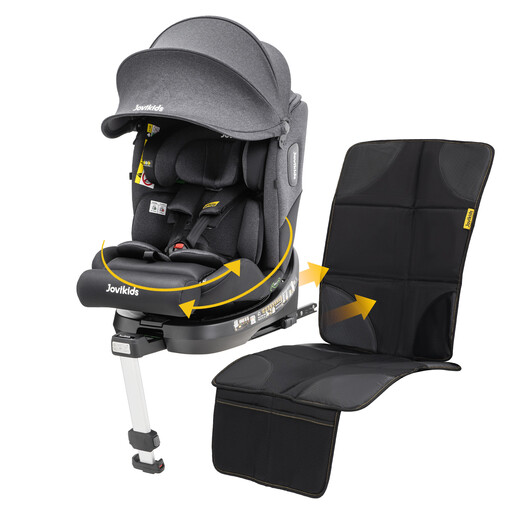
Why This Fits Their Persona: This model is a true multi-talent, covering the entire period of use from birth (40 cm) to age 12 (150 cm). It combines the i-Size standard with a 360° rotation feature and ISOFIX installation, making it a flexible solution for the entire childhood.
It addresses all three traps: The size range (40–150 cm) ensures a good fit, ISOFIX provides a secure installation, and the 360° rotation offers easy handling.
A single seat for the entire car seat-required period. The 12-position adjustable headrest and removable inserts allow for precise adaptation to the growing child.
In addition to the right seat, practical Car Seat Accessories can also improve comfort and organisation in the car. Summer covers regulate temperature on hot days, while back-seat organisers keep toys and snacks within easy reach.
We've compiled a complete, up-to-date list of products that fully meet these strict selection criteria and German safety regulations.
According to the i-Size standard (UN R129), rear-facing travel is legally required until at least 15 months of age and a height of 76 cm. However, safety experts recommend keeping children rear-facing for as long as possible, as this provides significantly better protection for the neck and spine in a frontal collision. Many seats allow this up to a height of 105 cm (approx. 4 years).
No, not necessarily. Although ISOFIX is a standardised system, the fit can be affected by the shape of the vehicle's seats, the angle of the backrest, or the position of the anchor points. Therefore, always check the car seat manufacturer's compatibility list for your specific vehicle model before purchasing.
A simple backless booster seat only raises the child so that the lap belt runs correctly across the pelvis. However, a high-back booster seat offers crucial additional safety: it protects the head and torso in a side impact and correctly positions the shoulder belt over the child's shoulder. For safety reasons, the high-back version is the recommended choice until the child is 150 cm tall.