
Lieferung heute & morgen

Qualitätsgarantie

Willkommens-Angebote freischalten: KOSTENLOSE Lieferung | Bis zu 80 % RABATT | Kostenlose 30-Tage-JoyPlus-Testphase
App herunterladen
Choosing a car seat is one of the most critical safety decisions a parent can make. However, the market is overwhelming and filled with marketing promises that create more confusion than clarity. Making the wrong choice not only leads to financial loss but can also compromise safety in a worst-case scenario. As your Joybuy Product Recommendation Officer, I'll help you identify the common pitfalls and make an informed decision.
The most common purchasing errors are based on three widespread misconceptions:
To make a well-informed decision, you should focus on three core technical parameters. These define a seat's safety and real-world usability far more than any marketing message.
In Europe, two standards are approved for parallel use. The choice has a direct impact on safety and handling.
Many parents rely on the results of independent tests for their selection, rather than following pure marketing promises. The standard is a first, important point of reference.
A rear-facing car seat is installed facing the back of the car. In a frontal collision—the most common and dangerous type of accident—the child's body is pushed into the seat shell. The forces are distributed evenly across the back, while the head and neck are protected. In forward-facing seats, the head can be thrown forward, which can lead to severe injuries in young children with their still-developing neck muscles. The i-Size standard mandates rear-facing travel until at least 15 months and 76 cm in height; however, safety experts recommend it for as long as possible, ideally until the age of four.
Before buying, check if your vehicle has ISOFIX anchor points and if the desired seat is approved for your car model.
Instead of making a blanket recommendation, we have selected models that meet the specific needs of families and purposefully avoid the pitfalls mentioned.
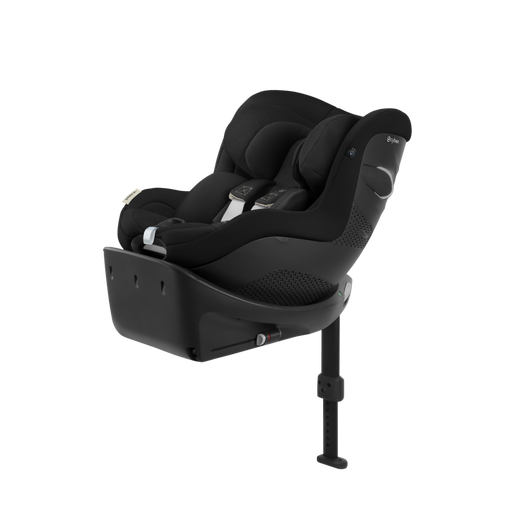
Why this model is a great fit: Ideal for parents who want to make no compromises on safety and comfort right from birth. As a rear-facing car seat with i-Size approval and a newborn inlay, it meets high safety standards for the most critical age group (0-4 years).
This model is a specialised solution, bypassing the "one-size-fits-all" compromise. It is precisely tailored to the anatomy and safety needs of babies and toddlers.
The 360° rotation feature makes getting in and out significantly easier and is gentler on parents' backs. The integrated Linear Side-impact Protection (L.S.P. System) offers an additional safety feature.
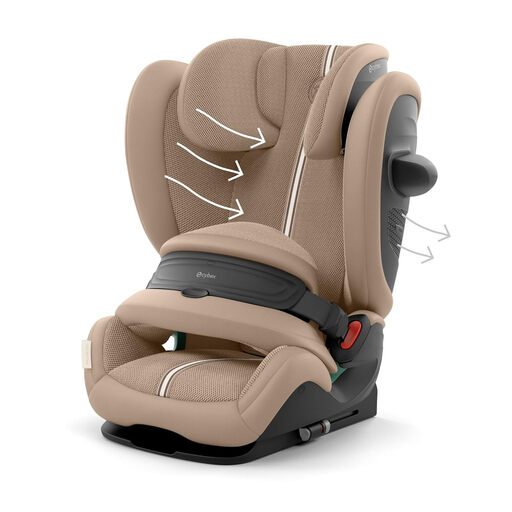
Why this model is a great fit: Designed as a convertible car seat for the period after the infant carrier (from approx. 15 months), it accompanies the child until they no longer need a car seat. It combines a long lifespan with advanced safety features.
This 2-in-1 system solves the "all-in-one" problem by using an impact shield for younger children. Later, the seat is used without the shield as a Group 2/3 high-back booster seat.
Very long lifespan of over 10 years. According to the manufacturer, the impact shield technology distributes impact forces over a large area, which can reduce stress on the neck area.
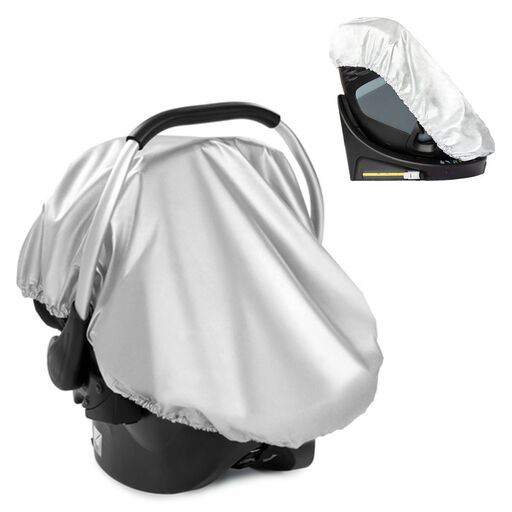
Why this accessory is a great fit: This car seat accessory solves a real-world problem: the seat getting extremely hot in the sun. It increases comfort for the child and prevents contact with hot buckles or plastic parts.
Instead of investing in a gimmick, this product addresses a genuine weakness of many car seats. It's a sensible addition to an existing, safe seat, much like a matching summer cover for a car seat.
Universal fit for all car seat groups (0/1/2/3). Easy to pull over thanks to an elastic band and can be stored compactly in the attached pouch when not in use.
We have compiled a complete, up-to-date list of products that fully meet these strict selection criteria and German safety regulations.
In Germany, children are required to use a car seat until they turn 12 years old or reach a height of 150 cm. The requirement ends as soon as one of these conditions is met.
These are two different concepts that are often related. ISOFIX is an installation system in the car that creates a rigid connection between the car seat and the vehicle's chassis. i-Size (UN R129) is a safety standard for car seats that, among other things, mandates stricter crash tests. Many i-Size seats are designed for installation with ISOFIX, but the terms are not interchangeable.
This is generally not recommended. You can never be sure if the seat has been involved in an accident. Even invisible hairline cracks in the material can drastically reduce its protective function in an emergency. Furthermore, the material degrades over time due to UV radiation and temperature fluctuations, which affects its stability. Your child's safety should be the top priority here.