
Lieferung heute & morgen

Qualitätsgarantie

Willkommens-Angebote freischalten: KOSTENLOSE Lieferung | Bis zu 80 % RABATT | Kostenlose 30-Tage-JoyPlus-Testphase
App herunterladen
A car seat for children needs to suit your child, your vehicle and how you plan to use it. Many products look similar at first glance, but can differ significantly in the height range they cover, how they are installed, which way they face and how long they can be used. And ‘grows with your child’ does not automatically mean that a seat is equally suitable from birth to the age of twelve.
Age ranges are only a guide. For an i-Size child car seat approved to UN R129, the permitted height range is the key consideration. A seat for children from 100 to 150 cm is not suitable for a toddler, even if the child’s age might seem to fit the stated range.
So always check:
A car seat with ISOFIX cannot automatically be used in the same way in every vehicle. Depending on the model, you may also need a Top Tether, support leg or three-point seat belt. Before buying, compare your vehicle’s manual with the seat’s installation instructions.
ISOFIX makes it easier to secure the seat to the designated anchorage points. However, it does not replace the correct adjustment of the headrest, harness or impact shield.
A 360-degree car seat can make it easier to get your child in and out. However, the swivel function is only useful if there is enough space in your vehicle and the seat can be used correctly in all the intended positions. A particularly soft cover or extensive recline adjustment alone says nothing about whether the seat is suitable for your child.
Look for easily accessible belt guides, washable covers and straightforward operation. In everyday use, these features often matter more than extra equipment.
For babies, you can choose a car seat from birth with a suitable newborn insert, or an approved infant carrier. A rear-facing car seat is used facing away from the direction of travel and, depending on the model, is approved for different height ranges. The exact period of use depends on the approval for that particular product.
Seats for 100 to 150 cm are commonly used for older children. A 15 to 36 kg car seat, by contrast, is based on weight; for R129 models, you should also check the stated height range. A simple booster cushion without a backrest offers less support than a seat with head and side supports, and should only be used within its stated height range.
Before buying, check:
Depending on its design, an ISOFIX booster seat may also be used with the vehicle’s three-point seat belt. ISOFIX often keeps the booster or seat in position, while the belt secures the child. Always follow the instructions and approval for the specific model.
The UN R129 or ECE R129 standard takes height and side-impact protection requirements into account, among other things. A car seat with side-impact protection may feature integrated side wings, energy-absorbing materials or a manufacturer-specific protection system. However, these terms should not be taken as a blanket guarantee.
It is important that the seat is fully approved, remains undamaged and is installed according to the instructions. After an accident, a child car seat should generally be replaced in line with the manufacturer’s guidance.
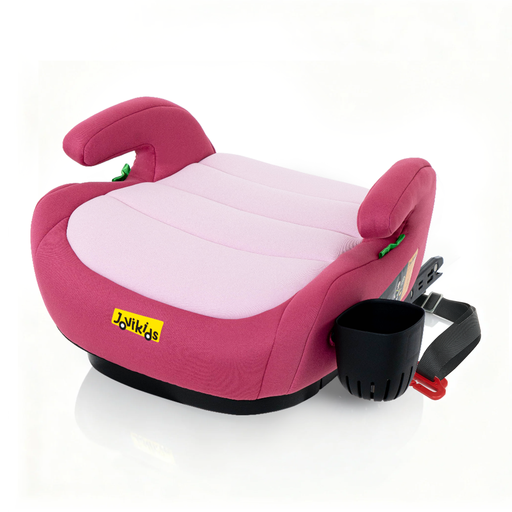
Why this product suits this profile: Suitable for children between 125 and 150 cm tall, and for families looking for a compact seat for everyday use and switching between vehicles.
The clearly stated height limit helps prevent the booster from being used too soon. ISOFIX and the supplied belt clip must be used according to the instructions.
Washable cover, ISOFIX compatibility and a stated weight of approximately 3 kg.

Why this product suits this profile: An option for parents who want to combine an integrated base, rear-facing use and a 360-degree swivel function.
The approved range of 61 to 105 cm is clearly defined. According to the product details, use from birth is only possible with a suitable insert, from 40 cm.
360-degree swivel, five recline positions, twelve headrest positions and an integrated L.S.P. system.
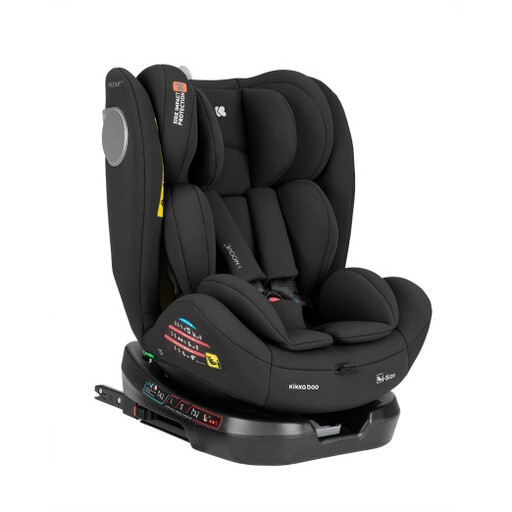
Why this product suits this profile: For families looking for a seat with a wide height range, rear-facing mode and a swivel mechanism.
The manufacturer specifies separate height ranges: 40 to 105 cm for rear-facing use and 76 to 150 cm for forward-facing use. This makes it easier to plan when the seat is suitable.
360-degree swivel function, ISOFIX with Top Tether, 24-position adjustable headrest and removable covers.
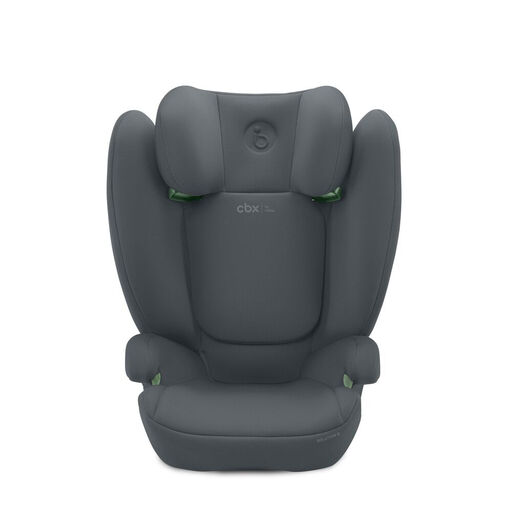
Why this product suits this profile: For children from around 100 cm tall, when you’re looking for a lightweight seat with a backrest and ISOFIX for everyday use.
This seat is not designed for smaller children. Its clearly stated approval range of 100 to 150 cm makes it easier to match the seat to your child’s height.
UN R129/04, ISOFIX, 12-position headrest, integrated L.S.P. system and machine-washable cover.
We’ve put together a complete, regularly updated list of products that fully meet these strict selection criteria and the safety regulations in force in the EU.
In Germany, this depends on the legal requirements and the child’s height. When choosing a seat for practical use, consider not only your child’s age but, above all, the seat’s approval and whether the belt fits correctly. A booster is only suitable once your child has reached the stated height range.
ISOFIX can make installation easier and provide a stable connection to the vehicle. However, it is not automatically suitable for every vehicle or seating position. A three-point seat belt routed correctly according to the instructions can also be part of an approved installation. What matters is seat compatibility, installation and securing your child correctly.
How long a seat can be used depends on your child’s height and weight, the seat’s design and the manufacturer’s guidance. A seat for 40 to 150 cm can cover several stages of development, while one for 100 to 150 cm is intended for use later on. Do not continue using a seat after an accident, if it has visible damage or once the manufacturer’s recommended period of use has passed.