
Lieferung heute & morgen

Qualitätsgarantie

Willkommens-Angebote freischalten: KOSTENLOSE Lieferung | Bis zu 80 % RABATT | Kostenlose 30-Tage-JoyPlus-Testphase
App herunterladen
Selecting the right automotive tool kit requires an analysis of technical requirements and specific use cases. Whether for routine maintenance, repairs, or seasonal tyre changes, efficiency and safety depend heavily on the tools' specifications. This article analyses the critical parameters of manual and cordless tool systems to provide a solid basis for an informed decision.
The functionality of an automotive tool is determined by its material, drive size, and performance data. An objective evaluation of these factors is crucial for practical application.
The longevity of sockets and ratchets is directly linked to the material used. Chrome Vanadium Steel (CR-V) is a commonly used alloy tool steel. The addition of chrome increases hardness and corrosion resistance, while vanadium improves toughness and wear resistance. A matte or polished chrome finish provides additional protection against rust and simplifies cleaning. For ratchets, the gearing of the mechanism is a key quality indicator: a fine-tooth mechanism (e.g., 72 teeth) allows for a minimal swing arc of just 5 degrees, which facilitates work in tight spaces.
The drive size, measured in inches, defines the connection between the ratchet and the socket and is decisive for the amount of torque that can be transferred.
For cordless tools like impact wrenches and ratchets, the maximum torque, specified in Newton-metres (Nm), is the central performance metric.
The following products have been selected based on their technical specifications and intended applications.
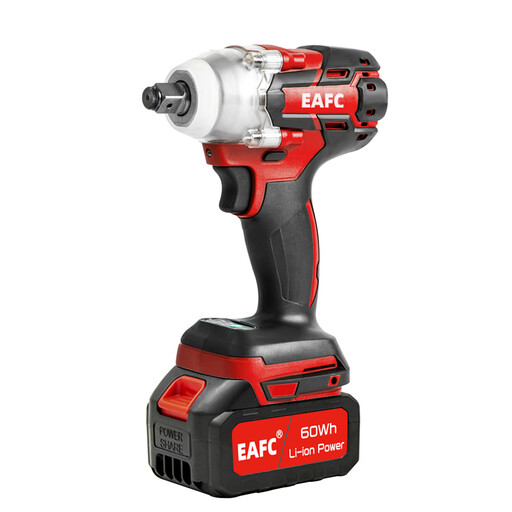
Why We Recommend It This model combines high torque with the efficiency of a brushless motor. The brushless motor operates without carbon brushes, resulting in less wear, a longer lifespan, and improved energy efficiency. The maximum torque of 200 Nm is designed for demanding tasks like loosening lug nuts.
Pros
Who It's For This device is aimed at DIY auto enthusiasts and hobby mechanics who regularly change tyres or work on chassis and engine components where high breakaway torque is required.
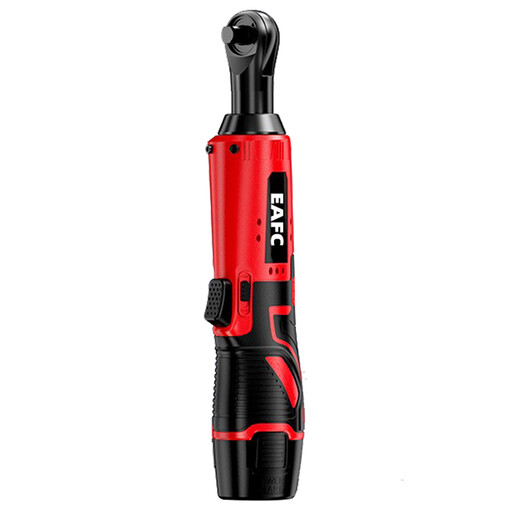
Why We Recommend It The strength of this cordless ratchet lies in its compact design. With a head just 3 cm wide and a weight of 0.78 kg, it allows access to bolts in extremely tight spaces, such as those found in engine bays or during motorcycle repairs. The 45 Nm of torque is sized for rapidly turning bolts that have already been broken loose.
Pros
Who It's For Ideal for mechanics and DIYers who frequently work in hard-to-reach areas. The tool speeds up the disassembly and assembly of components on cars, motorcycles, or even during furniture assembly.
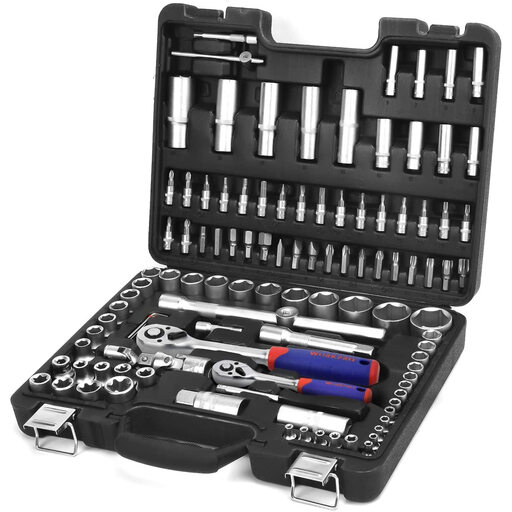
Why We Recommend It This ratchet and socket set provides a comprehensive foundational mechanical toolset. With 108 pieces, it covers the most common metric bolt sizes and includes both 1/4-inch and 1/2-inch drive tools. The chrome vanadium steel construction and fine-toothed 72-tooth ratchets meet the demands for precise and durable mechanical work.
Pros
Who It's For This automotive repair kit is a solid foundation for beginners in vehicle repair, DIY enthusiasts, and as a supplement for any workshop. It provides the necessary tools for a wide variety of maintenance and repair tasks.
Should the products presented here not exactly meet your requirements, or if you are looking for more specialised solutions, you can find a broader selection in our main category. Additional configurations of socket sets and power tools are listed there.
Explore Our Full Range of Socket Tools
1. What should a good automotive tool kit include? A basic set should include ratchets and sockets in 1/4-inch and 1/2-inch drive sizes, various extensions, a universal joint for awkward angles, spark plug sockets, and an assortment of screwdriver bits. For advanced work, torque wrenches and power tools like cordless impact wrenches or ratchets are useful additions.
2. Which socket set is best for a car? 1/4, 3/8, or 1/2 inch? That depends on the task. 1/4-inch is for small bolts in the interior and on the engine periphery. 1/2-inch is essential for high-torque jobs on wheels and suspension. 3/8-inch is a versatile middle ground and is often the primary drive size for general engine repairs. A set that combines multiple sizes offers the greatest flexibility.
3. How much torque does a cordless impact wrench need for changing a tyre? The breakaway torque is the critical factor here. Lug nuts on passenger cars are typically tightened to 110-150 Nm but can become seized due to corrosion and weather. A cordless impact wrench should therefore have a breakaway torque of at least 200 Nm to ensure reliable performance. Models with 300-500 Nm offer additional reserves. However, the final tightening must always be done with a torque wrench.