
Lieferung heute & morgen

Qualitätsgarantie

Willkommens-Angebote freischalten: KOSTENLOSE Lieferung | Bis zu 80 % RABATT | Kostenlose 30-Tage-JoyPlus-Testphase
App herunterladen
Whether it’s an oil change, tyre fitting, fault diagnosis or a small DIY car repair, the right car tools save time and reduce the risk of damaging screws, hoses or components. At the same time, tool sets and diagnostic devices differ significantly in terms of connection, load capacity and area of application.
If you only focus on the number of pieces or high torque figures, you can easily end up buying something that doesn’t suit your needs. Three common pitfalls are particularly worth noting:
For mechanical car tools, drive sizes such as 1/4 inch, 3/8 inch and 1/2 inch are crucial. A 1/4-inch ratchet handle is better suited to smaller fastenings and tight spaces, while 1/2-inch tools are used for larger bolted connections. Also check whether the sockets included cover the spanner sizes you need.
With an OBD2 diagnostic tool, the vehicle connection should not be the only criterion. OBD2/EOBD protocols, model year range, CAN-FD support, FCA AutoAuth and the coverage of individual control units can vary depending on the vehicle model. Special functions such as battery registration, DPF regeneration or electronic parking brakes must also be confirmed as vehicle-specific.
A torque wrench is set to a predetermined value and is used for controlled assembly. A ratchet or breaker bar, on the other hand, is primarily intended for loosening and tightening. The tools should not be confused when a bolted connection requires a defined tightening torque.
Pay attention to:
With a spring compressor, correct positioning is particularly important. The intended tool must not be used with an impact wrench if the manufacturer prohibits this. A protective sleeve, safety catches and a suitable receiver can assist handling, but do not replace safe working practices.
For regular DIY car repairs, it’s not just the material specification that counts. A non-slip handle, an easily accessible reversing mechanism and a compact tool box make the job easier. Water pump pliers and hose clamp pliers should be precisely adjustable and match the diameter or shape of the hose.
After use, it is advisable to:
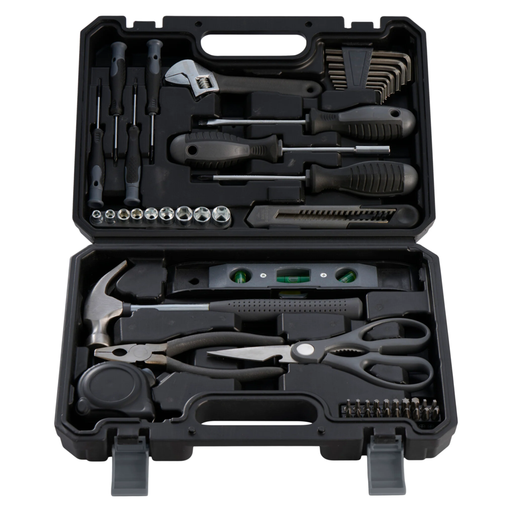
Why this product suits the profile: The 57-piece car tool set covers basic assembly, household and repair tasks and is suitable for users looking for a compact starter kit.
The included tools and sizes are clearly listed. This allows you to check before buying whether the screwdrivers, pliers, bits and 1/4-inch sockets match your requirements.
57 pieces, 1.9 kg net weight and a compact basic set for general DIY tasks.
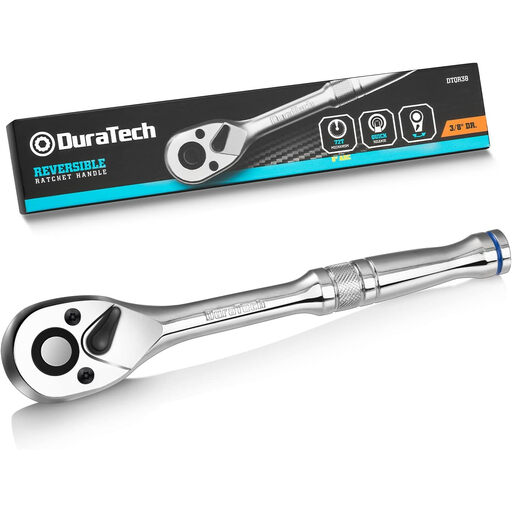
Why this product suits the profile: The handle offers three drive sizes and is suitable for users who want to cover different socket sets with one flexible tool.
The maximum stated torques are separated by drive size. This makes selection easier and prevents a small drive from being used for unsuitable loads.
1/4, 3/8 and 1/2 inch receivers plus 72 teeth with a stated swing angle of 5 degrees.
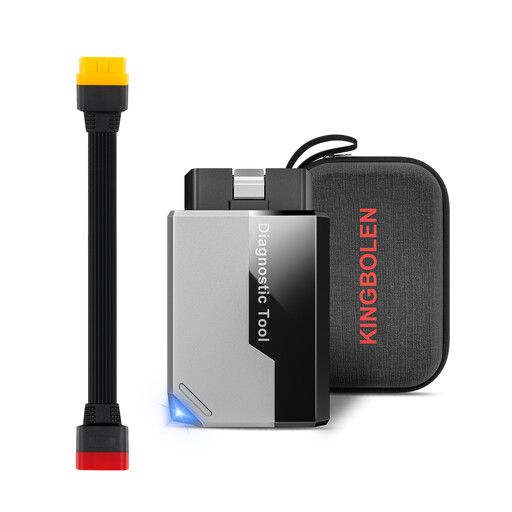
Why this product suits the profile: For mobile car mechanics, private car owners and small workshops, the Bluetooth 5.2 connection with Android or iOS devices is practical.
The product information explicitly states that coverage and special functions vary by model and year. A compatibility check before purchase therefore remains necessary.
According to the product description, supports full system diagnosis, bidirectional tests and 15 maintenance functions; Bluetooth range up to 10 m.
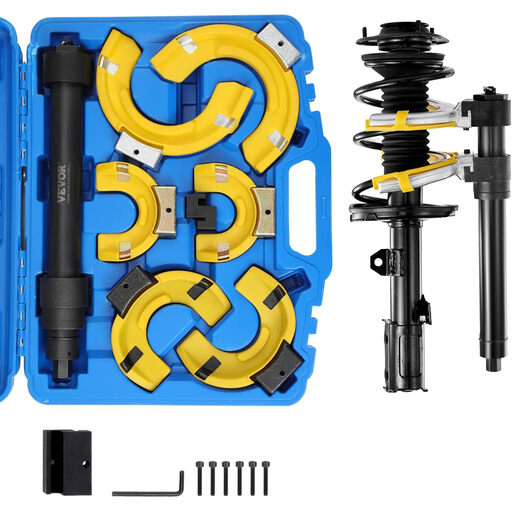
Why this product suits the profile: The tool is aimed at users who regularly work on struts or suspension components and need a dedicated spring compressor for the job.
Protective sleeves, safety catches and the stated load capacity of 4,500 kg are listed as specific features. The thread should be lubricated before use; an impact wrench is not intended according to the description.
Described for motorcycles, cars and SUVs; suitable 22 mm or 7/8 inch receiver according to product information.
We have put together a complete, regularly updated list of products that fully meet these strict selection criteria and the safety regulations in force in the EU.
For simple maintenance tasks, a suitable socket set, a ratchet, screwdrivers, pliers, Allen keys and a torque wrench are sensible. A hose clamp pliers and water pump pliers can also be useful additions. For brakes, suspension and electrical systems, appropriate specialist tools are required.
An OBD2 diagnostic tool can read fault codes and, depending on the model, display live data or additional control units. Before buying, you should check the vehicle make, model, year, protocol and desired special functions. Reading a code does not replace a professional fault cause or safety check.
The lifespan depends on the material, load, care and correct application. Tools should not be overloaded, misused as levers or used with unsuitable receivers. For safety-critical work on brakes, steering and suspension, damaged parts must be replaced immediately.