The right machine depends on how much space you have around it for milk, accessories and each step of the process. A slim portafilter machine or a bean-to-cup machine with a steam wand lets you prepare the milk at the machine, while a capsule machine such as the De’Longhi Essenza Mini EN85.B has no milk system, according to De’Longhi, so you’ll need a separate solution. When choosing, consider your whole coffee-making station, how much you want to do by hand and how easy the machine is to clean – not just its width. If you’re considering a specific mains-powered appliance for the German market, you should also check its required labelling and the relevant conformity information.
Who are the different brewing methods best suited to?
Latte fans with limited worktop space
You want to make espresso and milk foam, and need to fit the machine, milk jug and room to use it all in one space. De’Longhi and Krups describe certain models as having slim designs, but you’ll still need extra room for accessories.
Fans of quick, single servings
You want to make espresso in just a few steps and are checking whether there’s room for a separate milk frother beside a compact capsule machine. De’Longhi says the EN85.B has no milk system; Nespresso lists the Aeroccino as a separate milk solution.
Bean-to-cup and portafilter machine users
You want more control over how your coffee is made and are weighing up whether an integrated grinder or a manual portafilter routine better suits your space and daily life. Sage, Krups and De’Longhi offer different approaches, with steam wands or built-in grinders.
What should you consider when buying?
Slim portafilter machine with a steam wand
A good fit if: you want to prepare espresso and milk yourself, and have room for a jug and, if needed, a grinder.
The trade-off: grinding, tamping and frothing the milk all take hands-on effort. A narrow machine doesn’t necessarily mean you’ll have enough room for the whole process.
Capsule machine with a separate milk frother
A good fit if: quick espresso servings matter more to you than choosing whole beans, and you have room for a second appliance on the worktop.
The trade-off: the machine and frother need separate space. The dimensions of individual Essenza Mini variants and bundles aren’t necessarily the same.
Bean-to-cup machine with a grinder and steam wand
A good fit if: you want to use coffee beans but don’t want a separate grinder on the worktop. Krups lists an integrated grinder and steam wand for the Coffee Crush Experience SA403B.
The trade-off: you’ll still prepare the milk by hand, and you’ll need room to fill the machine and empty the coffee grounds.
Bean-to-cup machine with an integrated milk system
A good fit if: you prefer milk-based drinks with as few manual preparation steps as possible.
The trade-off: check the space needed, including for the milk system, and the cleaning routine for the specific model. The Melitta Avanza F270-100, for example, is listed as requiring daily cleaning of its milk system.
| Priority |
What to check when buying |
Who should pay particular attention? |
| Space for the whole preparation process |
Measure the width, depth, height, access to the water tank, clearance beneath the spout and the space needed for all the parts together. |
If I need to fit the machine, a jug and room to use it all on a small worktop, the whole latte-making station matters to me. Around 33% of consumers would make space their top buying priority. |
| Hot milk and foam |
Check whether you need a steam wand, an integrated milk system or a separate frother; remember that syrup is a separate ingredient. |
For my caramel latte, I want to know how the milk and foam are made before choosing a machine. Around 27% of consumers would put milk preparation first. |
| Fewer preparation steps |
Consider the process from espresso to milk and adding the syrup, rather than just comparing the number of drink buttons. |
If I want as few steps as possible in my daily routine, I look at what the machine actually does for me. Around 20% of consumers would prioritise a straightforward process above all. |
| Control over the beans and espresso |
Consider whether you already have a grinder, whether you want to use beans or capsules, and whether you’re happy to tamp the coffee by hand. |
If I want to choose my own coffee and how it’s prepared, I also need room for a grinder or portafilter accessories. Around 13% of consumers would put control over their coffee and preparation first. |
| Cleaning and ongoing effort |
Factor in the instructions for cleaning milk components and descaling, as well as the need to buy capsules or beans. |
If I use my machine regularly, I want to know what cleaning and maintenance it involves. Around 7% of consumers would make maintenance their top buying priority. |
Pitfalls to avoid when you have limited worktop space
-
Measuring only the machine’s width
A milk frother, jug or grinder can take up extra room. You’ll also need enough clear space to fill and operate the machine.
Try out the whole process on your available worktop, or measure the space you’ll need with a tape measure.
A separate frother, milk jug or grinder may need its own space.
-
Assuming an espresso button makes a ready-made caramel latte
The De’Longhi Essenza Mini EN85.B has no milk system, according to De’Longhi. A Nespresso recipe adds the caramel syrup directly to the glass and prepares the milk separately.
Before choosing a machine, check separately how you’ll add the espresso, milk and syrup to your drink.
Depending on how you prepare your drink, you may also need a milk frother, milk and caramel syrup.
-
Expecting effortless milk drinks with no cleaning
Milk frothers, steam wands and brewing components all need maintenance. Philips describes the Series 2200 as having a removable brew group and a two-part milk frother.
Check the cleaning instructions for the specific model against your daily routine.
Brands to consider
De’Longhi
The Dedica Style EC685.W EX:4 is a slim portafilter machine with manual milk preparation; these details apply to this model.
- De’Longhi lists the model as around 15 cm wide, with clearance for a glass up to 12 cm tall when the drip tray is removed.
- The machine’s width doesn’t include room for a jug or a grinder, if you need one.
Nespresso
The Essenza Mini EN85.B makes espresso; you’ll need a separate solution for milk with this variant.
- De’Longhi lists the EN85.B as having no milk system; Nespresso describes the Aeroccino 3 as a separate appliance for frothing or heating milk.
- A separate frother needs extra space and a power supply. The dimensions of a bundle don’t necessarily apply to every Essenza Mini variant.
Krups
The Coffee Crush Experience SA403B combines an integrated grinder with manual milk preparation.
- Krups lists the model as 15 cm wide, with a grinder and steam wand.
- The steam wand means milk preparation remains a separate manual step; extraction details are based on the manufacturer’s information.
Sage
The Bambino BES450 is a portafilter machine for people who want to prepare their own espresso and milk.
- Sage lists a 54-mm portafilter and a manual steam wand.
- Remember to allow for grinding the beans and the other steps in the process when planning where to put it.
Philips
The Series 2200 EP2223/40 is a bean-to-cup machine with a classic milk frother; these details apply to the product line described.
- Philips describes a two-part milk frother and a removable brew group.
- The space you need also depends on how easy you need it to be to access the milk frother and brew group in everyday use.
Espresso machines for caramel lattes on Joybuy
The options below include espresso machines with manual milk preparation, as well as a bean-to-cup machine with an integrated milk system. New mains-powered appliances with an AC voltage of 50 to 1,000 V sold on the German market are subject to the relevant EU requirements; EUR-Lex and Your Europe explain the requirements and CE marking. Check the labelling and relevant conformity information for the specific appliance; CE is not an independent quality mark.
 No product image available
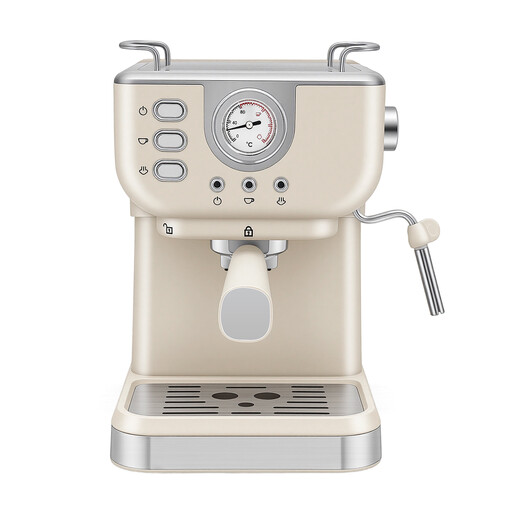
Semi-automatic espresso machine with milk-frothing function
A good choice if you want to make espresso and milk drinks and are happy to handle some of the process yourself.
It’s listed with a 1.5-l water tank and dimensions of 19.5 × 26 × 28 cm. Allow extra room to operate it and for any accessories you need.
View on Joybuy
 No product image available
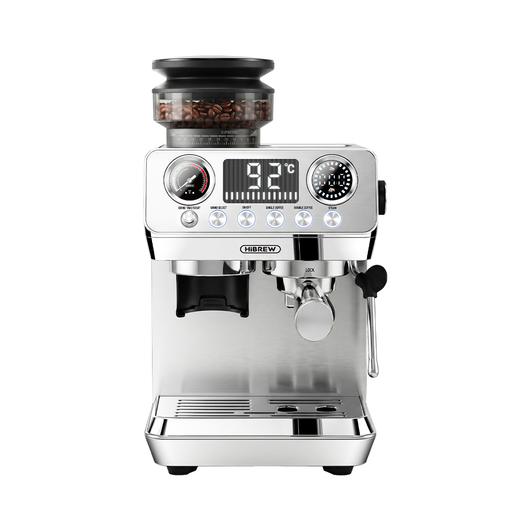
HiBREW H7 Lite
A good choice if you want to make espresso with freshly ground coffee and froth milk using a steam wand.
The model is described as having an integrated grinder with 44 grind settings.
View on Joybuy
 No product image available
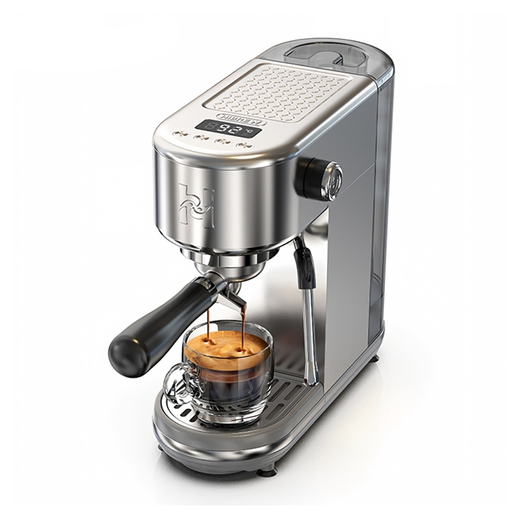
HiBREW H10B Lite
A good choice if you want to make espresso and milk drinks and adjust certain brewing settings.
Brewing time, brewing temperature and coffee quantity are listed as adjustable; a steam function is included for milk.
View on Joybuy
 No product image available
IAGREEA 20Bar espresso machine
A good choice if you want to make espresso and milk drinks using an adjustable steam wand.
It’s listed with a removable 1.1-l water tank and dimensions of 11.2 × 5.1 inches for width and depth.
View on Joybuy
 No product image available
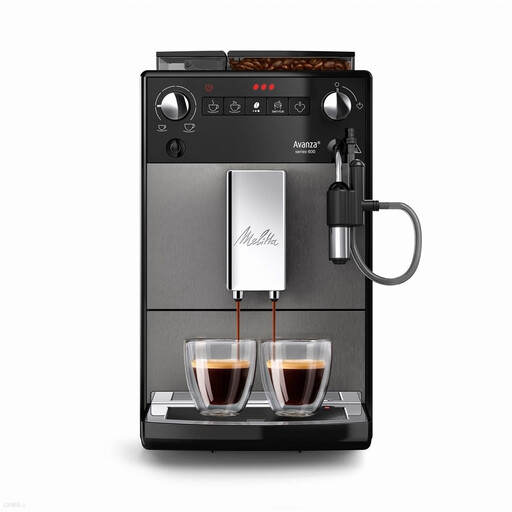
Melitta Avanza F270-100
A good choice if you’re looking for a bean-to-cup machine with an integrated milk system and fewer manual preparation steps.
It’s listed as 20 cm wide. The milk system is described as needing daily cleaning, so factor this into your routine.
View on Joybuy
Frequently asked questions
Do I need a machine with a syrup function to make a caramel latte?
No, you can add the syrup to the glass separately. A Nespresso recipe adds caramel syrup to the glass and prepares the milk foam separately, so focus on how you want to make the espresso and milk.
Will a tall latte glass fit under a slim portafilter machine?
Not necessarily – a narrow machine doesn’t guarantee enough clearance. De’Longhi lists the Dedica Style EC685.W EX:4 as accommodating a glass up to 12 cm tall when the drip tray is removed; compare this with your glass.
How often do I need to descale my machine?
It depends on the model and your water. For the Dedica Arte EC885.M, De’Longhi recommends testing your local water hardness and adjusting the machine’s settings accordingly. Always follow the instructions and descaling prompt for your specific model.
Is a manufacturer’s guarantee the same as your statutory rights?
No. In Germany, Verbraucherzentrale distinguishes between the statutory rights you have against the seller if a product is faulty and an additional voluntary manufacturer’s guarantee, which has its own terms. If you make a complaint, repair or replacement may be the first remedy to consider.
What should I check for a mains-powered appliance sold in the German market?
Check the labelling and conformity information for the specific appliance. Directive 2014/35/EU covers electrical equipment within its voltage range. Your Europe explains that CE marking is the manufacturer’s declaration that the product complies with relevant EU rules; it is not an independent quality mark.


