
Lieferung heute & morgen

Qualitätsgarantie

Willkommens-Angebote freischalten: KOSTENLOSE Lieferung | Bis zu 80 % RABATT | Kostenlose 30-Tage-JoyPlus-Testphase
App herunterladen
For many home cooks, achieving an authentic stir-fry with the characteristic "wok hei" aroma is the ultimate goal. A carbon steel wok is considered the classic tool for this job. However, the market is flooded with models whose marketing promises often obscure more than they reveal. Before you make a decision, it's crucial to understand the most common pitfalls that can lead to a bad purchase.
Many buyers only discover at home that their new wok wobbles on the induction cooktop, the supposed "non-stick" coating flakes off after a few weeks, or the necessary daily maintenance is unrealistic. This guide will help you bypass these problems and find a model that truly fits your kitchen and cooking style.
To avoid the pitfalls mentioned above, you should check three key characteristics before buying. These will determine whether the wok will work in your kitchen and bring you joy for years to come.
The most important decision depends on your cooktop.
Carbon steel is the material of choice because it conducts and retains heat quickly—a prerequisite for high-temperature stir-frying. Make sure you choose an uncoated wok. Models that come with a protective layer (e.g., beeswax) must be thoroughly cleaned before the first use. The true non-stick property is only created by seasoning with oil, which forms a dark, smooth patina. This natural layer improves with every use.
Additional features can make daily cooking significantly easier.
Here are some recommendations tailored to different needs and kitchen setups.
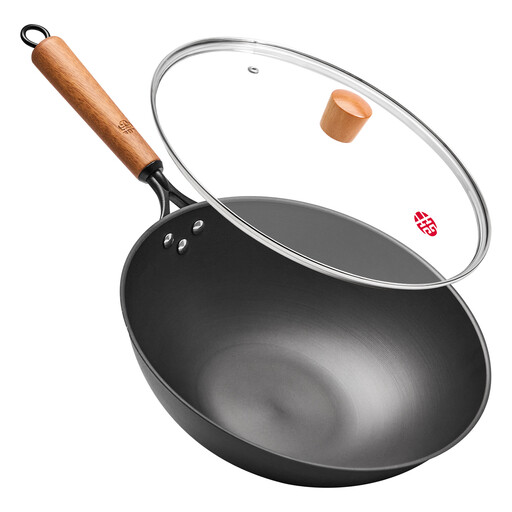
Why This Fits Their Persona: Ideal for cooks with modern kitchens who value functionality and easy storage. The flat bottom ensures perfect contact on induction and ceramic cooktops, while the detachable handle makes it easy to store in kitchen cabinets.
The stable, 14 cm diameter flat bottom prevents wobbling on flat cooktops. The uncoated, nitrided surface is designed for developing a true patina, not for a short-lived chemical coating.
The detachable wooden handle simplifies storage and allows for use in the oven. A matching glass lid and a wok spatula are already included in the set.
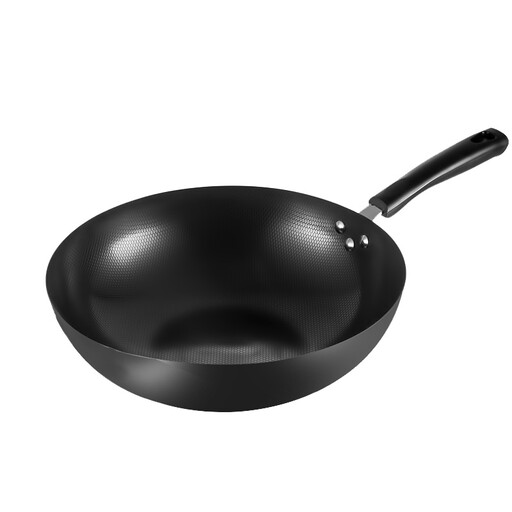
Why This Fits Their Persona: Perfect for anyone wanting to try out the world of carbon steel woks without making a large initial investment. This model offers the essential features for authentic cooking on modern cooktops.
This model is an honest, uncoated wok pan designed to be seasoned. It avoids the trap of short-lived non-stick coatings. The flat bottom ensures compatibility with induction and ceramic cooktops.
Offers the core benefits of carbon steel—fast heat response and the ability to develop a patina—in an accessible format. The 30 cm size is ideal for 2-3 people.
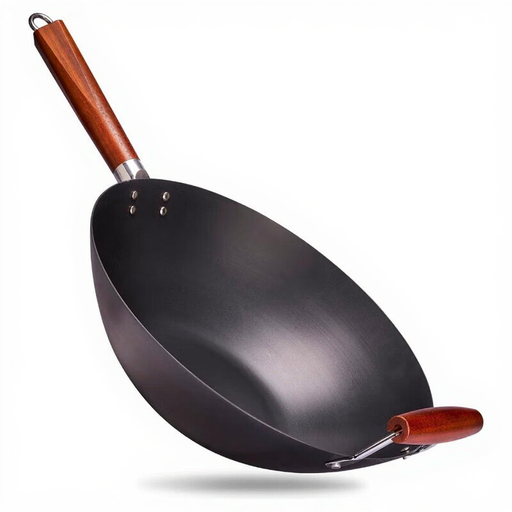
Why This Fits Their Persona: For cooks who prepare large quantities and appreciate the traditional approach. With a 35 cm diameter, this wok offers enough space to toss ingredients vigorously without anything spilling over the edge—ideal for family meals or cooking for guests.
This model focuses on the essentials: a large, robust cooking vessel made of chemical-free carbon steel. It forgoes unnecessary features and provides the foundation for authentic cooking results.
The large 35 cm diameter provides maximum surface area for searing and tossing, which is crucial for developing "wok hei." The simple steel handles make it extremely sturdy and durable.
We have compiled a complete, up-to-date list of products that fully meet these strict selection criteria and safety regulations.
Yes, seasoning is a crucial step. This process creates a natural, durable non-stick layer (patina) by polymerizing oil into the pores of the steel at high temperature. Without this step, food would stick, and the wok would be prone to rust. Most manufacturers provide instructions for this process.
Carbon steel is essentially iron and will rust when exposed to moisture. The most common causes are air-drying, cleaning in the dishwasher, or using harsh detergents that strip away the protective oil layer. To prevent rust, the wok should be immediately and thoroughly dried by hand on the stove over low heat after each cleaning, and then thinly coated with cooking oil. Light surface rust can be removed with a steel sponge, but the wok must be re-seasoned afterwards.
For home use on modern electric, ceramic, or induction cooktops, a flat bottom is not just practical but necessary. While a round bottom on a gas stove allows for slightly better heat distribution up the sides, a high-quality flat-bottom wok achieves excellent results on a flat cooktop. The high thermal conductivity of carbon steel ensures that the side walls also get hot quickly, enabling proper stir-frying.