
Lieferung heute & morgen

Qualitätsgarantie

Willkommens-Angebote freischalten: KOSTENLOSE Lieferung | Bis zu 80 % RABATT | Kostenlose 30-Tage-JoyPlus-Testphase
App herunterladen
There’s a wide choice of card games for children and families. Packaging often features claims such as ‘quick’, ‘for the whole family’ or ‘great fun’. But these claims alone aren’t enough to help you choose the right game. What matters are the specific details: recommended age, number of players, playing time, complexity of the rules and format.
A game recommended for ages 4 and up won’t necessarily suit every child in that age group. Reaction games where everyone turns over a card at the same time, complex card text, or tasks involving reading and logical thinking can be too challenging for younger children. Older children, on the other hand, can quickly lose interest if the rules are oversimplified.
Some games work particularly well with two players, while others need at least three. So check whether the game you’re interested in is designed for 2 to 6 players, a larger group or just a small gathering. The age differences within your family also matter.
A stated playing time of 15 minutes usually refers to one round. Strategy games for children and more involved family games can take considerably longer. For travel, restaurant visits or a quick evening game, fast-paced card games with a clear turn order are usually a better choice than games with lots of phases.
The age recommendation is a useful guide. Small parts such as chips, dice or cards can pose a choking risk for children under 3. Even with games recommended for ages 4 or 5 and up, an adult should explain the rules first and check the components.
Also check whether children need to be able to read. Puzzle games for children aged 8 and over often require someone to read the stories aloud. An adult can take on this role during a game night with younger children.
Games for 2 to 6 players are a flexible choice for families with several children. If you regularly have larger groups over, look for a game designed for the right number of players. A two-player game may suit siblings, while a four-player reaction game could be a better fit for a children’s party.
Compact card games take up little space and make ideal travel games for train journeys, holidays or visits to grandparents. Check the packaging dimensions and what’s included. Paper or cardboard cards should be stored in a dry place and not bent. If a game has lots of cards, keeping them neatly organised helps prevent anything from going missing.
The game mechanics should also suit the occasion:
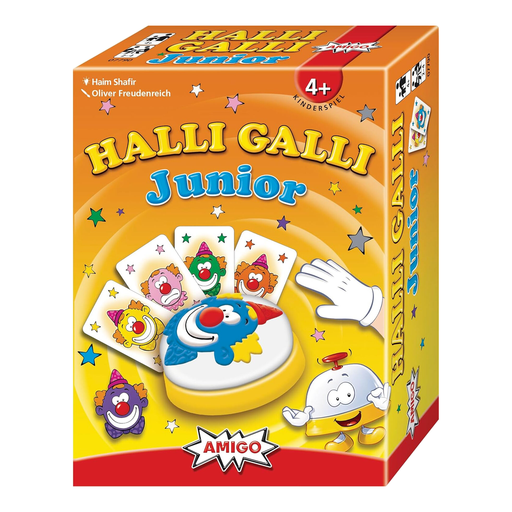
Why this product suits this family type: The simplified rules and age recommendation of 4 and up make it easier for younger children to get started. It’s designed for 2 to 4 players and is ideal for short games with parents, siblings or grandparents.
The product details specify the age recommendation, number of players and cardboard material. This makes it easier to assess whether the game is suitable than relying on general marketing claims.
Recommended for ages 4 and up, for 2 to 4 players, with simple rules that make it easy to get started.
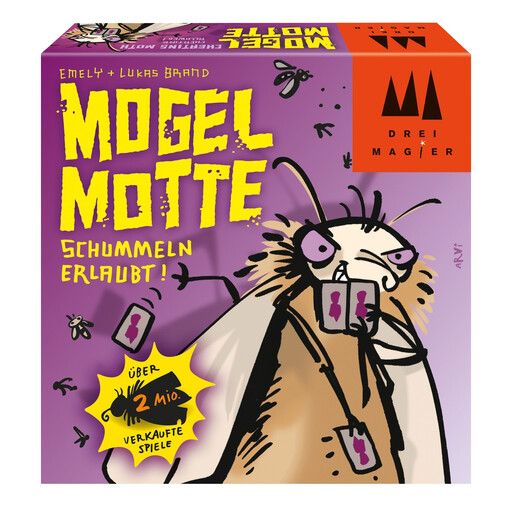
Why this product suits this family type: Recommended for ages 7 and up, this card game combines discarding, bluffing and a unique cheating mechanic. It’s for 2 to 6 players, making it a good fit for family games where children and adults play together.
The compact packaging measures 11 × 11 × 3,5 cm, and the number of players is clearly stated, making it easy to plan for game nights and trips out.
For 2 to 6 players, recommended for ages 7 and up, with bluffing and discarding mechanics and no batteries required.
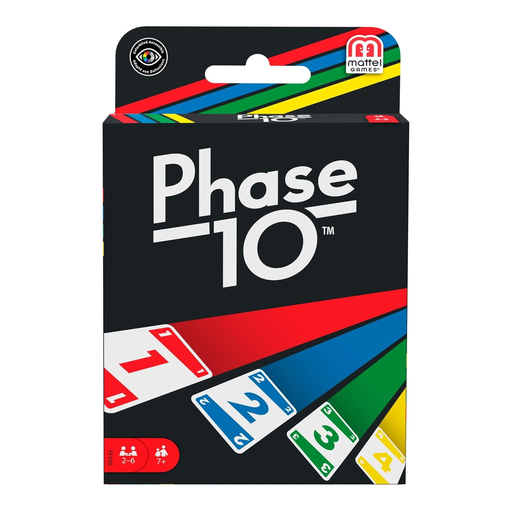
Why this product suits this family type: The ten consecutive phases offer more tactical depth than simple matching games. It’s a good fit for families and young people aged 7 and over who enjoy longer games with 2 to 6 players.
The approximate playing time of 60 to 90 minutes is clearly stated, making it easier to decide whether the game is right for your planned game night.
Ten phases, wild and skip cards, and suitable for 2 to 6 players.
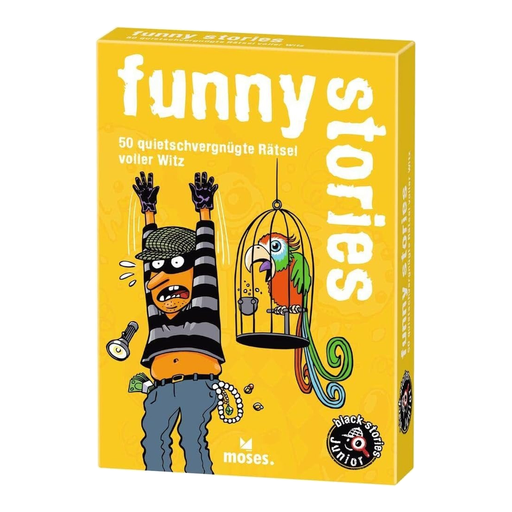
Why this product suits this family type: The 50 puzzle stories are suitable for ages 8 and up, take up little space and can be played cooperatively or competitively. The format is ideal for trips, children’s birthday parties and relaxed family get-togethers.
The box measures 9,4 × 13,3 × 2,4 cm. That makes it compact, with no lengthy set-up or extra playing space needed.
50 cards, yes-or-no questions, a cooperative way to play and a handy travel-friendly format.
We’ve put together a complete, regularly updated list of products that meet these strict selection criteria and fully comply with the safety regulations in force in the EU.
For children aged 4 and over, games with simple rules, easy-to-recognise pictures and short rounds are usually a good choice. According to the product details, Halli Galli Junior is designed for children aged 4 and over and for 2 to 4 players. However, whether it’s right for your child will also depend on their attention span, language skills and experience.
Mogel Motte and Phase 10 are both listed for 2 to 6 players. Mogel Motte focuses more on bluffing and quick discards, while Phase 10 combines several consecutive challenges. For larger groups of up to 10, UNO is an option; the product details give an age recommendation of 7 and up.
Look for small packaging, few loose components and minimal set-up. Black Stories Junior, Mogel Motte and other compact card games are easier to fit in a rucksack than large board games. Puzzle and word games are also practical for train journeys or waiting around, as they usually don’t need much playing space.