Carnival-goers keeping an eye on portions
If you want to take a bar with you for a long day, compare the kcal per bar. You can use the figures per 100 g to compare bars of different sizes, but you’ll usually eat a specific portion.


When choosing a cereal bar for Carnival, the energy in the bar you’ll actually eat matters more than the figure per 100 g alone. Compare the portion size and sugar content, and check the ingredients and allergens even on varieties labelled ‘no added sugar’.
If you want to take a bar with you for a long day, compare the kcal per bar. You can use the figures per 100 g to compare bars of different sizes, but you’ll usually eat a specific portion.
If you’re looking for a chocolate cereal bar and keeping an eye on sugar, check the ingredients list as well as the ‘of which sugars’ figure. A label such as ‘no added sugar’ doesn’t tell you how much energy it contains.
If certain ingredients aren’t suitable for you, check the labelling on the current pack of the variety you choose. Cereal bars may contain allergens such as gluten-containing cereals, milk, peanuts or tree nuts.
Start by comparing the portion you actually plan to eat. Then check the sugar content, ingredients list and pack format to choose a bar for Carnival.
| What to look for | What to check | Who it matters most to |
|---|---|---|
| Calories per bar | Compare the kcal per whole bar and its weight. If the information is only given per 100 g, take the weight of each bar into account. | I want to eat a whole bar while I’m out and know how much energy that portion provides. Around 36% of consumers prioritise comparing portions in this way. |
| Sugar and sweeteners | Check the ‘of which sugars’ figure per bar and the ingredients list, especially if the label says ‘no added sugar’. | I like chocolate flavour, but I also want to know how much sugar is in the portion I choose. This is a priority for around 29% of consumers. |
| Allergens and ingredients | Check the highlighted allergens and any ‘may contain’ warnings on the current pack. | I’ll only consider a variety if its ingredients meet my requirements. This check comes first for around 21% of consumers. |
| Pack and shopping | Check the weight per bar, pack format and exact variety before the event. | I want to find a suitable bar in good time, rather than rely on a changing promotional range. Around 14% of consumers prioritise planning their shopping this way. |
The label alone doesn’t tell you how many kcal a bar contains. The CORNY free Chocolate listed by REWE also contains maltitol syrup in its ingredients and has 8.4 g of polyols per 20 g portion.
Compare the energy and sugar per bar, and read the ingredients list rather than relying on the label alone.
Comparing products per 100 g highlights differences between them, but if bars are different sizes, it doesn’t automatically reflect the portion you’ll eat.
Compare the kcal per bar. REWE lists 68 kcal per 20 g bar for CORNY free Chocolate and 108 kcal per 25 g bar for CORNY Chocolate.
A small portion doesn’t make the ingredients any less important. Depending on the variety, it may contain milk, gluten-containing cereals or peanuts, among other ingredients.
If you have allergies, check the ingredients and ‘may contain’ warnings on the current pack of the specific variety.
ALDI Nord labels the listed GOLDEN BRIDGE cereal bars as promotional products, while EDEKA notes that its product information may differ from the packaging.
Check the variety and pack details when you shop, and buy the bar you want before the event.
The chocolate cereal bars listed differ in portion size, energy and sugar content.
EDEKA lists both a classic chocolate cereal bar and a chocolate variety with no added sugar.
ALDI Nord lists several cereal bar varieties, including chocolate and chocolate with no added sugar.
This selection includes chocolate cereal bars in 20 g portions, larger oat bars and a cereal bar with dates. For Carnival, compare the nutritional information per whole bar and the ingredients of the specific variety you choose.
 No image available
If you want to compare a 20 g portion with another bar, use the kcal for the whole bar. Also check the ingredients and allergen labelling for this variety.
 No image available
For a small snack on the go, you can compare the energy per 20 g bar with other varieties. The ‘no added sugar’ label doesn’t replace checking the nutritional information and ingredients.
 No image available
If you’re planning a 50 g portion instead of a 20 g bar, compare the kcal per whole bar rather than just per 100 g. For the peanut butter variety, checking the current allergen labelling is especially important.
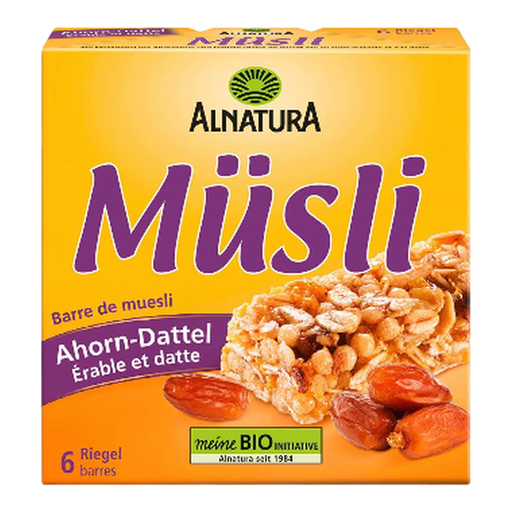 No image available
The 25 g portion can be compared with other individual bars. If you want to keep an eye on sugar as well as calories, check the nutritional information and ingredients for this variety.
No. What matters for your portion is the energy in the whole bar. The label also doesn’t replace checking the ingredients list, which may include sweeteners, for example.
Both figures serve different purposes: per 100 g lets you compare products of different sizes, while per bar helps you estimate the energy in the portion you plan to eat. Germany’s Food Federation explains that nutritional information per 100 g makes it possible to compare food products.
Check the ingredients list and ‘may contain’ warnings for the specific variety. Depending on the recipe, gluten-containing cereals, milk, peanuts or tree nuts may be relevant; you can’t tell whether a bar is suitable from its flavour or brand name alone.
Check the storage instructions and best-before date on the pack. Germany’s Food Federation explains that the best-before date applies to unopened food stored appropriately; it isn’t an automatic throw-away date.