Speakers using a stage sound system
If you’ll be speaking from a fixed position and want to record your speech at the same time, the microphone needs to work with your mixer or recorder and the signal chain you already have.


For a long carnival speech, a wired XLR handheld microphone is a good choice if you’ll be staying on stage and have a suitable recording setup. At a fixed computer setup, a USB microphone is the more straightforward option. If you want to move around or keep your hands free, consider a body-worn wireless system. Be sure to check the battery, wireless connection and whether local recording is enabled. Test the complete setup with a recording of the planned length.
If you’ll be speaking from a fixed position and want to record your speech at the same time, the microphone needs to work with your mixer or recorder and the signal chain you already have.
If you want to keep your hands free or move around while speaking, you’ll need a suitable way to secure the microphone and a recording setup that can handle the full length of your take.
At a fixed recording setup, a USB microphone can make connecting everything simpler. Make sure your computer recording and monitoring work with your setup.
A good choice if: you’ll be staying at the lectern or holding the microphone, and you have a compatible XLR input.
Consider: You’ll also need a suitable signal chain to record. Rehearse your cable routing, speaking distance and position relative to the speakers.
A good choice if: you’ll be speaking at a computer and don’t want to set up an XLR recording chain. The RØDE PodMic USB offers USB-C and XLR; the Audio-Technica AT2040USB is a USB-C option with a headphone socket.
Consider: A fixed position limits how much you can move around. A test recording will show whether the mounting, levels and computer recording all work as they should.
A good choice if: you want to move freely or keep your hands free. The RØDE Wireless PRO offers transmitter recording, which needs to be enabled for a local backup.
Consider: Wireless connectivity and power are additional potential points of failure. RØDE’s quoted recording time of over 40 hours refers to the internal recording storage per transmitter, not battery life.
| What matters when buying | What to check | Who is it important to? |
|---|---|---|
| Speech clarity | Test the polar pattern, microphone position and complete setup where you’ll be speaking. | When speaking to an audience, I want my voice to stay centre stage rather than getting lost in the room’s acoustics. Around 31% of consumers put clarity first. |
| Recording reliability | Test a recording of the planned length. With wireless systems, also check the battery level and that transmitter recording is enabled. | If I only have one chance to give the full speech, I don’t want to risk a flat battery or a backup recording that hasn’t started. Around 25% of consumers prioritise reliable long recordings. |
| Freedom to move | Check the mounting, contact with clothing and wireless performance at the venue. | If I gesture or move around while speaking, I want to keep my hands free. Around 25% of consumers put freedom of movement first. |
| Computer connection | Check that a direct USB-C connection or XLR input is compatible with your recording device; test the headphone socket and recording while it’s running. | At a fixed desk, I want to keep connections simple and monitor the recording as it happens. Around 19% of consumers give most weight to a straightforward computer connection. |
RØDE quotes over 40 hours of internal storage per transmitter for the Wireless PRO. This isn’t a figure for battery life: for the relevant wireless devices, the manufacturer quotes up to 7 hours, although actual performance may vary.
Compare your planned recording length separately against available storage and battery life, and test your setup before the event.
The Shure SM58 and Sennheiser e 835 provide a microphone signal, but they don’t record a monologue by themselves.
Before you buy, check the entire signal chain through to a saved file that you can play back.
Depending on your setup, you may also need a cable, a compatible XLR recording device or a mount.
RØDE notes that transmitter recording needs to be enabled on the Wireless PRO to create a local backup file.
Record a short test file before your speech and check that it plays back.
The SM58 is a wired dynamic cardioid option for a monologue recorded through an existing stage or recording setup.
The e 835 is a dynamic XLR stage microphone for speech and singing, whether you’re at a fixed lectern or holding it in your hand.
The PodMic USB is designed for a fixed voice-recording setup; the Wireless PRO is a separate option for body-worn wireless recording.
The AT2040USB is a dynamic USB-C microphone for voice recording at a fixed computer setup.
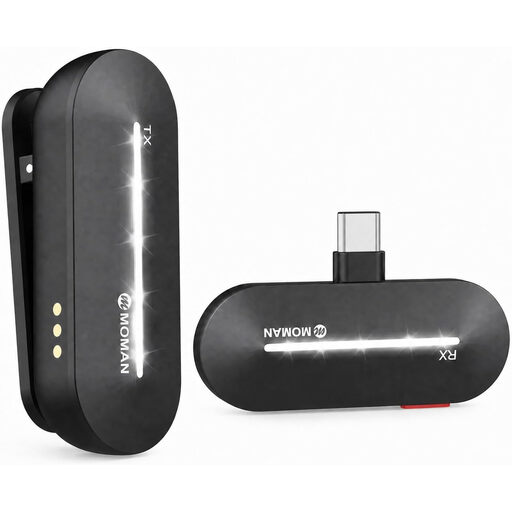
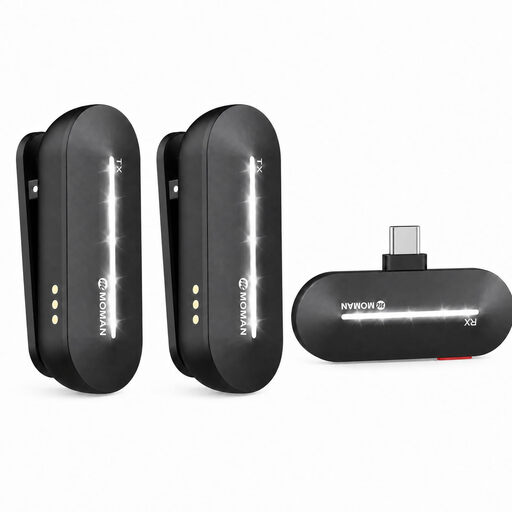
The following Joybuy products are wireless lavalier microphones with USB-C receivers for mobile voice recording.
 No image available
For mobile voice recording with a clip-on transmitter; a compatible USB-C device is required for recording.
USB-C, 1TX+1RX, 150m range.
 No image available
For mobile voice recording when you need two transmitters; the receiver requires a compatible USB-C device.
USB-C, 2TX+1RX, 150m range.
No. The Shure SM58 and Sennheiser e 835 are microphones, not standalone recorders. To save a recording, you’ll need a suitable signal chain, such as a compatible mixer or recording device. Test it with a practice recording.
Charge the components and test the connection and recording for the planned length of time. RØDE specifically notes that transmitter recording must be enabled on the Wireless PRO to create a local backup; actual battery life may differ from the quoted figure.
Not every device can be used on every frequency without registration. The Federal Network Agency (Bundesnetzagentur) permits use without registration only within the applicable general frequency allocation and subject to its technical and operational conditions. The April 2026 general allocation, Vfg. 37/2026, replaces the earlier allocations listed in it. Check the frequency band and the current conditions for your specific set.
Under section 201 of the German Criminal Code (StGB), recording another person’s words spoken in private without authorisation is a criminal offence. Whether this applies to a particular recording depends, among other things, on what is captured and whether it was spoken in private. This does not mean that recording your own speech is always prohibited or always permitted.
With an XLR microphone, you may need a compatible recording device or mixer, and possibly a cable or mount, depending on your setup. With a wireless system, check that the receiver works with your recording device and that you have the mounting accessories you need.