
Lieferung heute & morgen

Qualitätsgarantie

Willkommens-Angebote freischalten: KOSTENLOSE Lieferung | Bis zu 80 % RABATT | Kostenlose 30-Tage-JoyPlus-Testphase
App herunterladen
A carpet cleaner with spray, brush and suction functions can tackle stains on carpets, sofas, stairs and car seats. However, a high wattage or Pascal rating alone doesn’t guarantee you’ll find the right machine. Focusing only on advertising claims can mean overlooking tank capacity, hose length, drying time and suitability for different fabrics.
This buying guide from the Joybuy Product Recommendation Officer will help you assess marketing claims objectively and choose a carpet cleaner that suits your home.
A high motor rating can indicate a powerful motor. In practice, though, several factors affect cleaning performance: suction pressure, water flow, nozzle design and how the brush head moves. Figures such as 12 kPa, 15 kPa or 17 kPa are only useful for comparison if they were measured under the same conditions. Manufacturers don’t always use identical testing methods.
A compact spot cleaner is easy to store, but may need refilling several times when cleaning larger areas. Look for a separate clean and dirty water system. This prevents dirty water from being spread back over the fabric. The usable capacity also depends on how heavily soiled the surface is and how much cleaning solution you spray.
Hot water and steam functions may be intended for certain robust, water-resistant fabrics. Delicate materials, coated surfaces, natural fibres and glued furniture components can react to moisture and heat. Before the first use, test the colour and material on an inconspicuous area. Always follow the instructions for the appliance and the fabric manufacturer’s care guidance.
A carpet washer typically works in three steps: it applies cleaning solution, the brush loosens dirt, and then the liquid is sucked back up. This 3-in-1 design is suitable for spot cleaning and smaller fabric areas. For large carpets, it’s also important to check that the hose and power cable provide enough reach.
Check the stated capacity of both the clean and dirty water tanks. Models with around 1.4 to 1.9 litres of clean water are designed for several smaller cleaning jobs, while smaller tanks are better suited to spot cleaning. After each use, empty, rinse and dry the tanks, brush head, filter and hose thoroughly. This helps reduce residue and unpleasant smells.
A hose around one to two metres long makes it easier to clean sofas, stairs and car seats. If you’re buying a corded model, check the power cable length too. A stated noise level of, for example, 80 dB is clearly audible around the home. If you plan to clean in the evening or live in a block of flats, choose your cleaning times accordingly.
Before using a cleaner on a sofa, mattress or inside a vehicle, check that the surface is water-resistant, vacuum up loose dirt and never suck up flammable liquids. A carpet cleaner isn’t designed for glass, nails, sharp objects or chemical liquids.
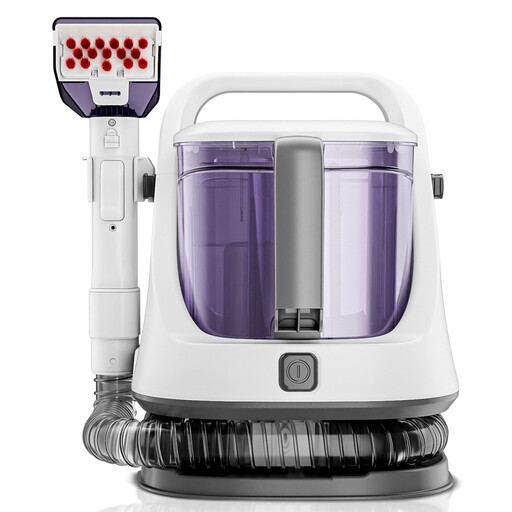
Why it suits this type of user: This compact model is designed for smaller households and regular spot cleaning on sofas, stairs, carpets or car seats.
The clean and dirty water tanks are separate. Their capacities are clearly stated as 1,400 ml and 1,200 ml, and the power cable is 3 m long.
650 W motor, stated suction pressure of 12 kPa, 1.1 m hose and removable tanks.
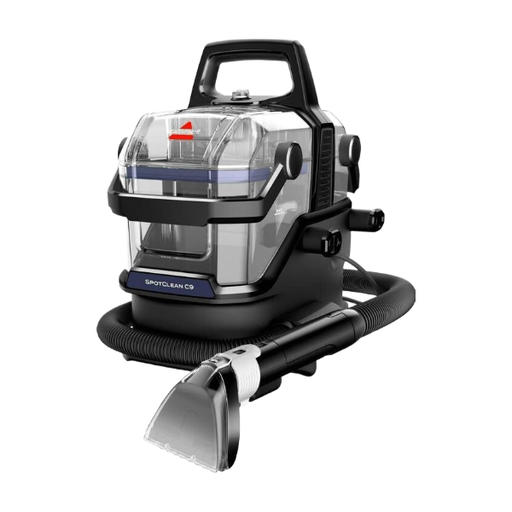
Why it suits this type of user: Designed for cleaning carpets and upholstery, this model has larger tanks for regular cleaning jobs around the home.
The capacities are clearly specified: 1.9 litres of clean water and 1.4 litres of dirty water. This makes it easier to work out whether it meets your needs before you buy.
400 W motor, compact design and separate clean and dirty water tanks.
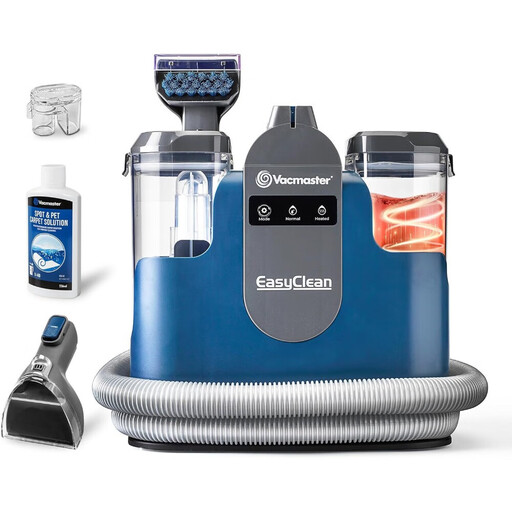
Why it suits this type of user: This appliance is aimed at households that want to clean sofas, carpets, stairs and car interiors regularly using a heated washing system.
The heating function is described as an optional mode. This lets you choose between standard and heated cleaning, depending on the material and level of dirt.
500 W motor, 1.6 L clean water tank, 0.95 L dirty water tank and 1.8 m hose.
We’ve put together a complete, regularly updated list of products that meet these strict selection criteria and fully comply with the safety regulations in force in the EU.
When dealing with pet stains, try to remove the dirt as soon as possible. However, an appliance can’t guarantee that odours will disappear or that the material won’t be permanently affected. For delicate fabrics or extensive damage, professional fabric care may be a sensible option.
A portable carpet cleaner can be useful for tackling individual stains and regularly caring for fabric upholstery. Look for a model with a sufficiently long hose and power cable, as well as a narrow nozzle. Before use, check the seat material, areas containing electronics and the vehicle manufacturer’s guidance.
Drying time depends on the material, room temperature, air circulation and the amount of water used. Going over the area several times with slow strokes can help reduce residual moisture. Good ventilation and using an appropriate amount of cleaning solution are important too.
As well as electricity, you’ll need to allow for water, suitable cleaning solution and, where necessary, replacement filters or brushes. Corded appliances rated at 400 to 650 watts use relatively little energy during short cleaning sessions. Models with a heating or steam function may use more electricity because they draw more power. The key factor is how long you use the appliance for each clean.