
Lieferung heute & morgen

Qualitätsgarantie

Willkommens-Angebote freischalten: KOSTENLOSE Lieferung | Bis zu 80 % RABATT | Kostenlose 30-Tage-JoyPlus-Testphase
App herunterladen
Spilled drinks, muddy paw prints on the carpet or stains on a car seat usually can’t be removed with a standard vacuum cleaner. A carpet cleaner, on the other hand, uses water or cleaning solution to loosen dirt, then extracts it. Depending on the model, it can also be used as an upholstery cleaner, wet vacuum or spot cleaner.
However, choosing the right one can be confusing. High wattage, impressive-sounding suction pressure figures and a range of attachments don’t necessarily tell you whether a machine will be practical for your home. What matters is how well it extracts water, how easy it is to use, the size of the tanks and which materials it’s suitable for.
A powerful motor doesn’t automatically mean better cleaning. Actual performance also depends on the nozzle, hose, airflow and water delivery. Figures such as kPa, Pa, motor power and suction power aren’t always directly comparable either.
So, look at the system as a whole:
A portable carpet cleaner is compact, but it often has smaller tanks than a full-size washing vacuum. This saves space, but cleaning large carpeted areas may mean frequent refilling and emptying. Check the capacity of both tanks, not just the clean-water tank.
Separate tanks prevent dirty water that’s already been extracted from being used again. After each use, empty both tanks, rinse them out and let them dry completely. This helps reduce residue and unpleasant smells inside the machine.
An upholstery steam cleaner can use hot steam or hot water. However, that doesn’t automatically make it suitable for every sofa, mattress or carpet. Delicate fibres, bonded materials and certain dyes can react to heat or moisture.
Before cleaning:
For deep cleaning, the stated suction pressure isn’t the only thing that matters. The machine needs to extract liquid from the fabric after spraying. A carpet washing vacuum or wet vacuum combines spraying, brushing and suction.
A wet vacuum without a suitable upholstery nozzle isn’t necessarily designed for cleaning upholstery. Conversely, a compact spot cleaner may be more practical for individual marks and car seats than a large machine.
Smaller tanks are often enough for spot cleaning a sofa, stairs or car seats. If you want to clean several rooms, large rugs or pet areas regularly, larger tanks are a better choice.
As a guide, product specifications state that:
A narrow nozzle is useful for stains and car seats, while a wider brush is better for carpets and sofas. Check the hose and cable length too. A portable carpet cleaner with a long cable can make it easier to reach stairs and vehicles, but you’ll need a nearby power socket.
Basic accessories include:
If you have pets, a carpet cleaner for pet stains with a narrow nozzle is a practical choice. Only use cleaning products that are suitable for both the machine and the fabric. Items such as glass shards, sharp objects, flammable liquids or liquids that aren’t chemically compatible must not be put into the machine.
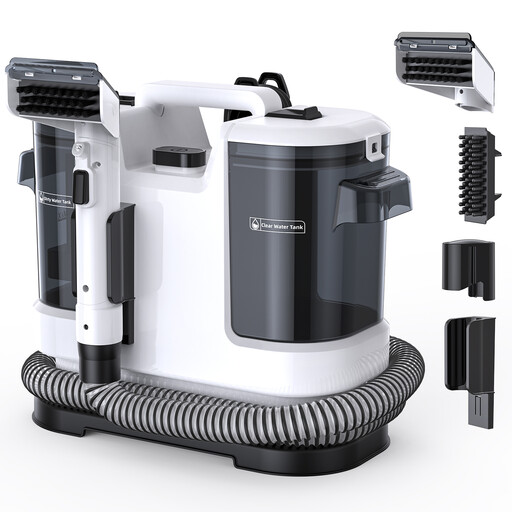
Why this product suits this use: This corded machine is designed for carpets, sofas and upholstery. It’s a good fit for households that want to tackle occasional stains without waiting for a battery to charge.
The product description specifies separate spraying, brushing and suction functions, as well as suction power of 13.500 Pa. Check the exact tank capacity before buying.
450-W motor, long cable according to the product description, and suitable for water-safe carpet and upholstery surfaces.
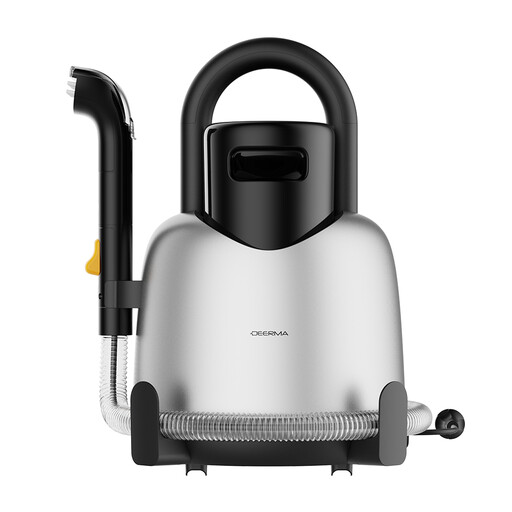
Why this product suits this use: The three stated cleaning modes let you choose between room-temperature water, hot water and steam, as long as the fabric you’re cleaning is suitable.
The modes are clearly separated, so steam isn’t used indiscriminately on every surface. You’ll still need to test the material before use.
1.700-ml clean-water tank, 1.400-ml dirty-water tank, 13-kPa suction power according to the product specifications, and five brush attachments.
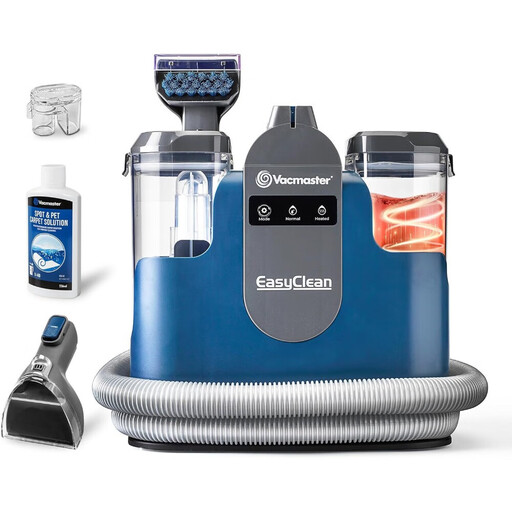
Why this product suits this use: This machine is aimed at people who regularly clean carpets, stairs, sofas and car seats using standard or heated cleaning.
Switching between standard and heated cleaning means you don’t have to use heat every time. The fabric still needs to be suitable for water and temperature.
500-W motor, 1,6-litre clean-water tank, 0,95-litre dirty-water tank, 180-cm hose and self-cleaning attachment according to the product description.
We’ve put together a complete, regularly updated list of products that meet these strict selection criteria and fully comply with the safety regulations in force in the EU.
Before washing, remove loose dust with a dry vacuum cleaner. Apply water or a suitable cleaning solution sparingly, then move the nozzle slowly over the area. Several short passes with suction may be easier to control than one pass that leaves the fabric very wet.
Ongoing costs mainly include electricity, water, cleaning products and, where applicable, replacement filters. With a corded machine, there’s no battery to replace, while a steam or heating mode can increase energy use. After each use, clean the tanks, brush head, hose and filters as instructed.
For individual pet stains, compact machines with a narrow upholstery nozzle and a separate dirty-water tank are practical. Older stains may need a suitable cleaning solution. Don’t assume that a machine will remove odours or improve hygiene in every case; results depend on the material, cleaning product and correct use.
Its lifespan depends on how often you use it, how well you maintain the filters, water quality and how you store it. Let the tanks and accessories dry completely, don’t block the airflow and don’t operate the machine without the specified filters. Check the manufacturer’s information for specific durability details.
Drying time depends on the density of the fibres, how much water you’ve applied, the room temperature and air circulation. Air the room and don’t walk on the area again until it’s completely dry. Wet cleaning may not be suitable for delicate materials or fabrics that are particularly sensitive to moisture.