
Lieferung heute & morgen

Qualitätsgarantie

Willkommens-Angebote freischalten: KOSTENLOSE Lieferung | Bis zu 80 % RABATT | Kostenlose 30-Tage-JoyPlus-Testphase
App herunterladen
A carpet cleaner should do more than an ordinary vacuum cleaner: it needs to apply water or cleaning solution, loosen dirt, and then extract the soiled liquid. It's this combination that makes a wash vacuum, spray extractor or portable spot cleaner so appealing for families, pet owners and car owners.
However, unnecessary costs often arise when buying one. High wattage figures, big promises about stain removal and particularly compact designs alone tell you little about whether a machine will be practical in everyday use. The following points will help you interpret marketing claims and choose a suitable carpet cleaner.
A figure like 12, 15 or 17 kPa describes the negative pressure or suction power stated by the manufacturer. However, it doesn't alone determine how dry a carpet will be after cleaning. The nozzle shape, airflow, hose length, filter condition and the speed at which you pull the tool back all influence the result.
A carpet cleaner with high suction power can therefore be useful when you need to extract dirty water from upholstery, carpets or car seats. But this figure should always be considered alongside tank capacity and design.
For an upholstery cleaner for sofas and cars, separate tanks are a practical feature. A clean water tank holds water and, where appropriate, suitable cleaning solution, while the dirty water tank collects the extracted liquid. Without this separation, cleaning can become more awkward.
Tanks that are too small mean frequent refilling and emptying when tackling large sofas, multiple car seats or stairs. Larger tanks, on the other hand, usually make a machine heavier and require more storage space. So the deciding factor is your intended use.
A portable carpet cleaner is usually best for individual stains, upholstery, stairs, pet areas and car interiors. For a full clean of large carpeted areas, a larger carpet wash vacuum with a wider nozzle and more tank capacity can be more practical.
Before buying, you should also check whether the fabric in question is suitable for wet cleaning. For delicate fibres, unknown colourfastness or coated materials, it's advisable to test on an inconspicuous area first.
A sensible workflow consists of three steps:
This 3-in-1 function is helpful for stains, spilled drinks and certain pet accidents. However, it doesn't replace material testing and doesn't guarantee the removal of every mark.
Pay attention to the separate figures for the clean and dirty water tanks. A machine with 1,400 ml of clean water and 1,200 ml of dirty water, for example, offers different working intervals than a model with 0.9 and 0.8 litres respectively.
After each use, the tanks, hose and brush head should be emptied, rinsed and dried completely. This helps reduce residue and unpleasant odours caused by standing moisture.
For cleaning car seats, stairs or high sofas, the hose and cable length are crucial. A long cable prevents you from having to change sockets frequently, while a flexible hose makes hard-to-reach areas more accessible. Cordless models offer greater freedom of movement, but need to be charged and have a limited run time.
Noise level is also part of the buying decision. The product specifications of the machines featured here, for example, range up to around 80 dB. This can be relevant for longer cleaning sessions in the home.
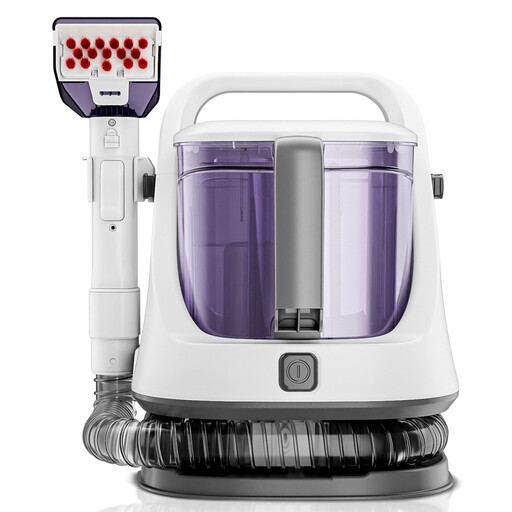
Why this product fits the profile: This compact machine is designed for spot cleaning tasks on sofas, stairs, carpets, upholstery and car seats. 650 W, 12 kPa suction power and a 1,400 ml clean water tank plus 1,200 ml dirty water tank cover typical household jobs.
The separate tanks prevent clean and dirty water from mixing in the same container. The hose and 3 m cable make it easier to use on furniture and in the car.
Compact design, 1.1 m hose, 3-in-1 cleaning and separate tanks.
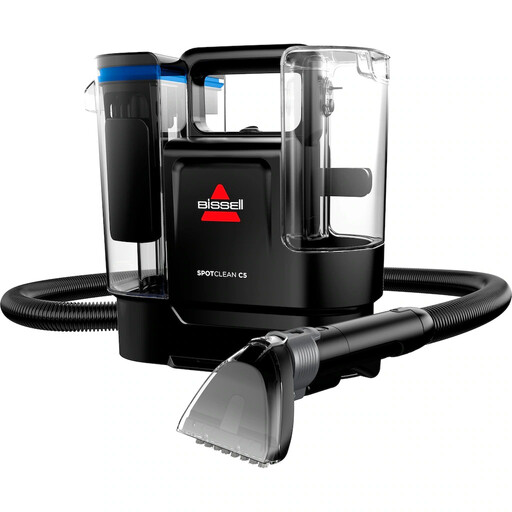
Why this product fits the profile: This portable upholstery cleaner combines spraying, brushing and suction. It's rated at over 15 kPa suction power, with a 1.7 m hose, a 4.3 m cable and a HydroRinse function for flushing the hose.
The product data states suction power, tank capacities of 0.9 and 0.8 litres, and specific reach figures. This makes it easier to assess the scope of use and workload.
HydroRinse cleaning tool, 10 cm brush and compact dimensions.
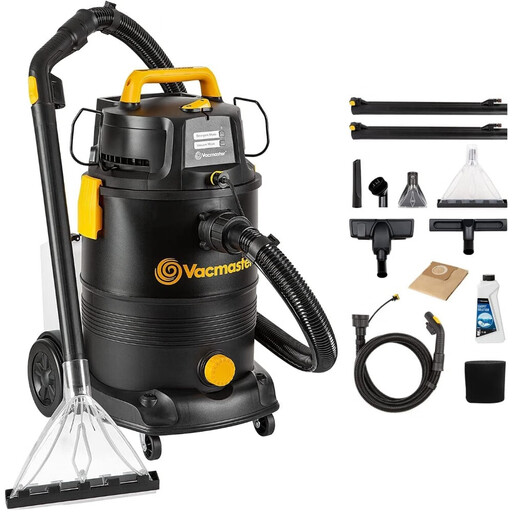
Why this product fits the profile: This larger machine is designed for wet, dry and carpet cleaning. A 6-litre cleaning solution tank and a 30-litre collection container are relevant for larger areas, multiple rooms or regular cleaning tasks.
The larger containers reduce interruptions during extensive tasks. For small stains, however, the format is less space-saving than a portable spot cleaner.
1300 W motor, wet-dry function and HEPA exhaust filter according to product specifications.

Why this product fits the profile: The cordless design makes it easier to clean car seats, stairs and hard-to-reach areas. It's rated at 15 kPa suction power, with a 1.6-litre clean water tank, a 0.8-litre dirty water tank and up to 55 minutes of run time.
The stated battery life makes the operating time clear. Before buying, you should check whether it's sufficient for the area you plan to clean.
Cordless use, 6-foot hose according to the product description and self-cleaning hose tool.
We've put together a full, regularly updated list of products that fully meet these strict selection criteria and the safety regulations in force in the EU.
This depends on the amount of liquid applied, the suction power, the material, the room temperature and the ventilation. Thin upholstery often dries faster than dense carpets. Using less water, extracting slowly and opening windows can shorten the drying time.
Many machines are designed for sofas, upholstery, stairs and car seats according to the product specifications. Nevertheless, check the care label, material compatibility and colourfastness. Testing on a hidden area before widespread use is advisable.
In addition to the purchase price, there are electricity costs, water and, where applicable, cleaning solution. Corded models need mains power during operation, while cordless machines also need to be charged. The actual costs depend on the power, duration of use, your tariff and the dosage of the cleaning product.