
Lieferung heute & morgen

Qualitätsgarantie

Willkommens-Angebote freischalten: KOSTENLOSE Lieferung | Bis zu 80 % RABATT | Kostenlose 30-Tage-JoyPlus-Testphase
App herunterladen
A carpet cleaner can lift spilt drinks, pet stains and everyday dirt from textiles. However, models vary considerably in tank capacity, suction power, reach and maintenance requirements. So whether you’re buying for a household, a family, a home with pets or a car, the product name alone isn’t enough to go on.
If you’re thinking of buying a wet carpet cleaner or a portable carpet cleaner, watch out for these three common buying misconceptions:
A carpet cleaner with spray and suction applies water or cleaning solution, works it into the dirt with a brush, then extracts the liquid. This method is particularly useful for tackling specific stains on carpets, sofas, mattresses, stairs and car seats.
Look for:
Before use, check that the surface is suitable for wet cleaning. Test for colourfastness and material compatibility on an inconspicuous area first.
A dual-tank system keeps clean and dirty water separate. This makes the machine easier to use and prevents extracted dirty water from being put back onto the surface. Tank capacity also affects how often you’ll need to refill or empty the machine while cleaning.
A compact tank is often enough for occasional spills. Larger tanks are useful if you clean upholstery regularly, need to remove pet stains or are cleaning several car seats. Make sure you observe the MAX fill line and rinse both tanks after every use.
A long power cord and hose make it easier to clean stairs, sofa corners and car interiors. At the same time, the machine should be compact enough to fit in a cupboard.
Before you buy, check:
A wet cleaner with lots of accessories isn’t automatically the right choice if it’s difficult to store or time-consuming to clean.

Why it suits this type of buyer: According to the product details, this compact upholstery cleaner is designed for carpets, sofas, mattresses, curtains and car seats. Its spray, brush and suction functions are suited to everyday household stains.
According to the product details, the separate tanks hold 1,5 l of clean water and 0,8 l of dirty water, so capacity is clearly specified. The instructions also warn against overfilling.
15 kPa suction power, according to the product details, a 4,26 m hose and 9,84 m cable, plus two brush attachments.
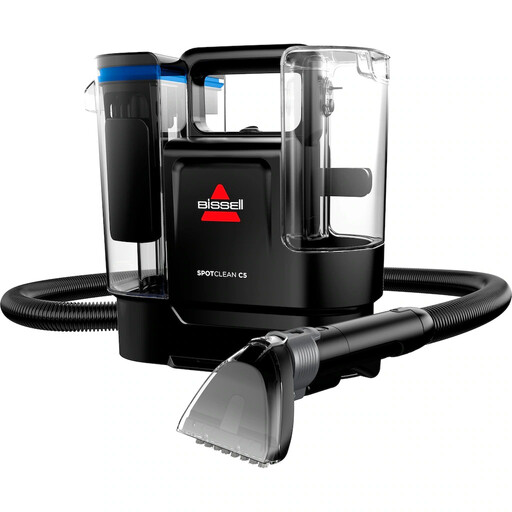
Why it suits this type of buyer: According to the product description, this model combines spraying, brushing and suction with a HydroRinse accessory for flushing the system. It’s a practical choice if you clean upholstery regularly and want aftercare to be straightforward.
The technical details list separate tanks holding 0,9 l of clean water and 0,8 l of dirty water, along with a 1,7 m integrated hose.
Over 15 kPa suction power, according to the product details, a 4,3 m cable, a weight of 4 kg and a HydroRinse cleaning attachment.
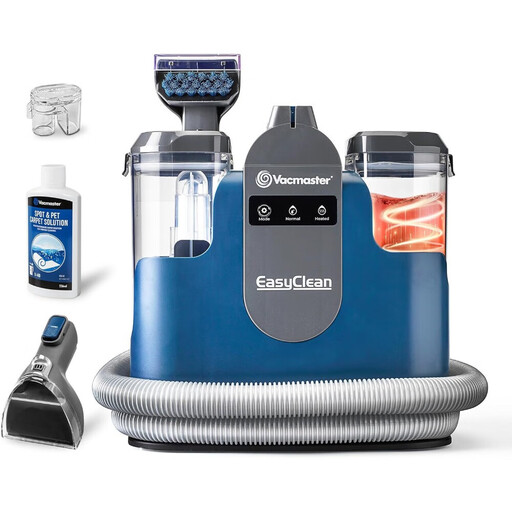
Why it suits this type of buyer: According to the product details, the heating function and 1,8 m hose are designed for cleaning carpets, sofas, stairs and car seats. This model is aimed at households dealing with recurring stains and larger areas of fabric.
The product details distinguish between normal and heated modes. This lets you choose the setting to suit the fabric and its care instructions.
500 W motor, 1,6 l clean-water tank, 0,95 l dirty-water tank and a self-cleaning attachment, according to the product details.
Before wet cleaning, remove loose hair, crumbs and coarse dust with a standard vacuum cleaner. This helps the spot cleaner work more effectively and reduces the risk of the nozzle clogging. Only use a cleaning solution that’s suitable for the machine and doesn’t foam excessively.
Ongoing costs mainly depend on cleaning solution, water and electricity use, and replacement parts. A machine with a larger tank can mean fewer refills when cleaning several areas, but it takes up more space. With a cordless carpet cleaner, you’ll also need to consider charging time and potential battery replacement costs.
We’ve put together a complete, regularly updated list of products that meet these strict selection criteria and fully comply with the safety regulations in force in the EU.
Yes, provided the manufacturer says it’s suitable for car interiors and water-resistant upholstery. Look for a compact nozzle, a hose that’s long enough and good control over the amount of liquid used. Let the car seats dry thoroughly after cleaning.
Drying time depends on the material, the amount of water used, room temperature, air circulation and suction power. Use as little liquid as possible, then make several suction-only passes without spraying more water. Good ventilation will help the surface dry.
Empty and rinse the clean- and dirty-water tanks after every use. Clean the brush, nozzle, filter and hose in line with the instruction manual, then let all removable parts dry completely. Unplug the machine before carrying out any maintenance.