
Lieferung heute & morgen

Qualitätsgarantie

Willkommens-Angebote freischalten: KOSTENLOSE Lieferung | Bis zu 80 % RABATT | Kostenlose 30-Tage-JoyPlus-Testphase
App herunterladen
A carpet cleaner is designed to lift stains, spills and deeply ingrained dirt from fabric surfaces. In practice, however, the machines vary considerably: a traditional wet vacuum picks up liquids, while a carpet washer also applies water or cleaning solution before vacuuming it back up. Confusing these functions can easily lead you to buy a machine that isn’t right for your home.
A motor’s power rating in watts initially tells you how much electricity it uses. On its own, it doesn’t indicate how much liquid or dirt the nozzle can pick up. For fabric surfaces, details such as suction power in kPa, tank design, nozzle shape and water flow are often more useful.
A wet and dry vacuum cleaner can pick up dry dirt and liquids. However, it doesn’t necessarily have a spray function for targeted stain treatment. A carpet washer or upholstery cleaner sprays water or cleaning solution onto the surface, brushes it and vacuums up the dirty liquid.
Larger tanks mean fewer refills, but they often make the machine heavier. Compact spot cleaners are easier to store and handy for sofas, stairs and car seats. After each use, empty and rinse the dirty water tank, hose and nozzle, then allow them to dry completely. Otherwise, residue and odours can develop.
For stains on carpets, mattresses or upholstery, a 3-in-1 design that sprays, brushes and vacuums is a practical choice. You should be able to control how much water is sprayed. Using too much can increase drying time and damage materials that aren’t water-resistant.
A spot cleaner with a narrow nozzle is ideal for individual marks and car upholstery. A wider nozzle saves time on carpeted areas. When dealing with pet hair, first pick up loose hair with a dry handheld vacuum cleaner or a brush. A carpet cleaner designed for pet hair doesn’t automatically replace a dedicated brush roll for picking up dry hair.
A dual-tank system keeps clean and dirty water separate. This makes it easier to manage water levels and prevents water that has already been picked up from going back onto the surface. Check the capacity of both tanks, rather than relying only on a combined capacity figure.
For homes with several floors, weight, a carry handle, hose length and power cord length all matter. A large machine with a 30-litre container is better suited to extensive wet and dry cleaning than a quick sofa clean.
Use the appropriate filter for dry dirt; depending on the model, foam filters are designed for liquids. Maintain filters according to the manufacturer’s instructions, and make sure they are completely dry before using them for dry vacuuming. Machines with a HEPA exhaust filter can trap particles in the exhaust system. This does not, however, imply any medical or therapeutic benefit.
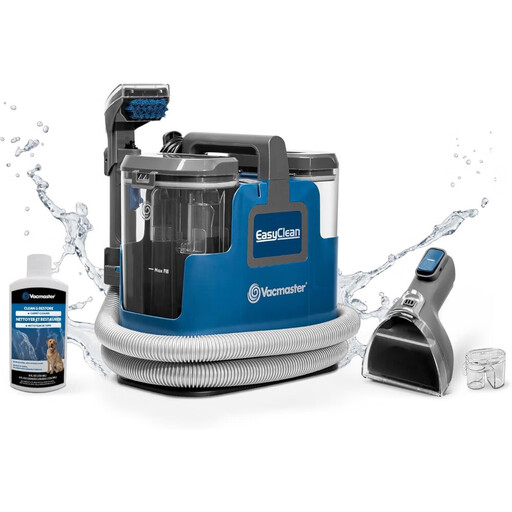
Why it suits this profile: This compact carpet washer is designed for smaller carpeted areas, sofas, stairs and car seats. Weighing 3.4 kg and with a 1.8 m hose, it’s easy to move around your home or vehicle.
The dual-tank system keeps clean and dirty water separate. A cleaning solution is included for the intended use.
500 W motor, 1.8 m hose and separate water tanks for targeted wet cleaning.
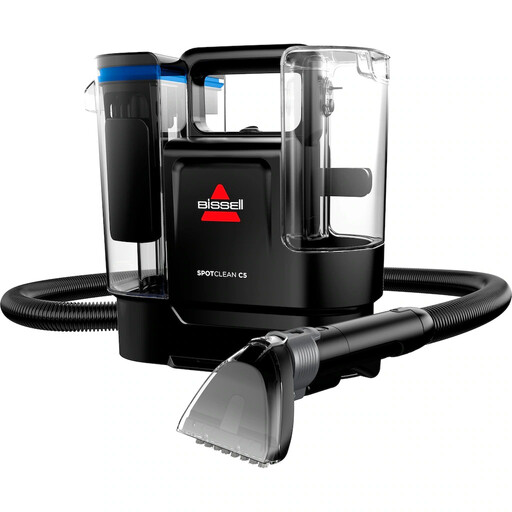
Why it suits this profile: For regular stain treatment on carpets, upholstery, stairs and car seats, this compact machine offers clearly specified features and an integrated 1.7 m hose.
The product specifications state suction power of over 15 kPa, separate tanks and a HydroRinse tool for flushing the system.
4 kg weight, 0.9-litre clean water tank, 0.8-litre dirty water tank and 4.3 m power cord.
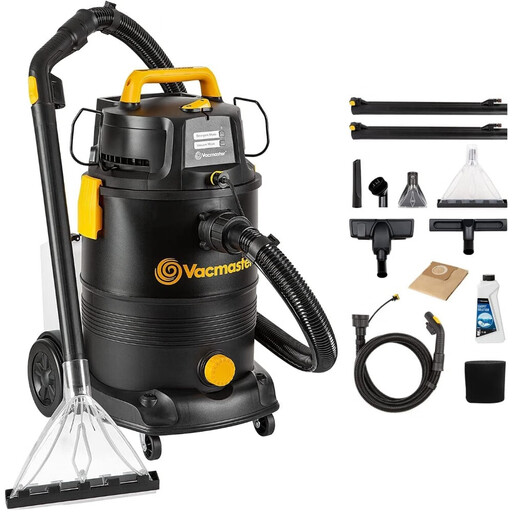
Why it suits this profile: This machine is designed for homes and work areas where tasks vary frequently. It can be used for dry vacuuming, picking up liquids and cleaning carpets.
The filters are tailored to each operating mode: a wash filter and HEPA exhaust filter for dry use, plus a foam filter for picking up liquids and shampoo cleaning.
30-litre collection tank, 6-litre cleaning solution tank, 1,300 W power and accessories for different types of cleaning.
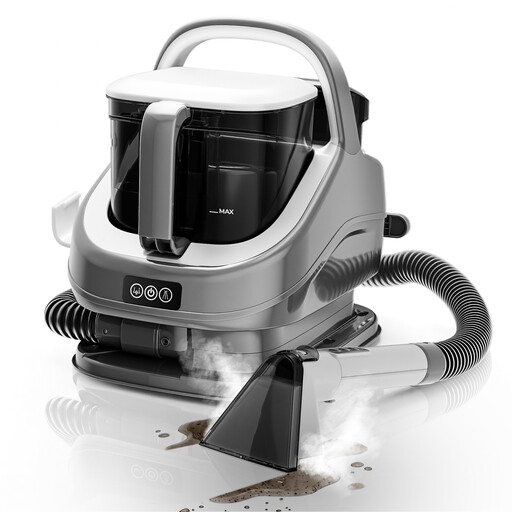
Why it suits this profile: Its portable design, 1.1 m hose and 3 m power cord make it suitable for sofas, car seats, stairs and smaller carpeted areas.
The product description lists three cleaning modes: cold water, hot water and steam. This lets you choose according to the material and the type of dirt, but you should still check the care instructions first.
1,300 W, 13 kPa suction power and separate tanks with a 1,400 ml clean water capacity and a 1,200 ml dirty water capacity.
We’ve put together a complete, regularly updated list of products that meet these strict selection criteria and fully comply with the safety regulations in force in the EU.
Before using it for the first time, test colourfastness on an inconspicuous area. Not every sofa, carpet or car upholstery fabric is suitable for water, heat or steam. Use only a cleaning solution designed for the machine, preferably a low-foaming one, and follow the recommended dosage.
After cleaning, follow these steps:
A carpet cleaner, or carpet washer, usually sprays water or cleaning solution onto the fabric surface and then vacuums it back up. A wet vacuum is primarily designed to pick up liquids and doesn’t necessarily have a spray or brush function.
It depends on the material, how often it’s used and how dirty it is. Treat individual stains as soon as possible. Only carry out a full wet clean if the care instructions for the carpet or upholstery allow it. Regular dry vacuuming reduces the need for wet cleaning.
Check the recommended cleaning solution dosage, and look for washable or long-lasting filters and tanks and nozzles that are easy to rinse. A machine with a smaller tank may be enough for spot cleaning, while frequent refills can take more time when cleaning larger areas.