
Lieferung heute & morgen

Qualitätsgarantie

Willkommens-Angebote freischalten: KOSTENLOSE Lieferung | Bis zu 80 % RABATT | Kostenlose 30-Tage-JoyPlus-Testphase
App herunterladen
A carpet cleaner can remove spilled drinks, pet accidents and everyday dirt from carpets, sofas or car seats. However, machines vary considerably in suction power, tank design, operation and the surfaces they are suitable for. If you only look at a high wattage or Pascal figure, you may end up buying a machine that is impractical for everyday use or unsuitable for the material you intend to clean.
Figures such as 12,000 or 18,000 Pa describe suction power under specific conditions. On their own, they do not indicate how much moisture is actually removed from a carpet or upholstered surface. The nozzle design, airflow path, hose and seals are also important.
A carpet washer should apply the cleaning solution evenly and then pick up as much of the dirty water as possible. With an upholstery cleaner, a compact nozzle is also important, allowing you to guide the machine precisely over sofas, stairs or car seats.
A single tank for clean and dirty water can make refilling and emptying more difficult. With a carpet cleaner with separate tanks, clean water remains separate from the dirty water collected by the machine. This makes monitoring easier and reduces unnecessary interruptions.
Do not just look at the tank capacity. Also check whether the containers can be removed, rinsed and dried thoroughly. Any remaining moisture can lead to unpleasant odours.
Natural fibres, delicate dyes, unsealed wood and certain mattress covers may react to water or cleaning products. Before using the machine over a large area for the first time, test the colourfastness in an inconspicuous spot. The manufacturer’s instructions for the specific surface always take priority.
A wet vacuum designed for larger spills is not automatically a carpet washer. Workshop machines with large tanks can collect liquids, but they often do not have a spray nozzle, brush head or dosage system designed for textiles.
For stains on carpets and upholstery, a 3-in-1 design combining spraying, brushing and suction is practical. The cleaning solution is applied, worked into the fibres and then collected together with the loosened dirt. A narrow nozzle is ideal for targeted stains, while wider attachments save time on sofas or larger carpeted areas.
A compact tank is sufficient for individual stains. Families with children or pets can benefit from larger clean- and dirty-water capacities. A hose measuring around 1.1 to 1.8 metres can extend your reach on stairs, upholstered furniture and inside vehicles. A longer power cable also means less need to switch sockets.
Mains-powered machines deliver a continuous supply of energy during use and are suitable for longer cleaning sessions. By contrast, a battery-powered wet-and-dry vacuum is convenient on hard floors when you want to vacuum and mop at the same time. The stated battery life depends on the cleaning mode and the condition of the battery.
For carpets, sofas and car upholstery, a portable spot cleaner with a hose is usually more suitable. For sealed hard floors, consider a hard-floor cleaner, a robot vacuum mop or a battery-powered wet-and-dry vacuum. These machine categories should not be confused with one another.
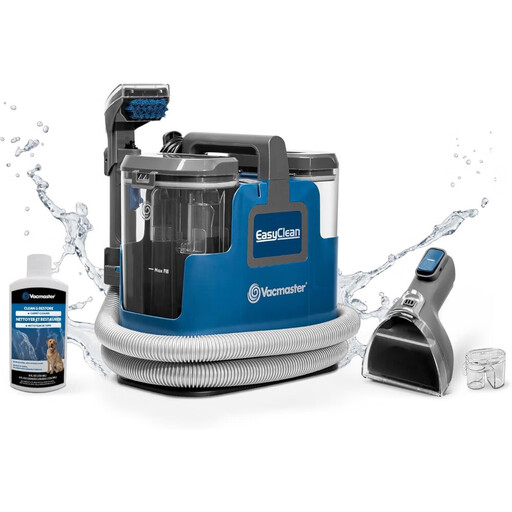
Why this product suits this profile: This compact, mains-powered machine is designed for carpets, sofas, stairs, car seats and textiles. At 3.4 kg, it is relatively easy to carry.
The separate, removable water containers eliminate the need for a shared clean- and dirty-water tank. Thorough dry vacuuming is recommended before use.
500 W motor, 17 kPa rating, 1.8 m hose and 0.8-litre capacity; a cleaning solution is stated to be included.

Why this product suits this profile: Its specifications of 12,000 Pa, 450 W, 1,200/1,300 ml tank capacity and a maximum of 69 dB provide a clear basis for choosing a machine for your home.
The manufacturer specifies a maximum water temperature of 60 °C and provides clear instructions for use on stable, water-safe surfaces.
1.5 m hose, 4.5 m cable, 3.5 kg weight and separate tanks for clean and dirty water.
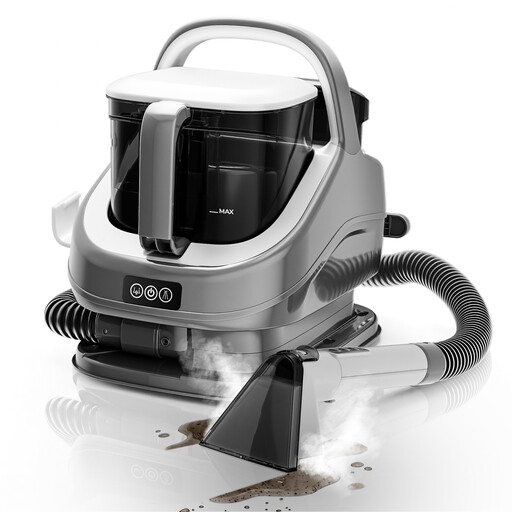
Why this product suits this profile: Three modes for cold water, hot water and steam are designed for households that regularly clean carpets, upholstery, stairs and car seats.
According to the product information, the separate tanks hold 1,400 ml of clean water and 1,200 ml of dirty water. The machine is expressly not intended for water-resistant fabrics.
1,300 W power, 13 kPa suction power, 3 m cable, plus cold-water, hot-water and steam modes.
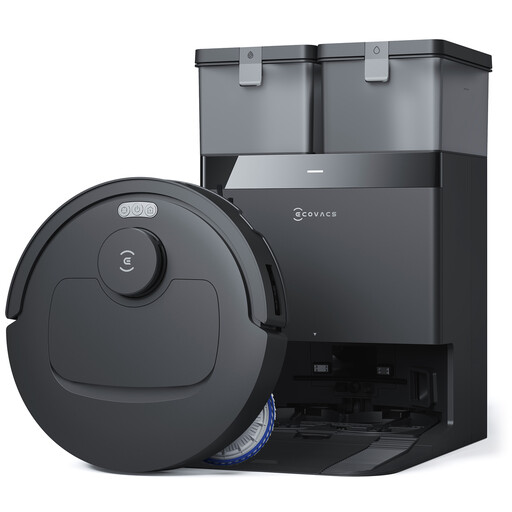
Why this product suits this profile: This robot vacuum mop is designed for regular floor care on carpets and hard floors, not for targeted removal of deep-set upholstery stains.
Automatic mop lifting when carpets are detected reduces the risk of wetting carpeted areas while mopping. The station still requires regular maintenance and refilling.
25,000 Pa according to the product information, up to 180 minutes of runtime, four suction levels and automatic mop washing with water heated to 75 °C.
We have put together a complete, regularly updated list of products that fully meet these strict selection criteria and the safety regulations applicable in the EU.
Before use, remove loose dust with a conventional vacuum cleaner. Work with slow, even movements and only use cleaning products in accordance with the instructions. After every use, follow these steps:
Do not vacuum up liquids such as petrol, solvents or other flammable substances. Children and pets should keep away from moving parts and cleaning solutions while the machine is operating.
Its service life depends on how often it is used, filter maintenance, storage and how the tank and hose are handled. Rinsing the water-carrying parts regularly and allowing them to dry completely can help reduce build-up and odours. Without specific warranty and maintenance conditions, it is not possible to give a reliable fixed service life.
Yes, provided the care label states that the upholstery is suitable for damp cleaning. Use a suitable upholstery attachment, test the colourfastness in a concealed area and avoid excessive soaking. For delicate materials, dry or manual cleaning may be more appropriate.
In addition to electricity, you will need to budget for water, cleaning products and, where applicable, replacement filters or brushes. With mains-powered machines, electricity consumption depends on the motor power and runtime. Battery-powered machines also require charging energy and may need a replacement battery after extended use. Actual running costs therefore vary depending on the model and how frequently it is used.