
Lieferung heute & morgen

Qualitätsgarantie

Willkommens-Angebote freischalten: KOSTENLOSE Lieferung | Bis zu 80 % RABATT | Kostenlose 30-Tage-JoyPlus-Testphase
App herunterladen
A carpet cleaner should remove stains from carpets, freshen up upholstery and, when needed, clean car seats too. But a machine with a high wattage or Pascal rating won’t necessarily suit every home. Families, pet owners and car owners often run into the same problems when shopping: a machine is advertised for too many types of surface, its tanks are too small for larger areas, or the time needed for cleaning and drying is underestimated.
This guide explains which technical details matter when you’re buying, how the different types of machine compare and which options suit different needs.
Wattage and kilopascals are useful technical specifications, but they don’t tell the whole story about a machine’s quality. How well it performs also depends on the spray rate, nozzle design, airflow and how effectively it picks up dirty water. A compact spot cleaner with strong suction may be ideal for individual marks, but it could take more passes to clean a large carpet.
A carpet washer uses water and picks up the dirty liquid afterwards. A household steam cleaner, on the other hand, loosens dirt with hot steam but doesn’t pick up the dirty water. These machines are therefore not automatically interchangeable when it comes to cleaning fabric surfaces.
Before buying, check the instruction manual to make sure your carpet, sofa, mattress, stairs or car seats are suitable for cleaning with water or steam. Test delicate materials on an inconspicuous area first.
A carpet washer or upholstery cleaner needs attention after every use. Empty or rinse the dirty-water tank, filter, brush head and hose, then leave them to dry completely. Otherwise, odours may develop or suction may weaken. A self-cleaning hose is handy, but it doesn’t replace regular maintenance.
To remove stains from carpets, a machine should apply clean water or cleaning solution where it’s needed, then pick up the dirty liquid. A dual-tank system keeps clean and dirty water separate. This makes the machine easier to use and stops it from spreading water that has already been picked up.
A portable carpet cleaner is often enough for small spills. For several rooms, larger tanks and a longer hose are useful. Also check the length of the power cable or, for cordless models, the stated run time.
Compact machines are easier to store and handy for sofas, stairs or car seats. However, smaller tanks need refilling or emptying more often. For a specific example, the Vacmaster SCC1201H has a 1.6-litre clean-water tank and a 0.95-litre dirty-water tank. Its built-in hose is 180 centimetres long.
A smaller model may be enough for occasional stains. If you regularly want to clean carpets and upholstery or tackle pet stains, consider tank capacity, hose length and the overall size of the machine together.
Hot-water or steam functions can help with certain types of dirt, but they’re not suitable for every material. Take particular care with delicate fibres, coated fabrics, open-pore wood or unsealed floors. Always follow the manufacturer’s instructions.
A wet and dry vacuum cleaner should also not be confused with a standard dry vacuum cleaner. Only pick up liquids, cleaning products and dirty water if the machine is specifically designed to do so.
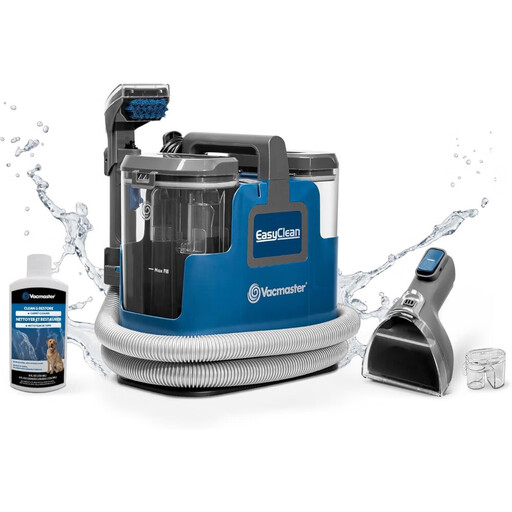
Why it suits this need: This compact carpet washer is ideal for individual marks on carpets, sofas, stairs and car seats. Its 1.8-metre hose makes it easier to reach awkward areas.
The dual-tank system keeps clean and dirty water separate, so you won’t keep cleaning with water that has already been picked up.
500-watt motor, separate dirty-water tank and cleaning solution included for spot cleaning.
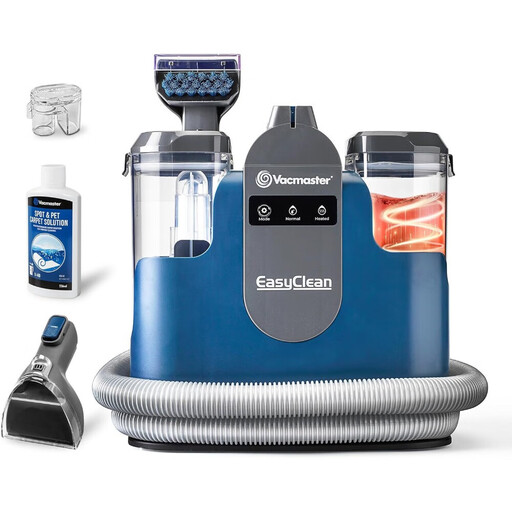
Why it suits this need: Designed for carpets, sofas, stairs, fabrics and car seats, this machine offers both standard and heated cleaning modes.
You can choose between the two modes to suit the type of dirt. The separate-tank design means less need to transfer water while you work.
500-watt motor, 1.6-litre clean-water tank, 0.95-litre dirty-water tank and self-cleaning attachment.
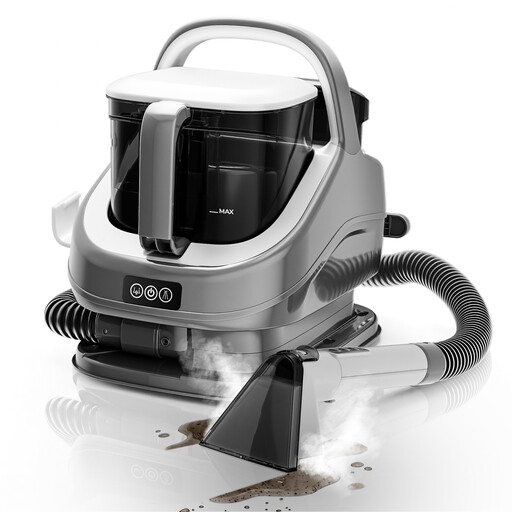
Why it suits this need: With three cleaning modes and a portable design, this machine is suited to users who switch between carpets, sofas, stairs, pet areas and car seats.
Check which areas the machine is designed for and whether the fabrics can withstand water before use. Choosing the right mode helps ensure you don’t treat every surface in the same way.
1300 watts, 13 kPa suction power, 1.4-litre clean-water tank and 1.2-litre dirty-water tank.
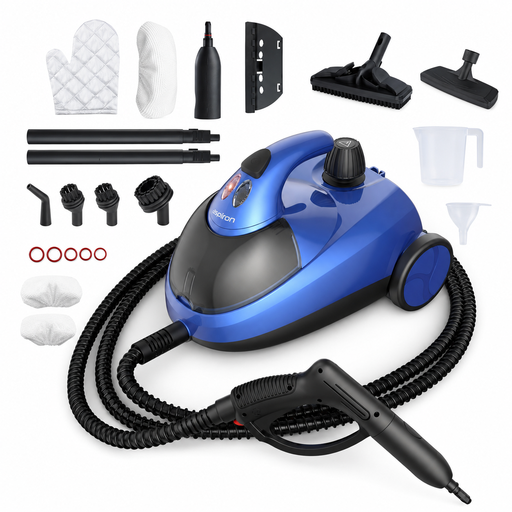
Why it suits this need: If you want to clean hard floors as well as tiles, glass, kitchen surfaces and selected upholstery, this machine comes with a range of attachments.
This is a steam cleaner, not a carpet washer. It doesn’t suck up dirty water in the way a carpet cleaner does.
2000 watts, up to 4 bar, 1.5-litre water tank and a 13-piece accessory set for a range of steam-safe surfaces.
We’ve put together a complete, regularly updated list of products that meet these strict selection criteria and fully comply with the safety regulations in force in the EU.
Before washing, remove loose dust with a suitable vacuum cleaner. Then apply the cleaning solution sparingly. Move the nozzle slowly and, if needed, make an extra pass with suction only and no spray. This helps reduce drying time.
After use:
Treat pet stains as soon as possible. However, complete odour or stain removal can depend on the material, how long the stain has been there and the cleaning product used.
A carpet cleaner is often a carpet washer: it sprays water or cleaning solution onto the surface, then sucks up the dirty liquid. Depending on the model, a wet and dry vacuum cleaner can pick up liquids, but it doesn’t necessarily have a spray function. Always check the instruction manual to see what your machine is designed for.
It depends on how often the carpet is used, the material and how dirty it is. Small stains can be treated as they appear. Avoid wet-cleaning the whole carpet more often than necessary, as carpets and upholstery need to dry completely after every wash. Always follow the manufacturer’s care instructions.
Running costs include electricity, water, cleaning solution and, where applicable, replacement filters. Power consumption alone isn’t enough to give an accurate estimate, as the actual time the machine is used also matters. Using cleaning solution sparingly and maintaining the filter regularly can help keep consumption down.