
Lieferung heute & morgen

Qualitätsgarantie

Willkommens-Angebote freischalten: KOSTENLOSE Lieferung | Bis zu 80 % RABATT | Kostenlose 30-Tage-JoyPlus-Testphase
App herunterladen
A carpet cleaner can do far more than an ordinary vacuum cleaner in the home – provided you choose the right type of machine and features for the job. Families, pet owners and car owners in particular often look for a solution for carpets, sofas, mattresses or car seats.
Before you buy, though, it’s worth watching out for a few common marketing traps. A high wattage, for example, doesn’t automatically mean stronger suction. And a large set of accessories won’t be much help if the dirty-water tank, hose or filter is awkward to clean.
The electrical power consumption in watts tells you how much energy the motor uses. For practical cleaning, suction pressure or suction power, water flow and nozzle design also matter. A wet-and-dry cleaner with the right spray and extraction system may be better suited to fabrics than a higher-wattage model with an unsuitable nozzle.
A separate tank system is a useful feature in a carpet and upholstery cleaner. Clean water stays separate from the dirty water collected by the machine. This makes the tank easier to fill as needed and simpler to empty after use. Before buying, also check whether both tanks can be removed and what capacities are listed.
Using too much liquid can affect the lifespan of carpets and upholstery. Before cleaning, check the care instructions for the material and test for colourfastness in an inconspicuous area. This is especially important for delicate fabrics, mattresses and car seats. A steam cleaner works differently from a wet vacuum: it loosens dirt with hot steam, but it doesn’t always remove liquid in the same way as a spray-extraction cleaner.
Ideally, a suitable carpet cleaner combines three steps: applying cleaning solution, loosening dirt with a brush and sucking up the liquid again. This 3-in-1 function is particularly useful for spot cleaning on sofas, carpets or car seats.
For pet hair and larger bits of dirt, start by vacuuming thoroughly while dry. A stain cleaner is primarily designed for wet messes and liquid spills, not for large amounts of dry hair or hard objects.
Some manufacturers state suction power in kPa. This figure can help with technical comparisons, but it shouldn’t be considered in isolation. Nozzle shape, hose design and filter condition also affect the results.
A compact machine is often enough for smaller stains. Larger tanks mean fewer stops when cleaning bigger sofas, stairs or several car seats. At the same time, consider the weight, hose length and power cord length. A machine with a 1.1 to 1.8-metre hose can make awkward-to-reach areas in your car or around furniture easier to clean.
After each use, empty and rinse both the clean- and dirty-water tanks. Brushes, filters and the hose must be left to dry completely to prevent unpleasant odours from developing. Integrated holders for the cable and accessories are handy, as is a compact design that fits easily in a cupboard or utility room.

Why this product suits this type of user: This portable machine is designed for small to medium cleaning jobs on carpets, sofas, mattresses and car seats. Its features make it a good choice for households looking for a versatile carpet cleaner.
The 3-in-1 system combines spraying, brushing and suction. It has separate 1.5-litre clean-water and 0.8-litre dirty-water tanks.
Specifications include 15 kPa suction power, a 4.26-foot hose, a 9.84-foot cable and two brush attachments.
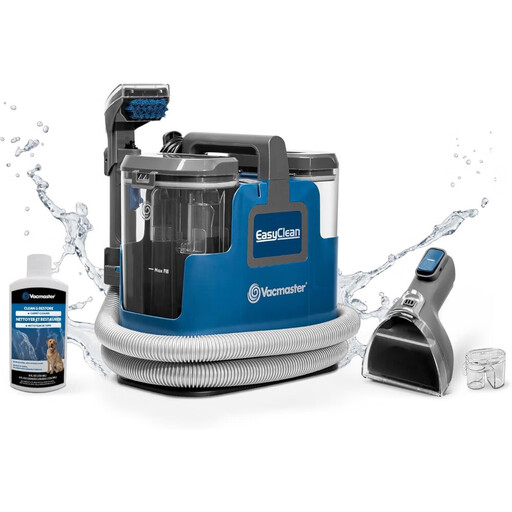
Why this product suits this type of user: This upholstery cleaner is designed for fabrics around the home and inside vehicles. Its removable tanks make filling and emptying easier.
The separate water system keeps clean water apart from the dirty water collected by the machine. Both tanks can be rinsed after cleaning.
According to the product specifications, the machine has a 500-watt motor, 17 kPa suction power and a 1.8-metre hose.
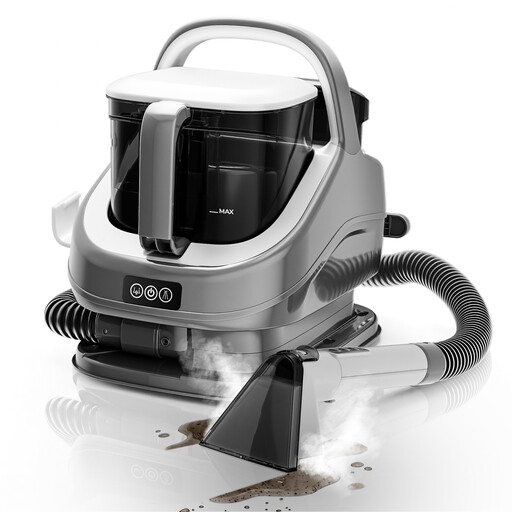
Why this product suits this type of user: The three cleaning modes are designed for people who want to use warm water or steam as well as conventional spray extraction. This can be useful for cleaning a range of water-resistant fabric surfaces.
You can choose cold water, hot water or steam. Always treat water-resistant materials only, and take care not to fill the tank above the marked level.
Specifications include 13 kPa suction power, a 1.4-litre clean-water tank, a 1.2-litre dirty-water tank and a 3-metre power cable.
Use as little liquid as possible on mattresses, car seats and delicate upholstery. If your machine has a steam function, take particular care to check the temperature, distance from the surface and whether the material is suitable.
We’ve put together a complete, regularly updated list of products that meet these strict selection criteria and fully comply with the safety regulations in force in the EU.
Drying time depends on the material, the amount of liquid used, the room temperature and ventilation. Air the room and don’t walk on the carpet until it is completely dry. Excessive moisture can cause odours or distortion in some materials.
Electricity costs depend on the machine’s power consumption and how long you use it. You’ll also need to budget for water, a suitable cleaning solution and, if necessary, replacement filters. A machine with a larger tank can reduce interruptions when cleaning several areas, but it won’t automatically use less electricity.
Many portable machines are designed for carpets, sofas and car seats, according to their product specifications. The key is to make sure the fabric is water-resistant and the nozzle is suitable for the surface. For leather, delicate blended fabrics or non-washable materials, follow the manufacturer’s instructions.