
Lieferung heute & morgen

Qualitätsgarantie

Willkommens-Angebote freischalten: KOSTENLOSE Lieferung | Bis zu 80 % RABATT | Kostenlose 30-Tage-JoyPlus-Testphase
App herunterladen
A carpet cleaner with spray, brushing and suction functions can remove spilt drinks, everyday dirt and pet accidents from textile surfaces. However, machines vary considerably in tank capacity, reach, cleaning temperature and maintenance requirements. A small flat has different needs from a house with pets, or a car owner who regularly wants to clean car seats.
Motor power in watts initially describes only the electrical power consumption. On its own, it does not indicate how much dirty water a machine can actually collect. Suction power, nozzle design, spray volume and airflow are also important. A 1,700-watt machine may be useful for certain applications, but it is not automatically more suitable for every household than a more compact 400- or 600-watt model.
A larger clean-water tank often reduces the need for frequent refilling. At the same time, a larger dirty-water tank can be heavier to empty and clean. A separate tank system is important to prevent clean water and collected dirty water from mixing. After every use, the tank, hose and brush attachment should be rinsed and dried thoroughly.
Sensitive upholstery fabrics, certain carpet fibres and non-colourfast textiles can be affected by heat or moisture. Always check the care label first and test the machine on an inconspicuous area. A carpet and upholstery cleaner may only be used on water-resistant surfaces. Steam models require additional care, as very hot steam can cause burns.
A 3-in-1 system distributes cleaning solution, works it into the fibres with a brush and then extracts the liquid together with the loosened dirt. This combination is designed for spot cleaning on carpets, sofas, stairs and car seats. For larger areas, a carpet cleaning machine with a wider nozzle may be more practical, while a portable carpet cleaner is easier to store and transport.
Figures such as 13 kPa, 15 kPa, 17 kPa or 18 kPa describe the vacuum pressure specified by the manufacturer. You should only compare these values between machines with similar designs. The drying time also depends on how slowly the nozzle is moved and how often the treated area is vacuumed. Using too much cleaning solution can prolong drying and may cause problems with sensitive materials.
For individual stains, compact tanks of around 0.8 to 1.0 litres are often sufficient. If you regularly want to clean a sofa, several steps or pet stains, larger containers may be beneficial. Also pay attention to:
A wet-and-dry vacuum cleaner is not automatically suitable for every textile surface. The instruction manual must explicitly state that the machine is intended for use on carpets, upholstery or vehicle interiors.
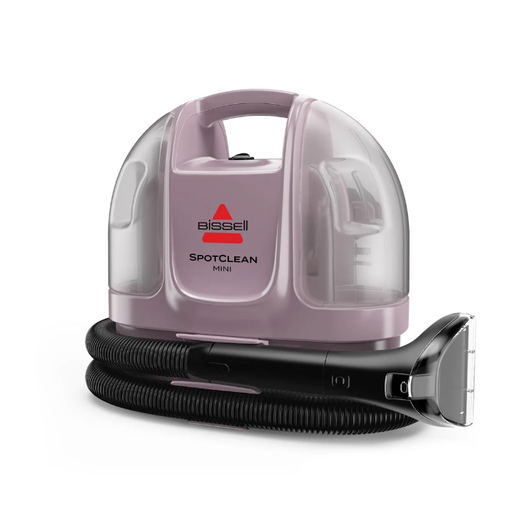
Why this product suits this profile: This compact machine is designed for smaller flats, individual stains, stairs, upholstery and vehicle interiors. Depending on the product specification, the stated weight is approximately 3.4 to 4.185 kg.
The compact design takes up less space. Its spray, brushing and suction system avoids relying on a machine that merely distributes liquid.
Compact dimensions and intended applications for stairs, upholstery and car interiors.
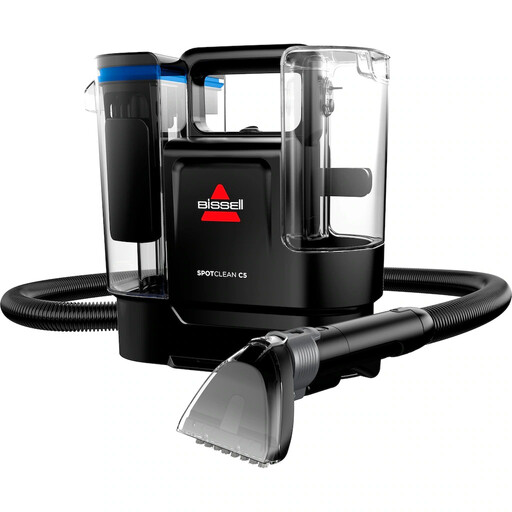
Why this product suits this profile: According to the product specifications, this model features 400 watts, more than 15 kPa of suction power, a 0.9-litre clean-water tank, a 0.8-litre dirty-water tank and a HydroRinse cleaning function.
Separate tanks and a designated self-cleaning tool make the maintenance requirements clear and manageable.
Dual-tank system, 1.7-metre hose and HydroRinse accessory according to the product description.
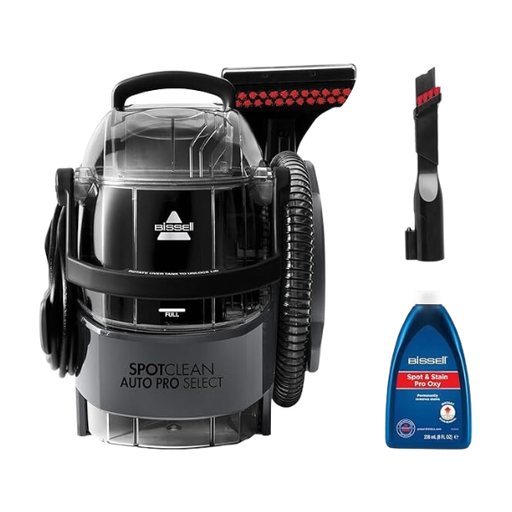
Why this product suits this profile: This model is designed for carpets, upholstery and vehicle interiors. According to the specifications, it offers a 750-watt motor, 2.8 litres of total tank capacity, a 1.5-metre hose and a 15-cm cleaning nozzle.
The larger tank capacity and accessories for confined vehicle interiors address common issues with reach and frequent changes.
2.8 litres of total tank capacity, a 6.7-metre power cable and XL sliding brush according to the product data.
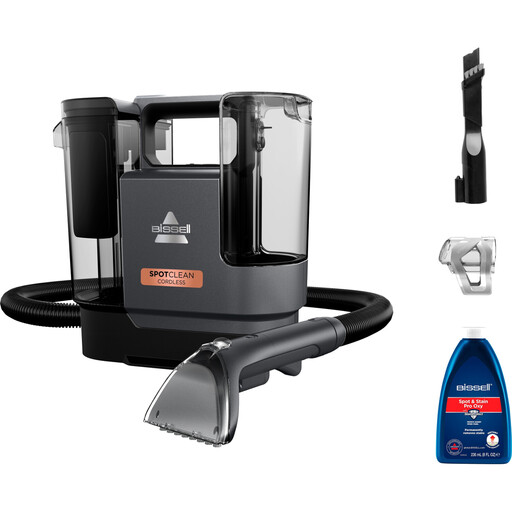
Why this product suits this profile: The 18-volt lithium-ion battery is ideal for quick cleaning jobs in places without a readily accessible socket, such as the car or stairs.
The stated runtime of around 20 to 25 minutes makes the operating limit clearer than an unspecified battery-powered system.
Cordless operation, a 0.9-litre clean-water tank, a 0.8-litre dirty-water tank and HydroRinse tool.
Before wet cleaning, use a conventional vacuum cleaner to remove loose hair, crumbs and coarse dust. Only fill the machine with water and a suitable, preferably low-foaming cleaning solution. Follow the maximum water temperature and dosage specified in the instructions.
After cleaning, you should:
This can help prevent odours, blockages and declining suction power during everyday use. Service life depends heavily on frequency of use, care, storage and the use of suitable cleaning products.
We have put together a complete, regularly updated list of products that fully meet these strict selection criteria and the safety regulations applicable in the EU.
Spot cleaning is ideal for individual stains or pet accidents. Full wet cleaning should depend on the material and the level of dirt. Excessive wetting can make drying more difficult, so always check the care label first.
This depends on the density of the fibres, the amount of water used, room temperature and ventilation. Move the nozzle slowly, then vacuum several times without spraying any additional solution. Open windows or ensure good air circulation if this is suitable for the room and material.
In addition to electricity consumption, you will incur costs for water, cleaning solution, filters and, where necessary, replacement nozzles. With a battery-powered machine, charging time is an additional consideration. For a realistic assessment, compare tank capacity, recommended dosage and planned frequency of use rather than looking only at the purchase price.