
Lieferung heute & morgen

Qualitätsgarantie

Willkommens-Angebote freischalten: KOSTENLOSE Lieferung | Bis zu 80 % RABATT | Kostenlose 30-Tage-JoyPlus-Testphase
App herunterladen
A spilled drink on the carpet, pet stains on the sofa or dirt on the car seats can all be tackled effectively with a suitable carpet cleaner. Unlike a conventional vacuum cleaner, a washer-extractor sprays cleaning solution onto the textile surface and then vacuums up the dissolved dirty water.
When buying, however, it's not just the wattage or sweeping promises that determine everyday usability. For private households in the UK, the design, tank configuration, suitability for different textiles and cleaning effort are particularly important.
A motor's power rating in watts only describes its electrical power consumption. For removing liquid, the suction power, often given in kPa, is also crucial. These two values should therefore be considered separately. A device with high wattage is not automatically suitable for every application.
A carpet spray extractor usually works with water and cleaning solution. A steam cleaner, on the other hand, uses hot steam. Delicate, non-waterproof or temperature-sensitive materials can be damaged by this. Before use, you should test an inconspicuous area to see if the colour, texture or coating changes.
If dirty water, cleaning residue or hair remain in the hose and nozzle, odours can develop and suction power can decrease. An upholstery cleaner with removable tanks, accessible filters and an easy-to-rinse nozzle is therefore more practical for everyday use than a device that is difficult to take apart after each use.
For spot cleaning, compact devices with spray, brush and suction functions are ideal. This combination loosens the stain mechanically and then picks up the dirty liquid. Figures such as 12 to 17 kPa can help with orientation, but are only meaningful when comparing similar designs.
A stain cleaner with a narrow nozzle is practical for stairs, sofa cushions or car seats. For larger carpet areas, a wider attachment can reduce the workload.
A dual-tank system separates clean water and dirty water. This prevents already-absorbed liquid from being reapplied to the textile surface. Pay attention to the respective tank sizes and whether both containers are removable. Larger tanks reduce frequent interruptions but usually increase the device's weight.
For cleaning car seats, a flexible hose and a sufficiently long cable are essential. In flats with stairs or lots of furniture, a cordless model can offer freedom of movement. However, charging time, battery life and weight must be factored into your buying decision.
Only use textiles that, according to their care instructions, can be cleaned with moisture. For delicate fabrics, it is advisable to test on a hidden area first. Cleaning solutions should be suitable for both the device and the surface. Non-foaming agents are required for many washer-extractors; the respective user manual remains the definitive guide.

Why this product fits the profile: This handy, corded device is designed for individual stains on carpets, sofas and car seats and requires no battery charging.
The specification lists separate clean and dirty water tanks, as well as cleaning with water at a maximum of 40 °C. This makes the key application guidelines clear.
600 W motor, stated suction power of 17 kPa and flexible hose for targeted applications.
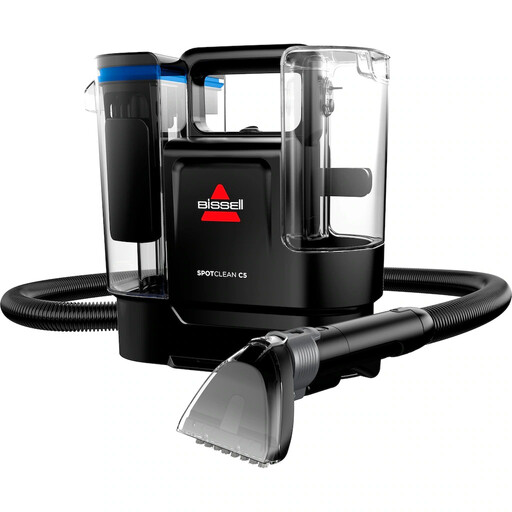
Why this product fits the profile: For regular use around the home and in the car, this compact model offers defined tank sizes, an integrated hose and a device for hose maintenance.
The specifications state 0.9 l clean water, 0.8 l dirty water, a 1.7 m hose and HydroRinse accessory for cleaning the system.
Stated suction power of over 15 kPa, 4.3 m mains cable and spray, brush and suction functions.

Why this product fits the profile: The cordless model is interesting for stairs, vehicles and hard-to-reach areas where a mains cable can get in the way.
The product data states a run time of up to 55 minutes, a 1.6 l clean water tank and a 0.8 l dirty water tank. The run time should match your intended use.
15 kPa stated suction power, self-cleaning hose accessory and cordless operation.
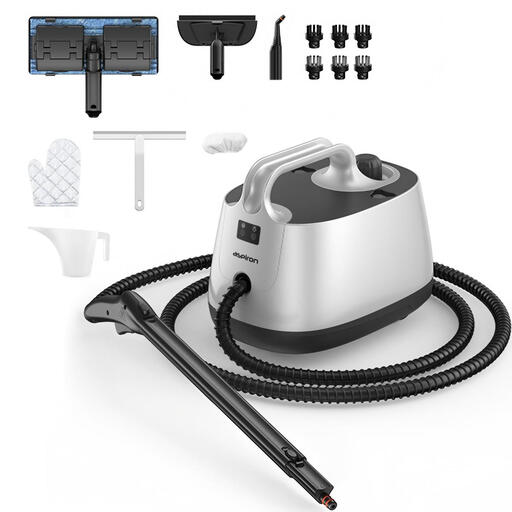
Why this product fits the profile: If you want to clean tiles, grout, windows or hard surfaces in addition to textiles, you get a device with multiple attachments.
The application is not suitable for every upholstery or carpet fibre. The manufacturer points out electrical safety rules and use in accordance with the instructions.
1500 W, stated steam pressure of 4 bar, 1.5 l water tank and 21 accessories.
We have put together a complete, regularly updated list of products that fully meet these strict selection criteria and the safety regulations in force in the EU.
For pet stains, treat the affected area as soon as possible. A carpet and upholstery cleaner can pick up visible soiling; however, a change in odour or permanent discolouration cannot be ruled out for every material.
The running costs consist of electricity, water and, if applicable, cleaning solution. For corded devices, the electricity consumption can be roughly estimated from the wattage and duration of use. For battery-powered devices, charging cycles and potential long-term battery costs are added. The manufacturer's dosage recommendations should be followed, as too much cleaning agent can cause more residue.
The lifespan depends on frequency of use, maintenance and material stress. Regularly rinsing the tanks, drying the filters and removing fibres from the nozzle can help maintain function. Overfilled tanks, blocked hoses and unsuitable liquids put strain on the device.
Yes, provided the upholstery is suitable for wet cleaning and the nozzle is compact enough. For the car, a long hose, a long cable or a battery, as well as a controllable spray amount, are useful. After cleaning, the doors should be opened and the seats dried completely.