
Lieferung heute & morgen

Qualitätsgarantie

Willkommens-Angebote freischalten: KOSTENLOSE Lieferung | Bis zu 80 % RABATT | Kostenlose 30-Tage-JoyPlus-Testphase
App herunterladen
A spilt drink, pet stains on the carpet or visible dirt on the sofa can often be difficult to deal with fully using an ordinary carpet vacuum. A spray-extraction carpet cleaner can apply water and cleaning solution to the fabric, then extract them again. This makes it an appealing option for households with children, pets or several upholstered pieces of furniture.
However, these machines vary considerably. High wattage or Pascal figures alone say little about how well a cleaner will perform in practice. Before you buy, it’s worth looking out for these three common pitfalls.
Figures such as 12,000, 15,000 or 18,000 Pa describe a technical measure of suction power. They don’t guarantee that a carpet or sofa will be dry straight after cleaning. Other important factors include the nozzle, airflow, water delivery and how quickly you move the cleaner.
After wet cleaning, make sure the room is well ventilated. For delicate fabrics, it’s also a good idea to test the cleaner on an inconspicuous area first.
A steam cleaner uses heated water or steam. A carpet washer or upholstery cleaner, by contrast, sprays water or cleaning solution onto the surface, then extracts the dirty liquid. Not all fabrics are suitable for high temperatures. For delicate fibres, coated surfaces or materials that aren’t water-resistant, spray extraction may be a more suitable method.
A compact, portable carpet cleaner takes up little storage space. However, when cleaning larger areas, small clean-water tanks need refilling more often. Easy-to-access filters, removable tanks and a way to rinse out the hose after use are also important. Otherwise, lingering moisture can encourage unpleasant smells.
For carpets, sofas, mattresses and car seats, separate clean- and dirty-water tanks are useful. The machine uses clean water, while the extracted liquid collects in a separate container. Check the capacity of each tank and whether both can be easily removed and cleaned.
A 3-in-1 spray, brush and suction function helps with targeted cleaning. The brush loosens dirt from the fibres, while the suction function extracts the dirty water.
The Pa rating can be a useful guide, but it shouldn’t be considered in isolation. A narrow nozzle is suitable for stains, stairs and car seats, while a wider brush covers larger carpeted areas more quickly. Motor power in watts describes electrical consumption or power input; it doesn’t automatically indicate cleaning performance.
Also check the hose and cable length. For a sofa, the back seats of a car or the stairs, a longer reach can reduce how often you need to move the machine.
Some machines allow you to use warm water, while others also offer a heating or steam function. Always check the instruction manual for the permitted temperature. For example, the UWANT B200 SE is specified for water temperatures of up to 60 °C. According to its product description, the ROUNY U2 Heat has cold-water, hot-water and steam modes.
Before use, check the care labels and test colourfastness on a concealed area. Fabrics that aren’t water-resistant must not be wet-cleaned. When cleaning car seats, also take care to prevent liquid from getting into electrical components or gaps in the upholstery.

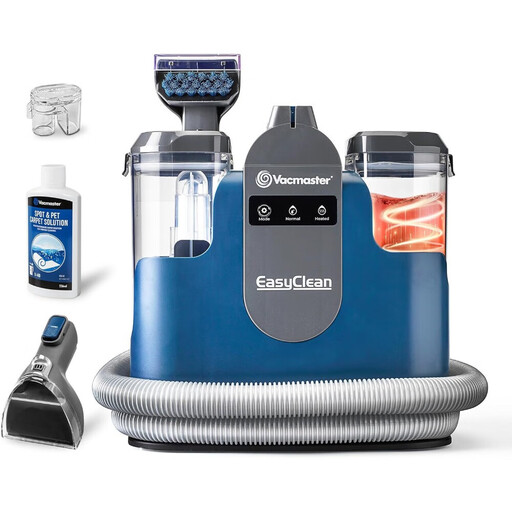
Why this product suits this type of user: This machine is designed for households that want to clean carpets, upholstery or smaller stains regularly, and prefer a compact design with a weight of 3.5 kg.
The separate 2-in-1 clean- and dirty-water tank helps prevent the liquids from mixing. The stated suction power of 12,000 Pa is paired with a 14 cm brush.
Weighs 3.5 kg, with a 1.5 m hose and a noise level of no more than 69 dB according to the product information.
Why this product suits this type of user: A good choice for anyone who values separate tanks, a heating function and clearly explained maintenance for carpets, sofas, stairs and car seats.
The clean-water tank holds 1.6 l and the dirty-water tank 0.95 l. According to the product description, both containers are removable, making it easier to plan when to empty and rinse them.
500 W motor, 1.8 m integrated stain-removal hose, plus standard and heated modes.
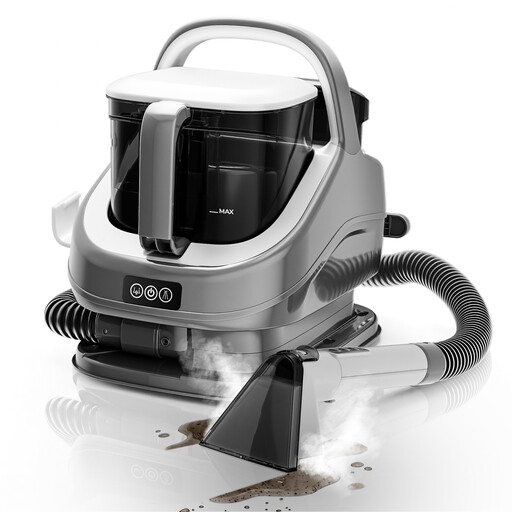
Why this product suits this type of user: Its three cleaning modes are useful if you want to clean different water-resistant fabrics, upholstery, stairs or car seats.
Choosing between cold water, hot water and steam allows you to tailor how you use the machine. The manufacturer’s guidance specifically rules out fabrics that aren’t water-resistant.
1,400 ml clean-water tank, 1,200 ml dirty-water tank, 13 kPa suction power and a 3 m cable.

Why this product suits this type of user: Its portable design is ideal for spot-cleaning carpets, sofas, mattresses and car seats, such as after little household mishaps.
The spray, brush and suction functions bring three cleaning steps together. According to the product information, only fabrics suitable for water cleaning should be treated; a colourfastness test is recommended.
600 W motor, 17 kPa suction power and separate tanks for clean and extracted water.
We’ve put together a complete, regularly updated list of products that meet these strict selection criteria and fully comply with the safety regulations in force in the EU.
A wet vacuum or wet and dry vacuum isn’t automatically designed for cleaning fabric. Check whether the model is specifically intended for carpets and upholstery. Flammable liquids, sharp objects and liquid on the motor unit should never go into the machine.
It depends on the material, how often it’s used and how dirty it is. For individual stains, targeted cleaning is enough. Only wet-clean a large area as often as the care instructions and material allow. Regular dry vacuuming reduces the need for deeper cleaning.
There’s no set time. It depends on the amount of water used, the fibres, room temperature, air circulation and suction power. Ventilate the room, and avoid walking heavily on the carpet again until the surface and deeper fibres are sufficiently dry.
For pet stains, machines with spray extraction, separate water tanks and a narrow upholstery nozzle are useful. Remove any solid residue while dry first, and only use a cleaning solution that’s suitable for the material. Avoid wet-cleaning delicate or non-water-resistant fabrics.