
Lieferung heute & morgen

Qualitätsgarantie

Willkommens-Angebote freischalten: KOSTENLOSE Lieferung | Bis zu 80 % RABATT | Kostenlose 30-Tage-JoyPlus-Testphase
App herunterladen
A carpet cleaner can lift spilled drinks, food residue, pet stains and dirt from textiles. However, not every appliance is suitable for every task in the home. A compact spot cleaner for occasional accidents works differently from a carpet washer for several rooms or a wet vacuum for carpets and upholstery.
Your choice should therefore not be based solely on wattage, suction power or advertising claims. The key factors are the design, tank system, cleaning method and suitability for the material in question.
A high power rating initially tells you only about electricity consumption or motor power. On its own, it does not indicate how much liquid is actually removed from a carpet. For practical use, nozzle design, airflow, spray volume and tank layout are also important.
An appliance with an easily accessible upholstery nozzle may be more suitable for sofas, stairs and car seats than a larger model with a higher wattage but an awkward housing.
During wet cleaning, liquid is applied to the fabric and then vacuumed up again. If too much moisture remains, using the item can become uncomfortable. Buyers should therefore look for a controlled spray function, a suitable suction nozzle and instructions recommending slow backward movements.
Important: not every carpet or upholstered item is suitable for wet cleaning. Before using the appliance for the first time, carry out a colour and material test on an inconspicuous area.
A carpet cleaner must be emptied, rinsed and dried after every use. Otherwise, residue and unpleasant smells may develop. A two-tank system keeps clean water and dirty water separate and makes it easier to monitor the cleaning process.
Larger tanks reduce the need to refill, but they often make the appliance heavier. For a flat or for quickly cleaning car seats, a portable carpet cleaner with smaller tanks may be more practical.
For stains on carpets, sofas or seat upholstery, it makes sense to choose an appliance that combines three stages:
Several models describe this combination as a 3-in-1 or Triple-Action system. It does not replace a full deep clean, but it is suitable for clearly defined areas and everyday dirt.
Depending on the model, manufacturers quote watts, kPa or both. kPa describes the stated vacuum pressure, while watts indicate electrical power consumption. These figures cannot be compared directly between different appliances, as measuring conditions and construction may vary.
For an upholstery cleaner, you should also consider:
Mains-powered appliances receive a continuous supply of electricity while in use. Battery models are more manoeuvrable when cleaning car seats or stairs, but they have a limited runtime and need time to recharge. A heat or steam function is only suitable if the textile’s care instructions allow it. High temperatures can damage delicate materials, adhesives or dyes.
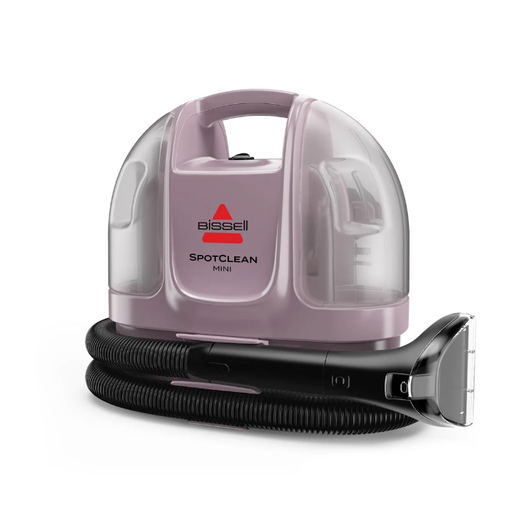
Why this product suits this profile: According to the product details, this compact mains-powered appliance is designed for everyday marks, stairs, upholstery and vehicle interiors. This makes it easier to store in smaller flats.
The product description specifically mentions spraying, brushing and suction. This gives a clearer picture of how it works than a wattage figure alone.
Compact design; stated product weight of around 3.4 kg; suitable for spot cleaning.
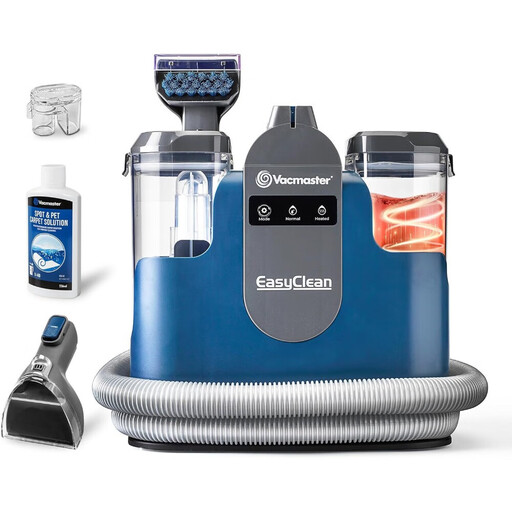
Why this product suits this profile: According to the product details, this model has separate tanks, a 180-cm hose and a switchable heating function for different cleaning modes.
The heating function is described as a selectable mode, not as a blanket indication that it is suitable for all fabrics. The textile’s care instructions remain decisive.
1.6-litre clean-water tank; 0.95-litre dirty-water tank; integrated hose-cleaning nozzle.

Why this product suits this profile: According to the product details, this handheld upholstery cleaner is designed for carpets, sofas, car seats and pet stains. The separate water tanks support frequent spot-cleaning tasks.
The instructions specify a maximum water temperature of 40 °C and recommend testing colourfastness. This helps prevent misuse on delicate fabrics.
600-W motor; stated suction power of 17 kPa; dual-tank system and flexible hose.
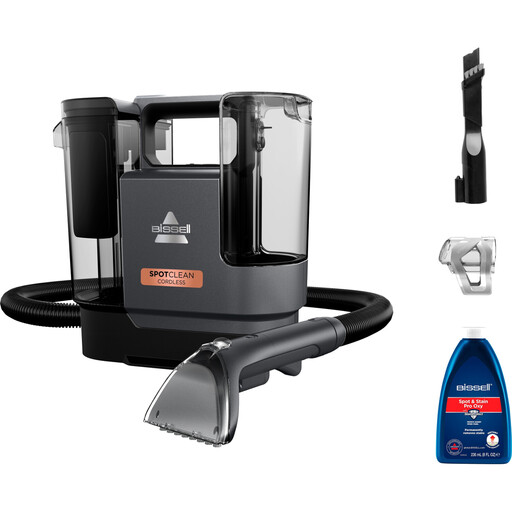
Why this product suits this profile: According to the product details, this battery-powered appliance is designed for short cleaning jobs without a power cable. This makes it particularly suitable for vehicles, stairs and hard-to-reach areas.
The stated runtime of 20 to 25 minutes and charging time of 3 to 4 hours make the appliance’s limitations clear.
18-V lithium-ion battery; 0.9-litre clean-water tank; 0.8-litre dirty-water tank; two attachments included.
We have put together a complete, regularly updated list of products that fully meet these strict selection criteria and the safety regulations applicable in the EU.
Before cleaning, remove loose dust with a standard vacuum cleaner. Then apply the cleaning solution sparingly. Move the nozzle slowly over the area so that as much dirty water as possible is collected.
The following steps are recommended after every use:
Only use suitable, preferably low-foaming cleaning solutions with the appliance. Flammable liquids, solvents and aggressive chemicals must not be put into the carpet cleaner. Children and pets should keep away from the appliance and cleaning products during use.
A carpet washer or spot cleaner sprays water or cleaning solution onto the textile, loosens the dirt mechanically and then vacuums up the liquid again. The fabric remains damp and needs sufficient time to dry.
For homes, spot cleaning is often sufficient for stains, spills or pet accidents. Larger areas should be cleaned according to the material, how heavily the carpet is used and its care instructions. Wetting delicate fibres too often can put them under strain.
Running costs mainly depend on electricity consumption, water, cleaning solution and, where applicable, battery charging cycles. With mains-powered appliances, you can roughly estimate consumption from the stated wattage and operating time. For a realistic comparison, you should also consider tank size, cleaning area and maintenance requirements.