
Lieferung heute & morgen

Qualitätsgarantie

Willkommens-Angebote freischalten: KOSTENLOSE Lieferung | Bis zu 80 % RABATT | Kostenlose 30-Tage-JoyPlus-Testphase
App herunterladen
A carpet cleaner can remove spilt drinks, pet accidents and everyday dirt from carpets, sofas or car seats. However, not every appliance is suitable for every household. Some models promote high wattage figures, even though tank capacity, hose length and day-to-day maintenance are more important in practice. Others offer a steam function that may be unsuitable for delicate fabrics.
As a Joybuy Product Recommendation Officer, I filter the most important product data and assess it according to practical usage scenarios. This makes it easier to identify which carpet and upholstery cleaner matches your requirements.
A high power consumption figure in watts initially describes only the motor’s energy consumption. It does not automatically indicate how much dirty water an appliance can actually extract from the fabric. Manufacturer specifications for suction power, for example in kPa, are more informative, as is the combination of spraying, brushing and extraction.
A compact portable carpet cleaner is easy to store. However, with small water tanks, the cleaning process needs to be interrupted more frequently. The clean-water and dirty-water tanks should also be separate. After every use, the tanks, brushes, filters and hose must be emptied or rinsed and allowed to dry completely.
A steam cleaner for upholstery operates at a high temperature. This can be useful for certain robust, water-resistant surfaces, but it is not suitable for every fabric, leather, coated material or delicate fibre. Before using it for the first time, check the fabric’s care label and test the appliance on an inconspicuous area.
A suitable carpet washer applies water or cleaning solution and then extracts the dissolved dirt. This combination sets it apart from a conventional dry vacuum cleaner. A brush supports the mechanical treatment of stains. For localised dirt, a spot cleaner with a narrow nozzle is usually more practical than a large appliance with a wide floor nozzle.
Manufacturers sometimes state suction power in kPa. These figures are only useful when comparing similar appliance designs, as construction, nozzle design and airflow also play a role. Also look out for:
Use an upholstery cleaner only on surfaces approved for this purpose and resistant to water. Use as little liquid as possible on mattresses, car seats and carpets, then extract it thoroughly. The appliance must not be immersed in water. Unplug it before filling, emptying or cleaning. Children and pets should keep their distance while it is in use.
The following appliances differ in suction power, tank capacity, cleaning system and power supply. The assessment is based on the product data provided for each model.
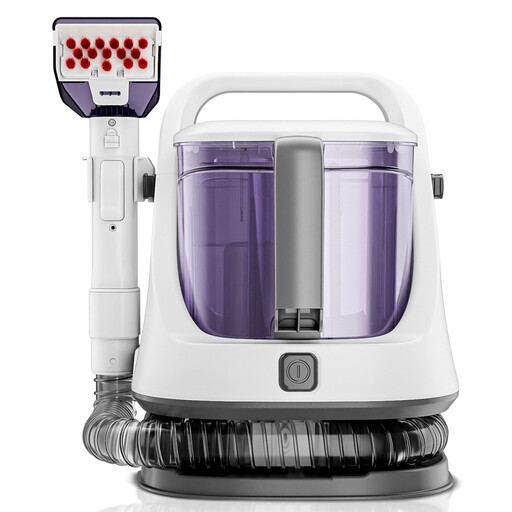
Why this product suits this profile: This appliance is designed for individual carpet areas, sofas, stairs and car seats. With 650 W, 12 kPa suction power, a 1.4-litre clean-water tank and a 1.2-litre dirty-water tank, it offers clear, practical specifications for regular spot cleaning.
The separate tanks prevent clean and dirty water from mixing. Before buying, however, check the 1.1 m hose length and whether the fabric is suitable.
Compact design, 3 m power cable and removable tanks for cleaning and rinsing after use.
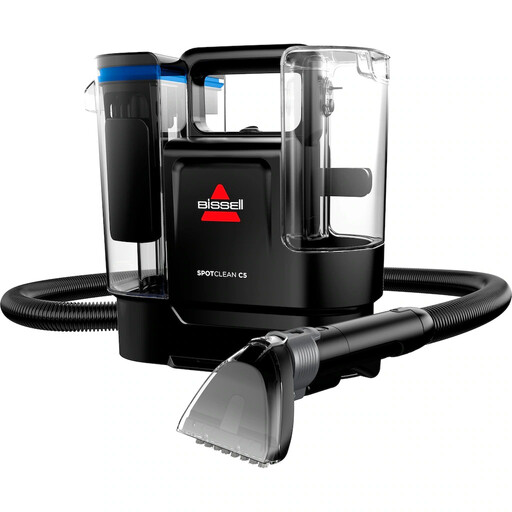
Why this product suits this profile: This compact carpet washer combines spraying, brushing and extraction. It offers over 15 kPa suction power, a 0.9-litre clean-water tank, a 0.8-litre dirty-water tank and a 1.7 m hose.
The HydroRinse cleaning function helps rinse the hose. The relatively small tanks are still something buyers should consider when cleaning larger areas.
4 kg appliance weight, 4.3 m cable and a self-cleaning aid for carpets, upholstery, stairs and car seats.
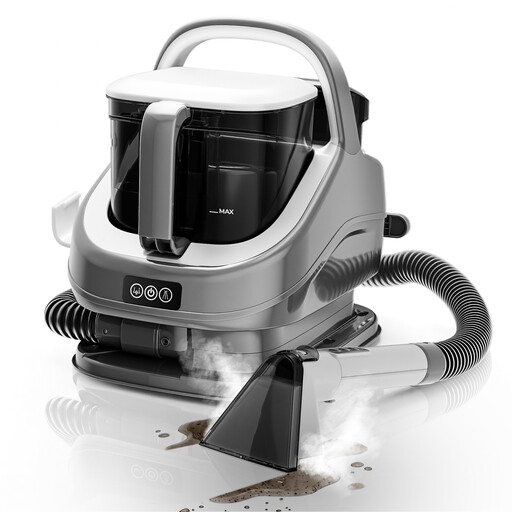
Why this product suits this profile: Three modes – cold water, hot water and steam – allow you to adapt the appliance to different cleaning tasks. With 13 kPa suction power, a 1,400 ml clean-water tank and a 1,200 ml dirty-water tank, it is designed for household use and car interiors.
The modes are clearly separated and should not be taken as universal suitability for every fabric. Check water resistance and care instructions before use.
1300 W power consumption, 3 m cable and several cleaning modes for carpets, sofas, stairs and car seats.
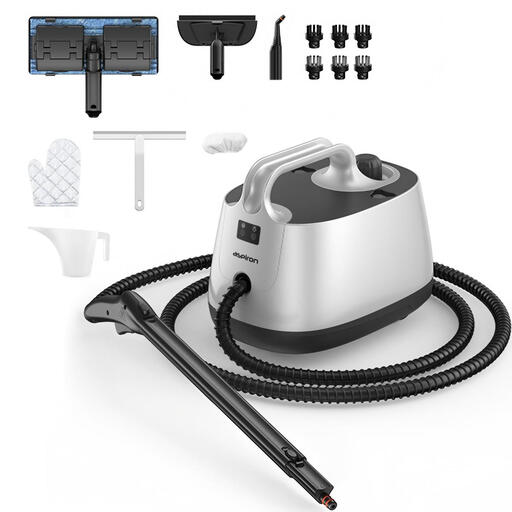
Why this product suits this profile: This appliance is designed for hot steam and a range of surfaces. It offers 1500 W, 4 bar, a 1.5-litre water tank and 21 accessories for floors, joints, windows, upholstery and car interiors.
Steam does not automatically replace the extraction of dirty water. For delicate upholstery and fabrics, the manufacturer’s approval is decisive; the steam temperature requires particular care.
4 bar steam pressure, 1.5-litre tank and an extensive range of accessories for different cleaning areas.
Before use, remove loose dust with a dry vacuum cleaner. Then test the area to be treated in a concealed spot first. Work in short spray intervals and move the nozzle slowly over the fabric to leave as little residual moisture as possible.
When it comes to “cleaning car seats”, particular care is required: electrical components, heated seats and delicate coatings must not become soaked. Sofas and mattresses should also be aired thoroughly afterwards. Cleaning products may only be dosed in accordance with the appliance and fabric instructions.
After cleaning:
We have put together a complete, regularly updated list of products that fully meet these strict selection criteria and the safety regulations applicable in the EU.
This depends on usage, material and the level of soiling. Individual stains should be treated as soon as possible. Full-surface wet cleaning is only necessary if the carpet or upholstery is suitable for it. Excessive moisture can extend drying times and put strain on delicate materials.
There is no generally applicable fixed service life. It depends on how often the appliance is used, how well it is maintained, how regularly the filter is cleaned and whether it is used correctly. Separate tanks, easily accessible filters and a hose-rinsing function can make maintenance easier. The specifications provided by the relevant manufacturer remain decisive.
For corded appliances, power consumption, usage time and the electricity tariff determine energy consumption. An appliance rated at 1,300 W uses 1.3 kWh in one hour of operation in theory; in practice, it usually runs for less time during spot cleaning. Water and, where applicable, a suitable cleaning product are additional costs.