
Lieferung heute & morgen

Qualitätsgarantie

Willkommens-Angebote freischalten: KOSTENLOSE Lieferung | Bis zu 80 % RABATT | Kostenlose 30-Tage-JoyPlus-Testphase
App herunterladen
A carpet cleaner machine can effectively remove spilt drinks, everyday dirt and pet stains from textile surfaces. However, machines vary considerably in tank capacity, suction power, controls and temperature functions. Focusing solely on a high wattage or kPa figure means overlooking important details.
Motor power alone does not indicate how much moisture is actually extracted from the fabric. In practical use, what matters is how the spray function, brush head, airflow and suction power work together. A carpet washer with 1,700 watts may offer additional heating or steam functions, while a portable carpet cleaner with 600 watts may be more compact and easier to handle for small stains.
kPa figures such as 12, 13, 15, 17 or 18 kPa should not be compared in isolation either. Measurement conditions may differ. What matters is whether the machine reliably collects dirty water and how quickly the treated area dries again.
Compact tanks are sufficient for individual stains. However, if you want to clean a sofa, several car seats or stairs, you should check the capacity of both the clean- and dirty-water tanks. Separate tanks prevent already collected dirty water from being used again. Removable tanks make emptying and rinsing easier.
A steam cleaner for upholstery is not suitable for every textile. High temperatures can affect delicate fibres, coatings or adhesive joints. Before any wet or steam cleaning, test an inconspicuous area to check whether the material is colourfast and water-resistant. With steam-capable machines, you should also consider cooling time, filling and protection against scalding.
A suitable spot cleaner ideally works in three stages: spray on the cleaning solution, loosen the dirt with a brush and extract the liquid again. This combination is suitable for carpets, upholstery, mattresses, stairs and car seats, provided that the relevant materials can be wet-cleaned.
A carpet cleaner with powerful suction can reduce residual moisture, but it does not replace slow and even working. Guide the brush head over the surface without applying excessive pressure, then make several extraction passes without spraying any more solution. This leaves less liquid behind in the fabric.
A long hose and a sufficiently long mains cable are useful when cleaning cars or stairs. Corded machines provide consistent power throughout use, but require a socket. A wet vacuum for sofas and car seats should also be easy to transport and have easily accessible tank and filter compartments.
Also look out for:

Why this product suits this profile: This handheld machine is designed for targeted wet cleaning and is suitable for smaller carpeted areas, sofas and car seats.
The specifications state a suction power of 17 kPa, along with separate clean- and dirty-water tanks. This makes the features more transparent than a simple marketing claim about motor power.
600-watt motor, stated suction power of 17 kPa, flexible hose and wet cleaning for textiles.
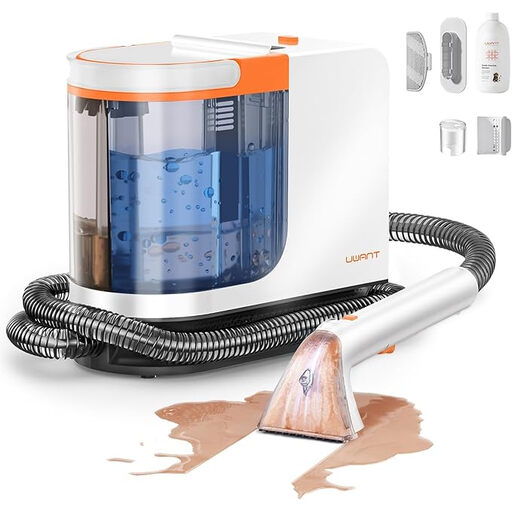
Why this product suits this profile: Its stated suction power of 18 kPa and portable design appeal to users who want to clean carpets, upholstery and vehicle interiors regularly and flexibly.
The product description explicitly states that the water temperature must be limited to a maximum of 60 °C and that the filter must be used.
Stated suction power of 18 kPa, portable design, cleaning tools and self-cleaning function according to the product description.
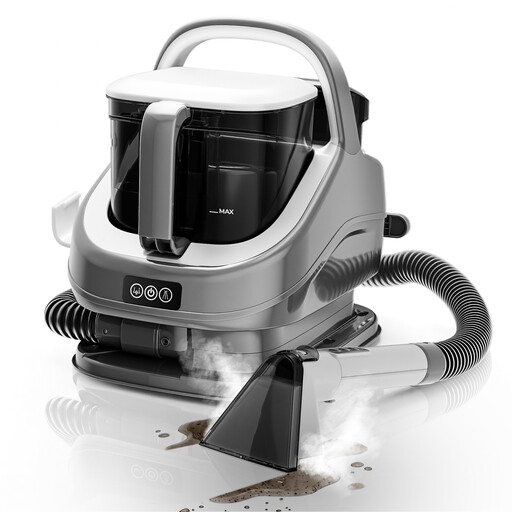
Why this product suits this profile: Three cleaning modes let you choose between room-temperature water, hot water and steam – provided the material being cleaned is suitable.
The product data lists the individual modes, 13 kPa suction power, tank capacities and the lower flow rate in steam mode separately.
1,300 watts, 13 kPa, 1,400-ml clean-water tank, 1,200-ml dirty-water tank and 3-metre cable.
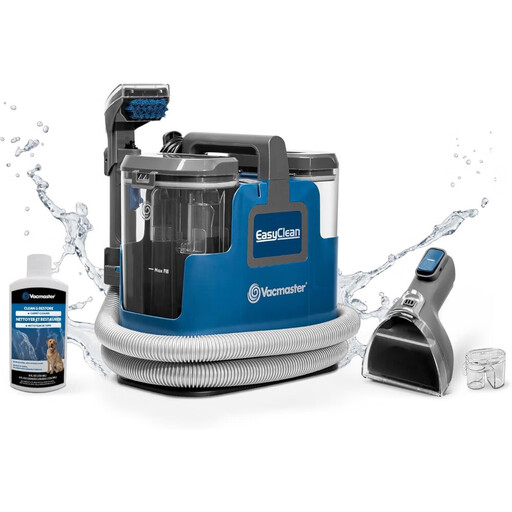
Why this product suits this profile: This upholstery cleaner is designed for sofas, carpets, stairs, car seats and textiles, and is supplied with a spot and pet cleaning solution.
The description specifies a 1.8-metre hose, separate water tanks and clear instructions for emptying and rinsing after use.
500-watt motor, stated suction power of 17 kPa, 1.8-metre hose and supplied cleaning solution.
We have put together a complete, regularly updated list of products that fully meet these strict selection criteria and the safety regulations applicable in the EU.
A carpet cleaning machine should not be used to collect petrol, flammable liquids, hot objects or sharp-edged dirt. The main unit and mains cable must not be immersed in water. Steam machines have an additional requirement: never direct steam at people, animals or electrical appliances.
This depends on usage, material and the type of dirt. In households with children or pets, spot cleaning when needed may be sensible. Full wet cleaning should only be carried out once you have confirmed that the carpet is suitable for it. Excessive moisture can make drying more difficult and place strain on delicate fibres.
The drying time depends on fibre density, the amount of water applied, room temperature and ventilation. Several slow extraction passes, moderate dosing and good air circulation help reduce residual moisture. Carpets should not be used normally again until both the surface and deeper layers are completely dry.
Electricity consumption mainly depends on motor power and operating time. The cost of cleaning solution depends on the dosage and the size of the area. Treating small stains promptly usually requires less water and product than cleaning an entire surface. The instructions on the cleaning product and those supplied with the specific machine should always be followed.