
Lieferung heute & morgen

Qualitätsgarantie

Willkommens-Angebote freischalten: KOSTENLOSE Lieferung | Bis zu 80 % RABATT | Kostenlose 30-Tage-JoyPlus-Testphase
App herunterladen
A carpet cleaner machine is designed to remove stains, extract liquid and make textiles usable again as quickly as possible. In practice, however, the differences aren't just about price. For private households, families with children, pet owners and car owners, suction power, tank configuration, hose length and suitable attachments are the key factors.
A stated 15 kPa suction power describes the vacuum pressure of the device. On its own, however, it doesn't tell you how well a stain will disappear. What really matters is the interplay between spray volume, brush head, airflow and distance from the fabric. A machine with a spray function can apply liquid precisely and then extract it again. Without sufficient suction, the upholstery will stay damp for a long time.
A large fresh water tank does reduce the need for refills. However, a dirty water tank that is too big or awkward to remove can make cleaning and emptying more difficult. A separate tank system makes sense: fresh water and dirty water remain completely separate. Also look for clearly visible MAX markings and easy-to-clean containers.
A portable carpet cleaner is handy for spot cleaning. But if the power cord doesn't reach the sofa or your vehicle, using it becomes unnecessarily awkward. For upholstery, mattresses and car seats, a flexible hose and a sufficiently long cable are important features. Just as important: accessories should store neatly, so brushes and the hose aren't left loose in a cupboard.
A carpet cleaner with spray function typically works in three steps: applying liquid, loosening dirt with a brush, and then extracting the water along with the dissolved dirt. This combination is also known as spray extraction cleaning.
When evaluating suction power, you should look at the kPa rating, but don't buy based on it alone. Also check:
An upholstery cleaner or extraction cleaner isn't suitable for every surface. Delicate fabrics, leather, coated materials and certain mattresses should only be treated according to the manufacturer's care instructions. Always test the cleaning solution on an inconspicuous area first.
The OMESER W07, according to the product specifications, uses a 1.5-litre fresh water tank and a 0.8-litre dirty water tank. The separate containers can make handling easier because clean and extracted water aren't mixed. Don't exceed the MAX mark, as an overfilled tank can affect performance.
The actual drying time depends on the fabric type, water volume, room temperature and ventilation. After use, you should extract several times if possible, open windows, and only use the furniture fully again once the upholstery feels dry. This reduces the risk of lingering dampness and odour, without promising a specific result.
A wet vacuum for carpets is intended for damp cleaning tasks, not for dry rubble or any liquid. The device must not be immersed in water. Always unplug the machine before filling, emptying or cleaning it. Keep the device and cable away from small children and pets during operation.
For cleaning car seats, compact dimensions and a sufficient cable length are helpful. When working on a vehicle, also make sure that upholstery doesn't become soaked and that electrical components don't come into contact with cleaning fluid.
The following cards classify the provided products according to their practical use. The HAUSHOF models are hand staplers for upholstery and DIY tasks, not carpet cleaning machines. They can be used as a supplement when refurbishing a piece of furniture, for example, but they don't replace an upholstery cleaner.

Why this product fits the profile: This compact spot cleaner is aimed at households that want to tackle carpets, sofas, mattresses or car seats occasionally, without having to store a large machine.
The separate tanks prevent fresh and dirty water from mixing. The specifications of 15 kPa, 1.5 l fresh water and 0.8 l dirty water provide clear points of comparison.
Spray, brush and suction functions in one device; 4.26-foot hose and 9.84-foot power cord according to the product specifications.
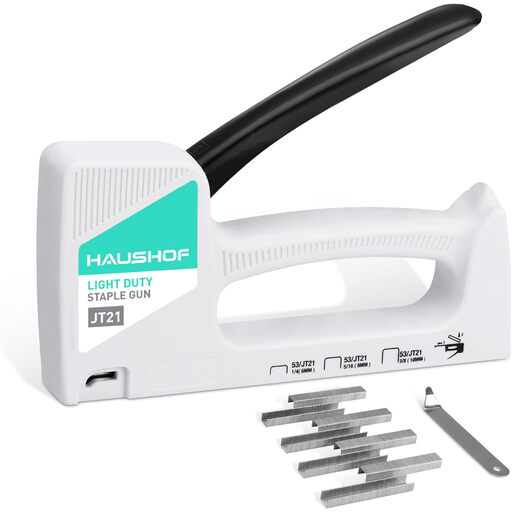
Why this product fits the profile: This set is intended for users who want to carry on with light DIY upholstery work on cleaned or re-covered furniture.
Compatibility with Type 53 staples and the 800 included 8 mm staples are clearly stated. The hand stapler is not mistaken for a carpet cleaner.
PC+ABS construction, quick-release magazine, anti-jam mechanism and staple remover included.
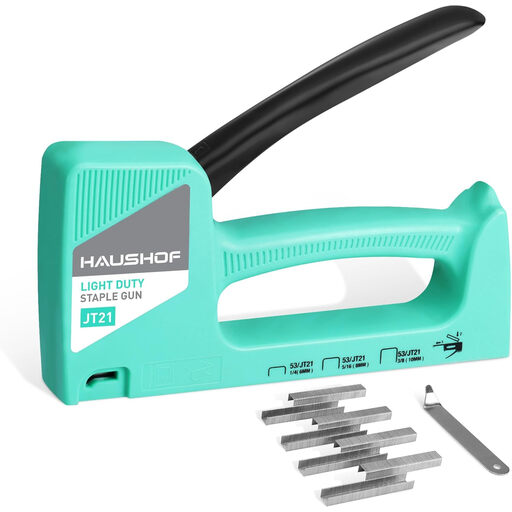
Why this product fits the profile: For regular small repairs on fabric, furniture or decoration, this supplementary tool offers simple manual operation.
The limit of its use is transparent: the stapler is for light upholstery and craft work, not for wet cleaning carpets or sofas.
Suitable for Type 53 in 6, 8 and 10 mm; ergonomic handle, quick-release magazine and 800 staples in the set.
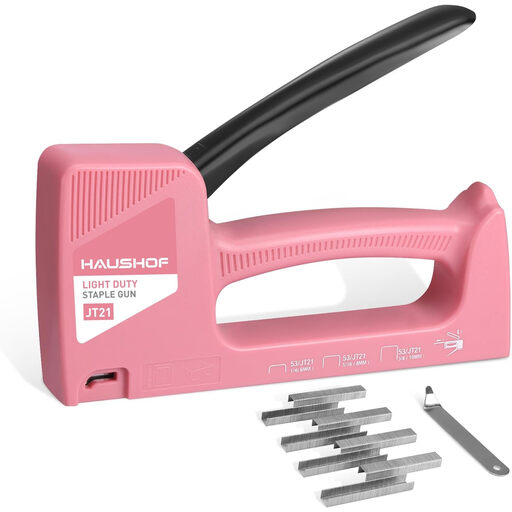
Why this product fits the profile: This set works well as an accessory for creative furniture projects where fabric needs to be attached or replaced after cleaning.
The staple sizes and the included staple remover are specified. A separate upholstery cleaning machine is still required for the actual textile cleaning.
Smooth operation, anti-jam function and quick-release magazine for light fabric and furniture work.
We've put together a complete, regularly updated list of products that fully meet these strict selection criteria and the safety regulations in force in the EU.
Only use cleaning agents that are suitable for your specific machine and the fabric you are treating. Too much cleaning product can leave residue and prolong the rinsing needed. After each use, empty the dirty water tank, rinse out both tanks, and allow the hose and brush head to dry.
The running costs mainly consist of water, cleaning solution, electricity and, if necessary, replacement parts. A machine with a larger tank can save refill time when tackling several small stains. For individual spots, however, a small amount of water is often enough, provided the spray function works precisely.
The machine sprays water or cleaning solution onto the fabric, loosens the dirt with a brush, and then extracts the liquid into a separate dirty water tank. Depending on the material, this method is suitable for carpets, sofas, mattresses and car seats, among other things.
It's not possible to give a fixed time. The material, water volume, room temperature and air circulation all affect the result. Use as little liquid as possible, extract several times, and ensure good ventilation. The fabric should feel dry before you use it normally.
A portable carpet cleaner can be a good idea if you regularly get small stains from children, pets or vehicles. For very large carpeted areas, a machine with a larger cleaning head may be more suitable. So the deciding factors aren't just the purchase price, but also how often you'll use it, the tank size, the accessories and the storage space you have available.