
Lieferung heute & morgen

Qualitätsgarantie

Willkommens-Angebote freischalten: KOSTENLOSE Lieferung | Bis zu 80 % RABATT | Kostenlose 30-Tage-JoyPlus-Testphase
App herunterladen
A carpet cleaner washer vacuum can tackle spilled drinks, everyday dirt, pet accidents and stains on textiles with spray, brush and suction functions. Unlike a standard vacuum cleaner, this appliance also picks up liquid. That’s handy for carpets, sofas, stairs, mattresses and car seats – but it does require choosing the right device and using it carefully.
The motor power in watts describes the electrical consumption or input power. On its own, it doesn’t tell you how well an upholstery cleaner draws liquid out of a fabric. For practical selection, you also need to consider the stated suction pressure, nozzle shape, airflow path and the design of the dirty water pickup.
A high suction power number is also no substitute for the correct technique: the nozzle should be moved slowly over the area you’ve just sprayed. Using too much cleaning solution can extend drying time.
A compact, portable carpet cleaner fits easily into a cupboard or boot. However, for larger areas you’ll need to refill the fresh water tank more often and empty the dirty water tank more frequently. So check the tank sizes and think about whether you’ll mainly use the device for individual stains or for several square metres of carpet.
A dual-tank system keeps clean water separate from the dirty water you’ve picked up. This makes the process easier and reduces the risk of accidentally spreading dirty liquid back onto the surface as you work.
A steam cleaner for carpets works fundamentally differently from a carpet washer vacuum. Depending on the model, steam can be released at high temperatures and isn’t suitable for every fibre, upholstery filling or coating. What’s more, steam doesn’t automatically replace the need to pick up dirty water.
For water-resistant textiles, a carpet washer vacuum with spray, brush and suction functions is usually the more straightforward category of appliance. Always check the care instructions from both the appliance manufacturer and the textile producer before use.
Manufacturers often state suction power in kPa. The figures in product specifications are only usefully comparable within the same category of appliance, because measurement conditions and construction can vary. A device with 17 or 18 kPa according to the manufacturer may be designed for spot cleaning, but it won’t necessarily replace a large-area carpet vacuum.
Also important are:
For individual stains, a smaller device is often sufficient. If you regularly need to remove pet stains, clean several upholstered items or clean car seats, you’ll benefit from larger containers and a longer reach. Also pay attention to the empty weight: a full tank increases the actual weight you’ll be carrying.
Always test the cleaning solution and moisture on an inconspicuous area first. Only water-resistant materials should be treated wet. Delicate natural fibres, coated fabrics and certain mattress covers can react to water, heat or cleaning chemicals.
For electrical appliances, follow the instructions in the user manual. The main unit must not be immersed in water. Flammable liquids should never be put into a carpet cleaner washer vacuum. After each use, rinse the dirty water tank, nozzle, filter and hose, and allow them to dry completely.
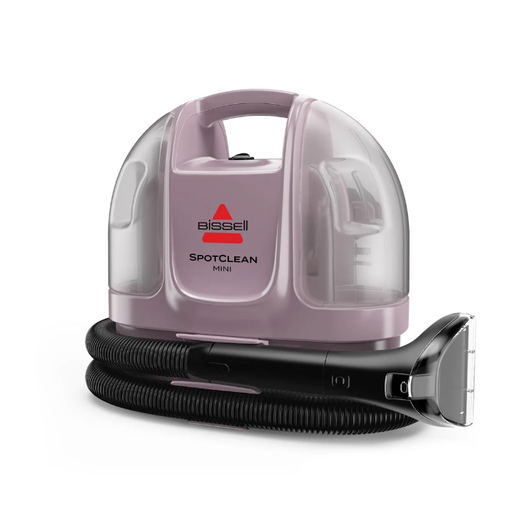
Why this product suits the profile: The compact design and stated weight of around 3.4 kg make it suitable for flats and occasional stains on stairs, upholstery or inside the car.
Its suitability for spot applications prevents a small device from being mistakenly planned as a solution for very large carpet areas.
Spray, brush and suction functions plus compact dimensions for small cleaning tasks.
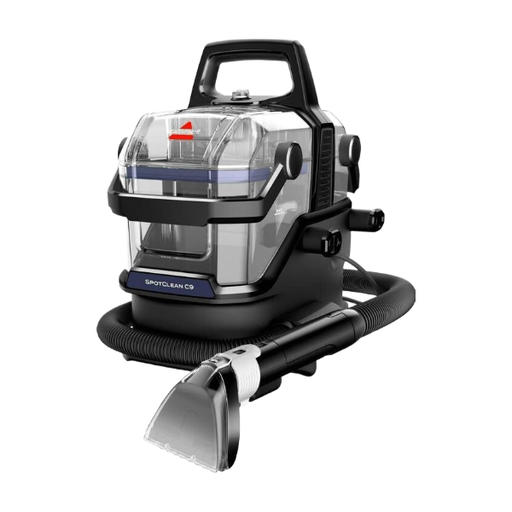
Why this product suits the profile: According to the product information, this model offers a 1.9-litre fresh water tank, a 1.4-litre dirty water tank and a 400-watt motor for carpets and upholstery.
The separate tanks and documented volumes make the capacity clear before purchase.
Larger tank volumes, compact handling and, according to the product description, versatile use on various textile surfaces.
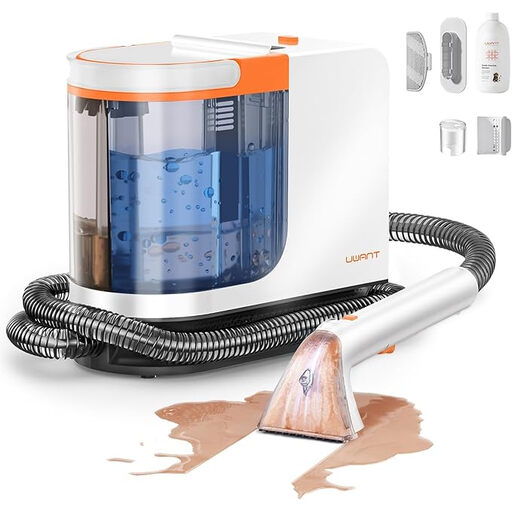
Why this product suits the profile: According to the product name, this portable device has a suction power of 18 kPa and cleaning tools for pet stains, upholstery, sofas, carpets and cars.
The stated suction figure and the included attachments make it easier to check whether the intended use area is actually covered.
Portable format, 18 kPa according to the product information and accessories for several textile surfaces.
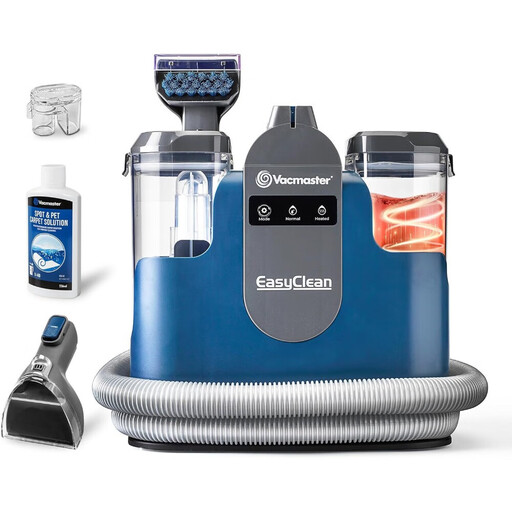
Why this product suits the profile: According to the product information, this model combines 1.6 litres of fresh water, 0.95 litres of dirty water, a 1.8-metre hose and a selectable heating mode.
The separate operating modes prevent a heating function from being equated with suitability for every textile. You still need to check the material approval.
Heating mode according to the product description, dual-tank system and 180 cm long hose for sofas, carpets and car seats.
We’ve put together a complete, regularly updated list of products that fully meet these strict selection criteria and the safety regulations in force in the EU.
For pet accidents, remove any solid matter first. Cleaning products must only be used according to the manufacturer’s instructions. Odour or stain removal can vary depending on the material, contact time and level of soiling.
A carpet cleaner washer vacuum typically sprays water or cleaning solution onto the textile surface, works with a brush and then vacuums up the dirty liquid. A wet vacuum can pick up liquids but doesn’t necessarily have a spray and brush function. For targeted textile care, the nozzle’s features are therefore crucial.
The drying time depends on the fibre material, the amount of liquid, room temperature, air circulation and suction power. Air the room and don’t walk on the area again until it is completely dry. Too much water can cause deformation or unpleasant odours on sensitive materials.
Ongoing costs include electricity, water, cleaning solution and possibly replacement filters. For corded devices, you can roughly estimate the electricity consumption based on the wattage and the length of use. Only use compatible, low-foaming products and clean the device after each use to avoid follow-up costs from blocked pipes or damaged filters.