
Lieferung heute & morgen

Qualitätsgarantie

Willkommens-Angebote freischalten: KOSTENLOSE Lieferung | Bis zu 80 % RABATT | Kostenlose 30-Tage-JoyPlus-Testphase
App herunterladen
A carpet cleaner washer vacuum sprays water or cleaning solution onto textile surfaces, loosens dirt with a brush, and then sucks the dirty liquid back up. This sets it apart from a classic vacuum cleaner and also from a steam cleaner for carpets. For households with children, pets, upholstered furniture or a vehicle, a portable device can be a sensible choice – provided the technical specifications match your intended use.
Figures like 12, 17 or 18 kPa describe the negative pressure, but they don't automatically indicate the cleaning result. What really matters is the interplay between spray performance, brush attachment, airflow, tank size and operation. A device with a high number but a short hose or a hard-to-reach dirty water tank can be less practical in everyday use.
A washer vacuum is only suitable for water-resistant textiles. Delicate carpets, velvet, certain mattress covers, leather or non-colourfast fabrics can be damaged by moisture, cleaning agents or friction. Before first use, you should carry out a colour and material test on an inconspicuous area.
After use, the fresh water tank, dirty water tank, hose, filter and brush head must be emptied or rinsed out. If residues remain in the device, odours can develop. A portable carpet cleaner with easily removable tanks and accessible components saves time during regular use.
For stains on carpets, sofas or car seats, a 3-in-1 system combining spray, brush and suction is particularly versatile. The spray function distributes water or a suitable, non-foaming cleaning solution. The brush works the dirt out of the fibres, while the suction function removes the liquid again.
With a wet vacuum for carpets, the nozzle should match the area. Small nozzles are suitable for individual stains, stairs and car seats. Wider attachments make cleaning larger carpet areas easier.
Suction power is often given in kPa. The values for the devices presented here range, for example, from 12 to 18 kPa. They are only meaningfully comparable within similar types of construction. Motor power in watts is also not a sole indicator of quality.
For flats and apartment buildings, the noise level is also relevant. The ROUNY model with 12 kPa, for example, is rated at 80 dB. This is a parameter that buyers should consider with frequent use and sensitive neighbours.
Separate tanks keep fresh and dirty water apart. Pay attention to:
For picking up pet hair or dry crumbs, a prior pass with a normal vacuum cleaner is usually advisable. A washer vacuum is primarily intended for subsequent wet cleaning and liquid extraction.
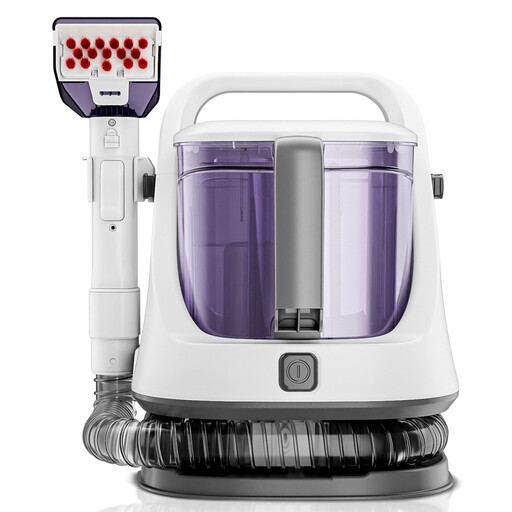
Why this product fits the profile: The device combines 650 W, 12 kPa suction power, separate tanks and a 3 m power cord. This makes it suitable for occasional stains on sofas, carpets, stairs and car seats.
The separate 1,400 ml and 1,200 ml tanks, along with the removable containers, make filling, emptying and rinsing straightforward.
1.1 m hose, 3 m cable and dual-tank system for flexible use around the home and in the vehicle.
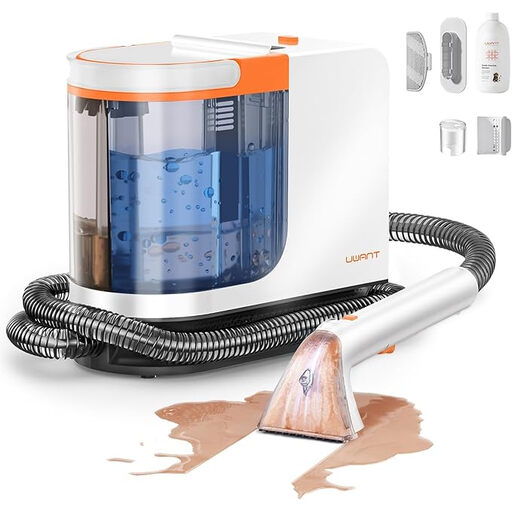
Why this product fits the profile: The stated suction power of 18 kPa and the included cleaning tools appeal to users who want to regularly clean upholstery, carpets and vehicle textiles.
Before buying, customers should check which attachments and which cleaning fluid are actually included in the package, rather than just focusing on the kPa figure.
18 kPa according to the product specification, plus a portable design for sofas, carpets, cars and pet areas.
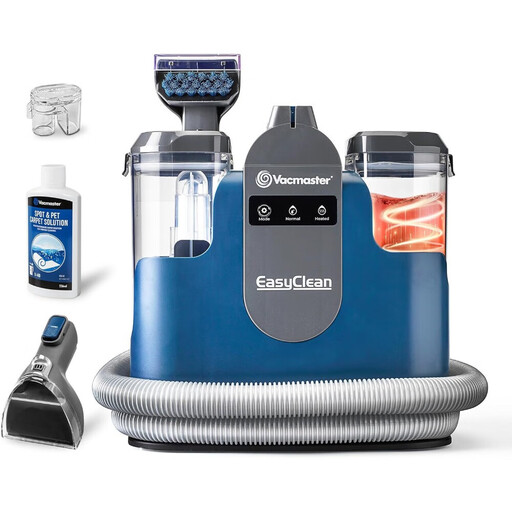
Why this product fits the profile: This model features a 1.6 L fresh water tank, a 0.95 L dirty water tank, a 180 cm hose and two cleaning modes according to the product description.
The heated function is no substitute for material tests. With delicate fabrics, temperature guidelines, care labels and the instruction manual should be checked first.
Two modes, separate tanks and a self-cleaning attachment for repeated use on textiles.

Why this product fits the profile: According to the data sheet, this handheld device is intended for carpets, sofas, car interiors and pet stains. 600 W motor power and 17 kPa suction power are transparently stated for classification.
The instructions specify lukewarm water up to a maximum of 40 °C and a non-foaming cleaning solution. This limits incorrect operation during daily stain cleaning.
Ongoing costs mainly depend on electricity consumption, cleaning agent, water and spare parts. Corded models avoid battery changes but require a socket. With frequent use, easily available filters and accessible spare parts are more important than a single high performance figure.
We have compiled a complete, regularly updated list of products that fully meet these strict selection criteria and the safety regulations in force in the EU.
The drying time depends on the fabric, room temperature, humidity and the amount of water used. After spraying, as much liquid as possible should be sucked up. Good ventilation and reduced application shorten the waiting time. The area should only be walked on again when it is completely dry.
Yes, provided the cover is suitable for wet cleaning. A washer vacuum for sofas and cars with a short nozzle and flexible hose makes the job easier. Electrical connections, controls and sensitive interior parts must not come into contact with water.
The dirty water tank should be emptied and rinsed out after each use. The brush head and hose also need cleaning. Filters should be checked according to the instruction manual and inserted completely dry. This care helps maintain consistent suction power and prevents residues from building up inside the device.