
Lieferung heute & morgen

Qualitätsgarantie

Willkommens-Angebote freischalten: KOSTENLOSE Lieferung | Bis zu 80 % RABATT | Kostenlose 30-Tage-JoyPlus-Testphase
App herunterladen
A carpet cleaner wet vacuum combines spraying and vacuuming: a cleaning solution is applied to the textile surface, then loosened dirt is removed along with the liquid. This distinguishes it from a standard carpet vacuum, which mainly removes dry dust and loose particles.
For households, pet owners and car owners, this type of appliance can be practical. However, high power ratings or a large number of accessories do not automatically guarantee the right purchase. What matters is whether the tank capacity, cleaning principle, operating range and maintenance requirements suit the intended use.
The motor rating in watts initially describes electrical consumption or input power. On its own, it says little about how effectively a machine extracts dirty water from fibres. Also important are negative pressure or suction power, nozzle design, spray volume and the sealing of the air path.
A 500-watt appliance may be sufficient for sofas, car seats and individual stains, while a larger wet vacuum offers other advantages for extensive areas. Figures such as 12 or 15 kPa should therefore be considered in conjunction with the tank, hose and cleaning nozzle.
Hot water or steam can be useful for certain types of dirt, but is not suitable for all textiles. Delicate upholstery, coated fabrics and materials with unstable colours may be affected by heat or moisture.
Before use, follow the manufacturer's care instructions and test the appliance on an inconspicuous area. A cold-water upholstery cleaner with spray extraction is more controllable for many everyday situations than a machine with an additional heating or steam function.
After every use, the dirty-water tank, fresh-water tank, nozzle and, where applicable, filters must be emptied or rinsed. If residue remains in the hose, odours or deposits may develop. A portable carpet cleaner with removable tanks and a hose-cleaning function reduces the maintenance required, but does not eliminate the need for cleaning.
A wet vacuum for sofas and carpets should keep fresh and dirty water separate. This means the cleaning solution is supplied from a separate tank, while the extracted water is collected in another container.
For smaller spot-cleaning jobs, tanks in the region of around 0.8 to 1.5 litres are often sufficient. For large carpeted areas, greater capacity can reduce interruptions. However, a larger tank usually also increases the weight and space required for storage.
A narrow nozzle can reach corners, stairs and car seats precisely. A wider nozzle can save time when cleaning carpets or larger sofa surfaces. The stated suction power is a technical comparison figure, but no guarantee of removing a particular stain.
After wet cleaning, the textile surface should be given enough time to dry properly. Using too much cleaning solution, a blocked nozzle or repeated slow spraying can increase residual moisture. Ventilation and economical use of cleaning solution are therefore important parts of the cleaning process.
A wet vacuum for dry and wet tasks requires different filters depending on the operating mode. According to the product information, the Vacmaster VK1330PWR uses a washing filter, an exhaust filter made from HEPA material and a foam filter for wet vacuuming and shampoo operation. However, a filter made from HEPA material does not mean that a reduction in allergens throughout the entire room is guaranteed.
For cleaning vehicles and stairs, weight, hose length and cable management are particularly important. Battery-powered appliances offer freedom of movement, but have a limited runtime and need time to recharge. Corded models allow for longer cleaning sessions, but require an accessible power socket.
The following appliances cover different usage profiles. The stated data corresponds to the respective product information. Before buying, check the contents of the package, operating instructions and suitability for the specific material.
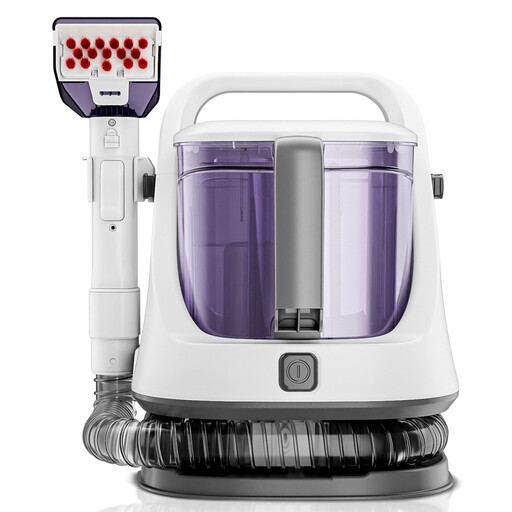
Why this product suits this profile: This compact appliance is designed for sofas, carpets, stairs, upholstery and car seats. Its 1,400 ml fresh-water tank, 1,200 ml dirty-water tank and 3 m cable are suitable for individual rooms and mobile cleaning tasks.
The separate tanks prevent fresh and dirty water from mixing in the same container. The stated suction power of 12 kPa can be assessed against the intended area of use.
650 W motor, 12 kPa suction power, 1.1 m hose and removable tanks for cleaning textiles and vehicle interiors.
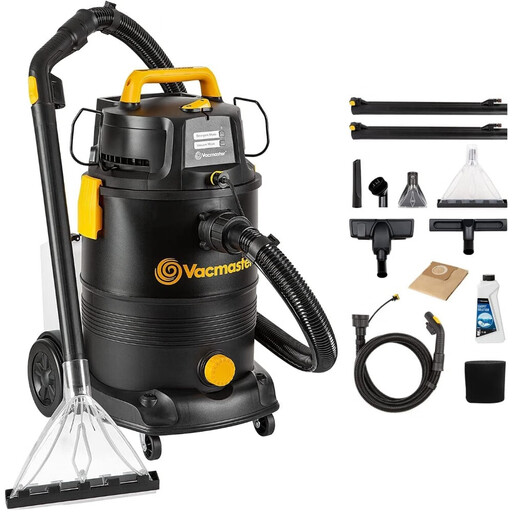
Why this product suits this profile: This model combines dry vacuuming, wet vacuuming and carpet cleaning. With 1,300 watts, a 6-litre cleaning-solution tank and a 30-litre collection container, it is designed for longer cleaning sessions at home, in the garage or around the vehicle.
The 3-in-1 design makes the different operating modes clear. Separate filters are provided for dry and wet vacuuming, making filter changes part of the operating concept.
Large tank capacities, 1,300 W motor, HEPA material in the exhaust filter according to the product information, and accessories for wet, dry and carpet cleaning.

Why this product suits this profile: Battery operation is designed for car seats, stairs and areas without a nearby power socket. According to the product information, it offers up to 55 minutes of runtime, a 1.6-litre fresh-water tank and a 0.8-litre dirty-water tank.
The stated runtime makes the battery dependency clear. Before longer cleaning sessions, check the charge level and divide the work into manageable sections.
Cordless use, 15 kPa suction power, 24-volt lithium battery and self-cleaning hose accessory according to the product description.
We have put together a complete, regularly updated list of products that fully meet these strict selection criteria and the safety regulations applicable in the EU.
Before using the appliance for the first time, remove loose dirt with a dry carpet vacuum or vacuum cleaner. Then check whether the material is suitable for water and whether its colours are fast. When cleaning:
For pet hair, a wet vacuum is not always the best first tool. A separate pet-hair and stain remover or brush nozzle may loosen hair more effectively before wet cleaning. If you regularly want to clean car seats, you should also consider the hose length, nozzle width and whether the vehicle provides a suitable power supply.
This depends on the level of dirt, the material and how it is used. For households with pets or children, targeted cleaning can be useful. However, cleaning textiles too frequently with water may unnecessarily saturate them. Always follow the care instructions provided by the carpet or upholstery manufacturer.
No fixed drying time can be given for every material. It depends on the amount of water, room temperature, air circulation, fibre density and suction power. Economical spraying, thorough vacuuming and good ventilation reduce residual moisture. The textile should not be used normally again until it is completely dry.
In addition to electricity consumption, there are costs for cleaning solution, and possibly filters and replacement parts. Battery-powered appliances also require a functioning battery. Large tanks can reduce refill times during frequent use, but consume more water and cleaning solution when filled and used to capacity. The key factor is choosing an appliance size that suits the actual area to be cleaned.