
Lieferung heute & morgen

Qualitätsgarantie

Willkommens-Angebote freischalten: KOSTENLOSE Lieferung | Bis zu 80 % RABATT | Kostenlose 30-Tage-JoyPlus-Testphase
App herunterladen
A carpet cleaner wet vacuum can tackle spilt drinks, everyday dirt, pet stains and residue on water-safe textiles. Unlike a conventional carpet cleaner with spray and suction functions for dry dirt, a wet vacuum works with liquid: it applies water or cleaning solution, loosens the dirt and then sucks the dirty liquid back up.
The choice may seem straightforward at first glance. In practice, however, unclear performance specifications, unsuitable tank sizes or time-consuming cleaning after use often lead to disappointing purchases. Households, families, pet owners and car owners should check these points before buying.
Specifications such as 12, 15 or 17 kPa describe the maximum negative pressure. However, they do not by themselves show how well a device works on different fabrics. The nozzle seal, airflow path, spray volume and the ability to guide the nozzle slowly over the fabric are also important.
A upholstery cleaner with a high kPa rating can therefore be impractical if the hose becomes blocked quickly or the nozzle applies too much liquid. Look at the interaction between suction power, spray function and nozzle design.
A compact spot cleaner is easy to store. However, when cleaning several seats or a large carpet, small water tanks need to be refilled and emptied more often. A separate system for clean and dirty water is important. This prevents collected water from being distributed over the textile surface again.
Removable tanks, clearly visible fill markings and openings that can be rinsed out completely after use are particularly practical.
Before use, check whether the carpet, sofa, mattress or car seat is water-resistant. First test the device on an inconspicuous area to check colourfastness and material compatibility. Delicate natural fibres, unsealed upholstery fillings or materials containing water-soluble adhesive can be damaged by moisture.
A steam cleaner is not automatically an alternative. It works with hot steam and, depending on the attachment, is more suitable for hard surfaces, grout or certain textiles. It does not replace a wet vacuum that extracts dirty water from the fabric.
A wet vacuum for carpets and upholstery should apply liquid in a controlled manner and then collect it again. A 3-in-1 function combining spraying, brushing and suction is practical for localised dirt. For the driest possible result, it is important to consider how slowly and evenly the nozzle can be guided.
Compare the size of the clean-water tank with your intended use. Compact tanks are often sufficient for sofas, stairs and car seats. Larger containers are more convenient for several carpets. The dirty-water tank should be emptied and rinsed after every use to prevent residue or odours from developing.
A long cable and flexible hose make it easier to clean stairs, sofa corners and vehicles. At the same time, the device should remain portable. Specifications for weight, hose length and cable length are therefore more meaningful than general advertising claims. Some models state a noise level of around 80 dB; this figure is relevant for households with young children or noise-sensitive people.
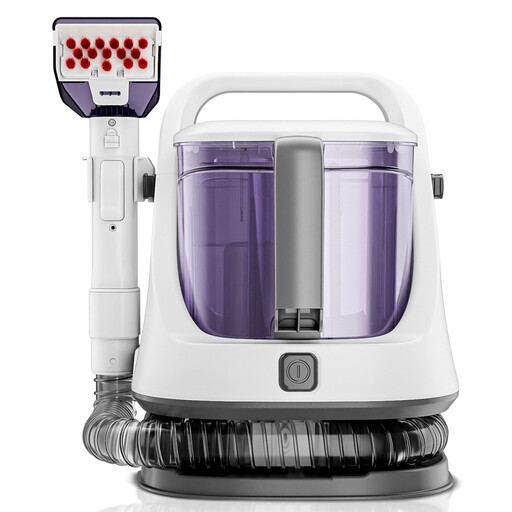
Why this product suits this profile: This compact device is designed for smaller households and individual stains on sofas, carpets, stairs or car seats.
The separate 1,400 ml clean-water and 1,200 ml dirty-water tanks prevent the liquids from mixing during operation.
650 W motor, 12 kPa negative pressure, 1.1 m hose and 3 m mains cable; the tanks can be removed and rinsed out.
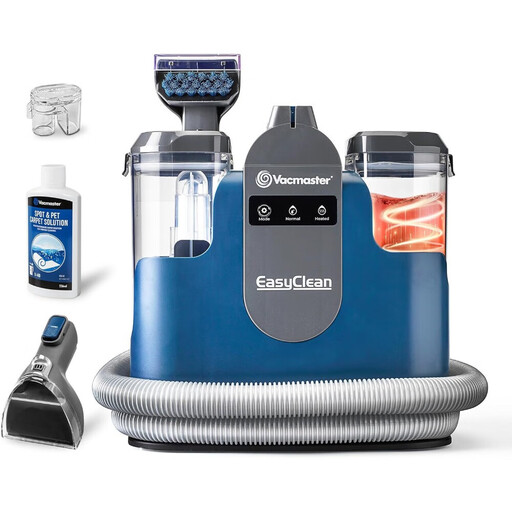
Why this product suits this profile: This model is aimed at users who want to choose between standard and heated cleaning for carpets, upholstery, stairs and car seats.
The separate, removable 1.6 L clean-water and 0.95 L dirty-water tanks make maintenance straightforward.
500 W motor, 1.8 m cleaning hose and two cleaning modes; one attachment supports hose care.
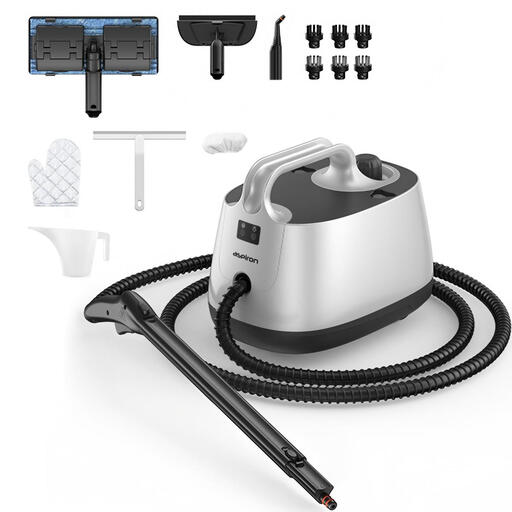
Why this product suits this profile: This device is appealing to users who want to clean not only certain textiles but also floors, windows, grout and other surfaces with steam.
The distinction is clear: this device works with steam and does not extract dirty water from the fabric. For wet stains, a wet vacuum is the more suitable type of appliance.
1,500 W, up to 4 bar steam pressure, steam heated to up to 145 °C and 21 accessories according to the product specifications.
First vacuum up loose crumbs and hair while dry. Then fill the appliance only with the liquids specified by the manufacturer. When using cleaning products, follow the recommended dosage and choose a formula that produces as little foam as possible. Too much foam can reduce the collection performance.
After cleaning, three steps are important:
Ongoing costs include electricity, water, cleaning products and, where applicable, replacement parts. A corded spot cleaner does not require batteries, but it does need to be connected to a socket. In homes with pets, an appliance with an easily accessible nozzle and larger dirty-water tank may prove more practical for everyday use, as frequent cleaning and emptying are less of a chore.
We have put together a complete, regularly updated list of products that fully meet these strict selection criteria and the safety regulations applicable in the EU.
This depends on the material, the amount of liquid used, the room temperature and ventilation. Guide the suction nozzle slowly over the surface, then pass over it several times without spraying. Open windows or use effective room ventilation. Carpets and upholstery should not be returned to normal use until they are completely dry.
A wet vacuum can collect liquid dirt and residue from water-safe textiles. First remove any solid material and follow the manufacturer’s instructions for the cleaning product. Complete odour or stain removal cannot be guaranteed in every case, as the material, age and type of dirt all play a role.
First check the seat material and its water resistance. Test the appliance on a concealed area, use only a small amount of liquid and move the nozzle slowly. With electrically operated seat components, ensure that no liquid enters switches, connectors or upholstery openings.