
Lieferung heute & morgen

Qualitätsgarantie

Willkommens-Angebote freischalten: KOSTENLOSE Lieferung | Bis zu 80 % RABATT | Kostenlose 30-Tage-JoyPlus-Testphase
App herunterladen
A carpet cleaner wet vacuum can lift spilled drinks, everyday dirt and pet accidents from fabrics. Unlike a dry vacuum cleaner, it sprays water or cleaning solution onto the surface, brushes it and then sucks up the dirty liquid. This versatile combination is useful in homes with children, pets or several vehicles.
However, impressive performance figures don’t automatically point to the right buying choice. Three common pitfalls are particularly worth bearing in mind:
A good carpet cleaner with spray and suction functions should combine all three steps in a controlled way:
A separate spray and suction nozzle can make the job easier. For pet stains, the nozzle should sit as close to the surface as possible. This helps you pick up the liquid more precisely, rather than pushing it deeper into the upholstery.
Suction power is often given in Pa or kPa. However, 13 kPa, 15 kPa, 17 kPa and 18 kPa can only be compared directly if they were measured under identical conditions. So also check the nozzle design, hose length and guidance on the maximum fill level.
A dual-tank system keeps clean and dirty water separate. This is more practical for sofas, carpets and car seats than using a single container. Check the following:
A smaller tank is enough for individual stains. If you regularly clean several sofa cushions, stairs or a car interior, larger containers are a real advantage. After each use, both tanks should be emptied, rinsed and left to dry completely.
A wet vacuum for sofas and carpets is suitable only for water-resistant fabrics. Test the cleaning solution on a concealed area first. Delicate materials, loose dyes, waxed surfaces and non-washable mattresses can be damaged by water.
A flexible hose, a narrow nozzle and a longer power cable are useful for car seats and stairs. If you’re using a car seat washer, the machine itself should also remain stable while you guide the nozzle. Before wet cleaning, it’s best to vacuum up hair, crumbs and loose dirt first.
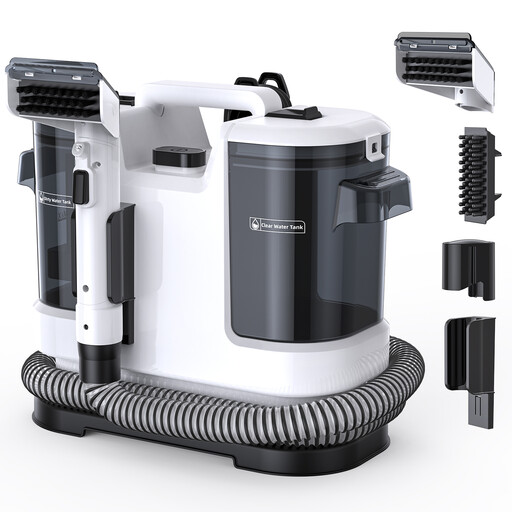
Why this product suits this user: This corded model has a power rating of 450 W and a stated suction power of 13,500 Pa. It’s suitable for spot-cleaning carpets, sofas and upholstery, without relying on a battery.
The stated spray, brush and suction functions make it clear how the machine works. Fit the clean and dirty water tanks before use. Once you’ve finished cleaning, you can empty and rinse the containers.
13,500 Pa according to the product specifications, 450 W power and a long power cable for spot cleaning.
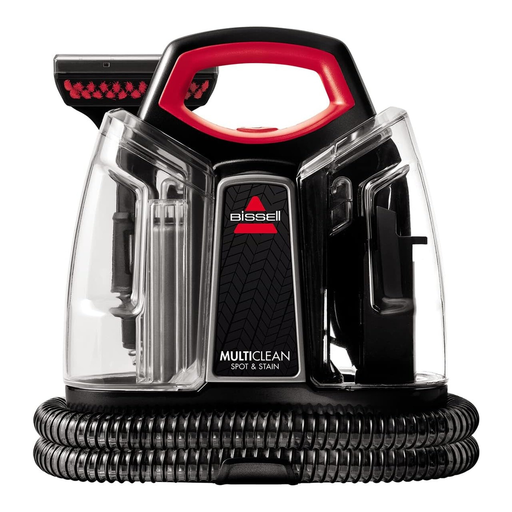
Why this product suits this user: The specifications include a 2.2 m hose, 300 W power and separate clean and dirty water systems. It’s a good fit for households that regularly clean upholstery, carpets and vehicle interiors.
Separate containers reduce the risk of continuing to clean with water that’s already dirty. The care instructions recommend emptying and rinsing both tanks after use.
2.2 m hose, 2.5 l total capacity according to the product specifications, and compact dimensions of 30 × 17 × 36.8 cm.
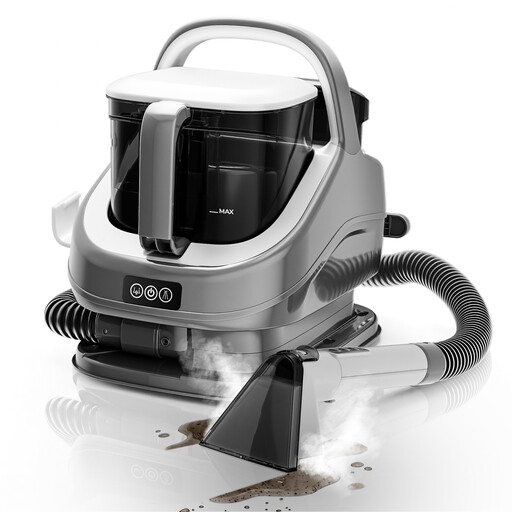
Why this product suits this user: According to the product specifications, this machine offers cold water, hot water and steam modes, as well as 13 kPa suction power. It’s an interesting option if you want to clean different types of water-resistant fabric and tackle various kinds of dirt.
The three modes make it clear that hot water and steam aren’t necessarily suitable for every surface. The manufacturer specifically advises that the machine is intended for water-resistant materials and should be cleaned after use.
1,400 ml clean water tank, 1,200 ml dirty water tank, 1.1 m hose and 3 m power cable according to the product description.
The running costs of a carpet cleaner include electricity, water, cleaning solution and, where applicable, replacement filters. A machine with a higher wattage won’t necessarily use more power per clean if it gets the job done faster. The key factors are how long you use it, how much it sprays and the size of the area you’re cleaning.
To help extend its lifespan:
For pet stains, first blot the affected area with absorbent material. Then check that the fabric is suitable and avoid applying too much liquid. Odours can linger in deeper layers of upholstery; technical specifications alone can’t guarantee complete odour removal.
We’ve put together a complete, regularly updated list of products that meet these strict selection criteria and fully comply with the safety regulations in force in the EU.
For individual stains, it’s best to spot-clean them as soon as possible. How often you need to wet-clean an entire carpet depends on how it’s used, the material and how dirty it is. After each clean, leave the carpet to dry thoroughly before using it again.
Yes, as long as the seat fabric is water-resistant and the nozzle is compact enough. Electrical appliances must not come into contact with airbag components, electrical connectors or standing water. Check the vehicle’s care instructions before you start.
A carpet washer sprays on liquid and sucks up the dirty water. A steam cleaner heats water and releases steam. Steam may be suitable for certain robust surfaces that can withstand water and heat, but it isn’t generally recommended for delicate fabrics. Always check the material’s care guidance, temperature advice and the manufacturer’s instructions.