
Lieferung heute & morgen

Qualitätsgarantie

Willkommens-Angebote freischalten: KOSTENLOSE Lieferung | Bis zu 80 % RABATT | Kostenlose 30-Tage-JoyPlus-Testphase
App herunterladen
Stains on the sofa, spilt drinks on the carpet or dirt on car seats can be tackled more effectively with a suitable carpet cleaner than with a standard vacuum cleaner. However, before you buy, it’s worth taking a close look at the technical specifications. High wattage or sweeping claims like “deep cleaning” alone don’t tell you whether a machine is right for your home.
Manufacturers often quote watts, kilopascals or motor power. These values describe different characteristics. Watts primarily refer to the electrical power consumption, whereas kPa indicate the vacuum pressure of the suction unit. The two figures are therefore not directly comparable.
What really matters in practice is whether a wet vacuum cleaner can adequately extract dirty water from the fabric after spraying. If too much moisture is left behind, drying times increase and the material can be stressed if used incorrectly.
A steam cleaner works with heated water or steam. This can be practical on suitable, moisture-resistant surfaces. However, delicate natural fibres, coated fabrics, leather, glued materials or non-colourfast textiles can be damaged by heat and moisture.
Before first use, check the care label on the upholstery and test the effect on an inconspicuous area. Steam must never be directed at people, pets, eyes or sensitive electrical appliances.
A small fresh water tank may require frequent refilling when cleaning several seats or a large carpet. More important than having the largest possible container is the separation of fresh water and dirty water tanks. After use, tanks, hoses, nozzles and filters should be emptied, rinsed and thoroughly dried. Otherwise, residue and unpleasant odours can develop.
Carpet and upholstery cleaning usually works in three steps: cleaning solution or water is applied, a nozzle or brush loosens the dirt, and then the machine extracts the liquid again. So look out for:
A machine with separate tanks makes hygienic handling easier. However, the stated litre values don’t automatically relate to the actual area you can treat, as water output, fabric type and soiling level all affect consumption.
For homes with limited storage space, compact, portable models make sense. Also check the weight, handle, hose storage and tank position. A slightly smaller portable carpet cleaner can be more practical in daily use if it’s regularly taken out of a cupboard or cellar.
Not every machine is approved for every cleaning agent. Only use products that are suitable according to the instruction manual, and follow the dosage instructions. With steam or hot water functions, you should consider material compatibility, temperature settings and cooling times.
The following recommendations categorise specific models by area of use and the available technical data. The values come from the respective product descriptions.
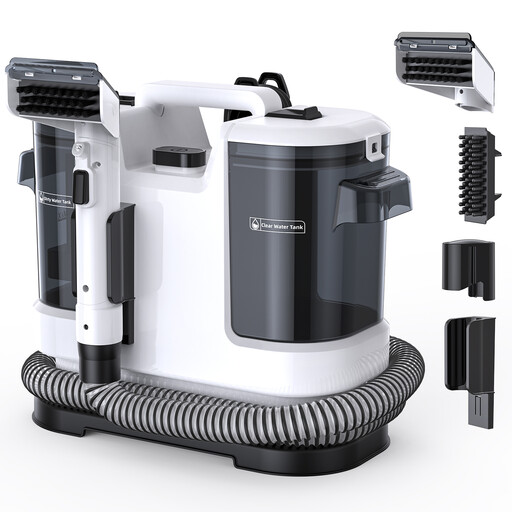
Why this product fits the profile: This corded model is designed for carpets, sofas and upholstery, offering relatively straightforward features for regular spot cleaning.
The separate water tanks make fresh and dirty water distinguishable. With 450 W and 13,500 Pa, key technical specifications are clearly stated.
450 W motor, 13,500 Pa stated suction power and operation with spray and extraction.
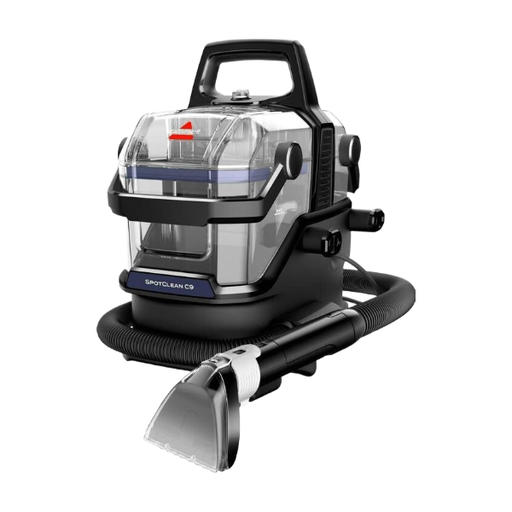
Why this product fits the profile: This portable machine is designed for carpets and upholstery and features separate tanks with 1.9 litres of fresh water and 1.4 litres of dirty water.
The product description states tank volume, motor power and a specific process of applying, brushing and extracting.
1.9-litre fresh water tank, 1.4-litre dirty water tank, 400 W motor and compact format.
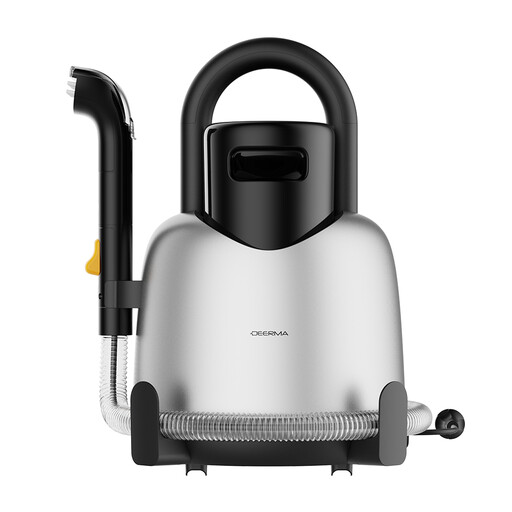
Why this product fits the profile: Three cleaning modes, multiple brush attachments and a self-cleaning system appeal to households with different textile surfaces.
Cold water, hot water and steam modes allow you to choose the right setting for the material. The tanks hold 1.7 and 1.4 litres respectively.
1,700 W rated power, 13 kPa stated suction power, five attachments and separate large tanks.

Why this product fits the profile: The cordless design is ideal for stairs, car seats and areas without easy access to a power socket.
The product data states battery voltage, run time, tank volume and a self-cleaning function for the hose. The battery must be charged before use.
24 V lithium battery, up to 55 minutes stated run time, 15 kPa suction power and 1.6-litre fresh water tank.
We’ve put together a complete, regularly updated list of products that fully meet these strict selection criteria and the safety regulations in force in the EU.
Ongoing costs mainly consist of electricity, water, cleaning agent and possibly replacement filters. With a battery-powered machine, long-term battery use is an additional factor. For occasional stains, a small spot cleaner may be sufficient; with several sofas, carpets and vehicles, a machine with a larger tank can simplify the workflow.
This depends on the fibres, amount of water, room temperature and air circulation. Air the room and only walk on the area once it is completely dry. Too much cleaning fluid prolongs drying time.
Many portable models are intended for car seats and interior textiles according to the product description. You should first check whether the fabric is water-resistant. Electrical seat components, control panels and connectors must not be soaked.
A wet vacuum cleaner sprays liquid onto the surface and then extracts it. A steam cleaner works with heated water or steam. The choice depends on material compatibility, type of soiling, drying time and the mobility you need. No single method is suitable for all textiles.