
Lieferung heute & morgen

Qualitätsgarantie

Willkommens-Angebote freischalten: KOSTENLOSE Lieferung | Bis zu 80 % RABATT | Kostenlose 30-Tage-JoyPlus-Testphase
App herunterladen
Stains on the carpet, spilt drinks on the sofa or pet mess on the car seat can rarely be dealt with completely using an ordinary vacuum cleaner. A carpet and upholstery cleaner combines spraying and suction, allowing liquid and loosened dirt to be collected. Before buying, however, it’s worth checking carefully that the performance, tank design and controls suit the jobs you have in mind.
Motor power, measured in watts, describes the electrical consumption or input power. On its own, it doesn’t tell you how much liquid the cleaner will actually pick up. In practice, suction power, nozzle design, airflow and water delivery are also important.
A 600 W model may be suitable for spot cleaning. However, how efficiently it cleans a large carpet also depends on its cleaning width, tank capacity and cable length.
Advertising often uses terms such as deep cleaning without specifying spray pressure, the tank system or suction performance. More useful details include 17 kPa suction power, separate clean- and dirty-water tanks, and a suitable upholstery nozzle.
High suction power is no substitute for using the cleaner on materials it’s suitable for. Delicate fabrics, carpet backings that aren’t water-resistant and textiles with unstable dyes can all be damaged by moisture.
A wet carpet cleaner needs to be emptied, rinsed and dried after every use. If dirty water, hair or detergent residue is left in the tank or hose, it can cause unpleasant smells. An easily accessible dirty-water tank and a brush that’s simple to clean are therefore important features.
When choosing an electric upholstery cleaner, the product description should include at least the following:
A handheld carpet cleaner or portable carpet cleaner is particularly handy for stairs, sofa cushions, smaller rugs and car interiors. For a large fitted carpet, a model with a wider nozzle and larger tank may be a better fit.
Before use, test the cleaner on an inconspicuous area to check that the fabric is colourfast and suitable for water-based cleaning. This applies equally to sofas, car seats, carpet edges and delicate upholstery fabrics.
Also:
Before cleaning car seats, also check that the upholstery is water-resistant and that there are no sensitive electrical components beneath the fabric. Leather seats need different care from fabric upholstery.
A carpet washer for pet stains can pick up liquids and visible residue. However, its suitability depends on the surface and the cleaning solution you use. For urine, vomit and other organic messes, gently blot the affected area first, then treat it according to the manufacturer’s instructions. The cleaner’s features alone don’t guarantee odour removal or hygiene benefits.
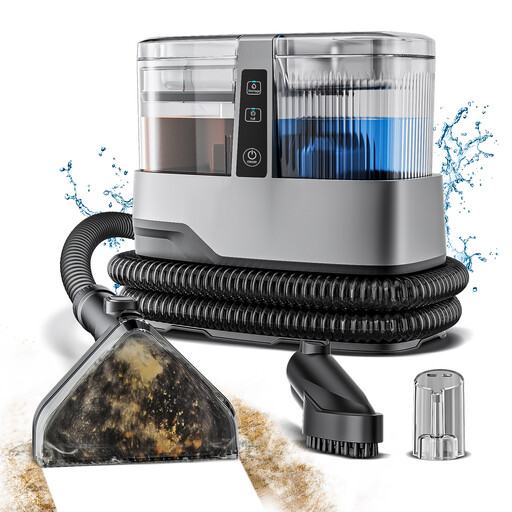
Why it suits this profile: This corded handheld cleaner is designed for individual stains on carpets, upholstery and car seats. There’s no need to recharge it during use.
The product specifications list the motor power, 17 kPa suction and separate water tanks, making key buying criteria easy to check.
600 W motor, 17 kPa suction, flexible hose and separate clean- and dirty-water tanks.
Why it suits this profile: Buyers who compare specifications before purchasing get clear details about the wet-cleaning method, performance and tank system.
The product information gives specific usage instructions, including using water at a maximum temperature of 40 °C and a low-foaming cleaning solution.
Wet cleaning and stain removal for water-safe fabric surfaces; the dirty-water tank can be emptied and rinsed after use.
Why it suits this profile: The handheld design is ideal for hard-to-reach areas such as stairs, seats, sofa cushions and car seats.
It’s designed for more than just carpets. Suggested uses include fabric, sofas, car interiors and pet stains; the surface must be suitable for water-based cleaning.
Corded operation for continuous use, a flexible extended-reach hose and a compact design for spot cleaning.
We’ve put together a complete, regularly updated list of products that meet these strict selection criteria and fully comply with the safety regulations in force in the EU.
The ongoing costs of a carpet cleaner mainly come from water, cleaning solution and electricity. A 600 W appliance theoretically uses 0.6 kWh per hour of operation. Actual consumption depends on how long you use it and your electricity tariff. Spot cleaning usually uses less electricity than washing an entire carpet.
After each use, rinse the dirty-water tank, nozzle and hose. Leave the parts to dry separately. This makes maintenance easier to manage and helps keep the appliance working properly.
Yes, as long as the care label says the upholstery is suitable for water-based cleaning. Test the cleaning solution on a concealed area first, and don’t dampen the fabric more than necessary.
Drying time depends on the material, room temperature, air circulation and the amount of water used. Vacuuming several times, opening the windows and keeping the room dry can help reduce residual moisture. Don’t use the carpet again until it’s completely dry.
The stated 17 kPa suction power can help pick up cleaning solution and loosened dirt. However, the right nozzle, a suitable cleaning solution and the surface’s compatibility with water remain key.