
Lieferung heute & morgen

Qualitätsgarantie

Willkommens-Angebote freischalten: KOSTENLOSE Lieferung | Bis zu 80 % RABATT | Kostenlose 30-Tage-JoyPlus-Testphase
App herunterladen
Spilt drinks on the carpet, pet accidents on the sofa or dirt on your car seats can all be tackled with the right carpet and upholstery cleaner. Unlike a dry vacuum cleaner, this type of appliance sprays water or cleaning solution onto the fabric, loosens dirt with a brush and then vacuums up the liquid.
A compact appliance is often the best choice for households, families, pet owners and people living in smaller homes. However, it’s worth watching out for a few common marketing pitfalls before you buy.
Figures such as 15 or 17 kPa may look impressive at first. In practice, performance also depends on the nozzle, airflow, hose length and condition of the filter. A high figure is no substitute for a well-designed spray and suction system.
Check whether the appliance is genuinely designed as a 3-in-1 cleaner with spray, brush and suction functions. It’s the combination of these features that makes a portable carpet cleaner useful for treating isolated stains.
A small clean-water tank is fine for tackling individual stains. But if you’re cleaning a sofa, several steps or the inside of a car, you may need to refill it frequently and empty the dirty-water tank. Information about both tank capacities is therefore more useful than a general claim about cleaning performance.
A carpet washer with separate tanks also prevents dirty water from being put back onto the surface.
Not every sofa, carpet or car seat is suitable for wet cleaning. Delicate materials such as silk, certain types of velvet or non-colourfast fabrics can be affected by moisture and friction.
Before using the cleaner for the first time:
If you’re using sprays or foam cleaners, follow the relevant hazard warnings and instructions for use.
A carpet cleaner should apply the cleaning solution in a controlled way and then extract it. A brush helps loosen dried-on dirt. A narrow nozzle is useful for individual stains, while a wider one can speed up cleaning on sofas or carpeted areas.
The power rating in watts indicates electricity consumption or motor power, but it doesn’t automatically tell you how well the cleaner will perform. Suction power in kPa is another useful guide, but it should be considered alongside the accessories, nozzle design and tank construction.
Separate containers for clean and dirty water make the cleaner easier to use. Key details to look for include:
After each use, empty, rinse and dry the dirty-water tank, nozzle and hose as directed in the instruction manual.
Hose and cable length matter when cleaning stairs, car seats and hard-to-reach areas. A portable carpet cleaner with a long cable may be more convenient at home than a cordless model if you don’t want to stop to recharge. You will, however, need access to a power socket.
Weight is another factor to consider. Compact appliances are easier to store in smaller homes and are handy for occasional stain removal. A noise level of, for example, 80 dB is also worth bearing in mind, particularly if you live in a block of flats.
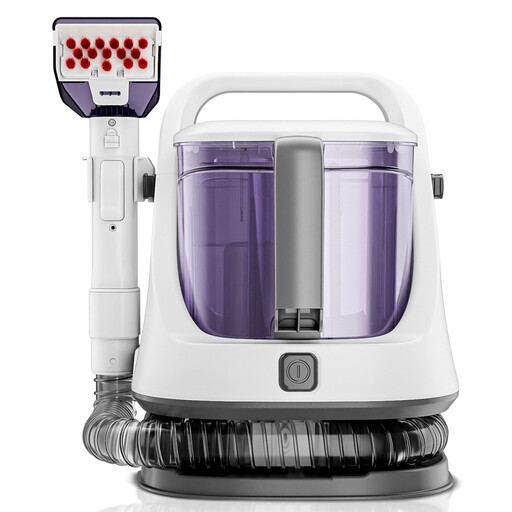
Why this product suits this type of user: This compact appliance is designed for occasional stains on sofas, stairs, carpets and car seats. With 650 W, 12 kPa suction power, a 1,400 ml clean-water tank and a 1,200 ml dirty-water tank, it offers clear specifications for home use.
Separate tanks make it easy to see how the water is handled. The 3 m cable and 1.1 m hose make it practical to use on furniture and in vehicles.
A 1,400 ml clean-water tank, a 1,200 ml dirty-water tank and removable containers for easy cleaning.
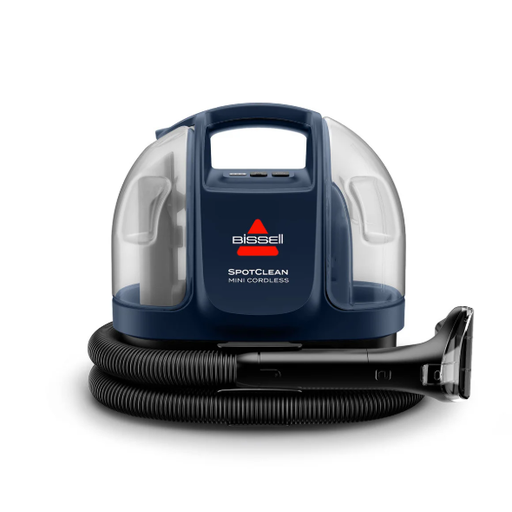
Why this product suits this type of user: Its compact design makes it a good fit for homes with limited storage space, as well as for cleaning upholstery, stairs and vehicle interiors. The appliance sprays, scrubs and lifts dirt away.
The product description lists its intended uses and weight of around 4.077 kg. This makes it easier to assess the space and effort needed to store and move it before you buy.
A compact design and cleaning functions tailored to upholstery, stairs and car interiors.

Why this product suits this type of user: With 600 W and 17 kPa suction power, this appliance is aimed at people who want to wet-clean carpets, sofas, car seats or areas with pet stains on a regular basis.
The information about wet cleaning, the dual-tank system and water heated to a maximum of 40 °C clarifies how the appliance is intended to be used. You’ll still need to test for colourfastness first.
A stated suction power of 17 kPa and a dual-tank system that keeps clean and dirty water separate.
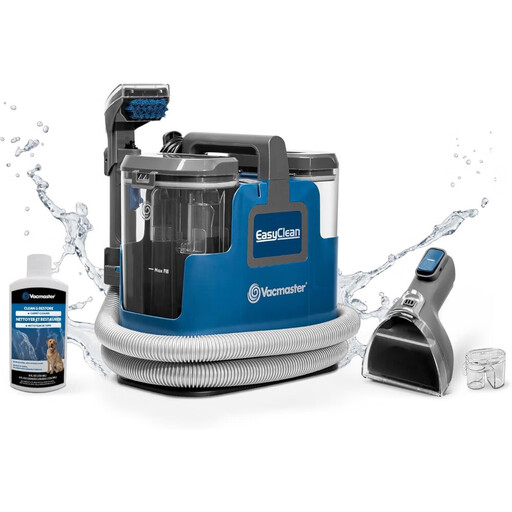
Why this product suits this type of user: This wet cleaner for sofas and car seats has a 1.8 m hose, separate water tanks and a stated weight of 3.4 kg. The included Spot & Pet cleaning solution is designed for these types of jobs.
The product specifications include details of the tank system, hose length and maintenance. Before use, vacuum the area thoroughly while it’s dry.
A 500 W motor, 1.8 m hose and removable water tanks for use at home and in your vehicle.
Before wet cleaning, remove loose crumbs, hair and dust. For pet stains, it’s best to carefully lift away the mess first without spreading it unnecessarily. Then apply a small amount of cleaning solution, work it in with the brush and vacuum it up slowly.
Ongoing costs mainly include electricity, water, cleaning solution and, where needed, replacement filters. A 600 W appliance uses around 0.3 kWh during 30 minutes of operation. The actual cost of electricity depends on your tariff and how long you use it. Only use the amount of cleaning solution recommended by the manufacturer, as too much foam can affect airflow and suction power.
We’ve put together a complete, regularly updated list of products that meet these strict selection criteria and fully comply with the safety regulations in force across the EU.
Drying time depends on the material, room temperature, air circulation and how much water you’ve used. After spraying, extract as much liquid as possible. Air the room and don’t use the surface again until it’s completely dry.
Many portable models are described as suitable for car seats and vehicle interiors. Check that the cleaner is suitable for the material and follow the care instructions for the seat covering. Don’t soak electrical parts, controls or safety components.
Empty and rinse the dirty-water tank, nozzle and hose after every use. Check filters and other components as directed in the instruction manual, and allow them to dry completely. This helps prevent build-up and keeps the cleaner working consistently.