
Lieferung heute & morgen

Qualitätsgarantie

Willkommens-Angebote freischalten: KOSTENLOSE Lieferung | Bis zu 80 % RABATT | Kostenlose 30-Tage-JoyPlus-Testphase
App herunterladen
Stains on the sofa, spilled drinks on the carpet or pet hair on car upholstery can only be removed to a limited extent with a conventional vacuum cleaner. A carpet and upholstery cleaner sprays water or cleaning solution onto the surface, loosens dirt with a brush and then vacuums up the liquid. Depending on the model, it can be used on carpets, upholstery, mattresses, stairs and car seats.
However, product descriptions are not always easy to compare. High wattage or Pascal figures alone tell you little about how practical a machine will be in everyday use. Before buying, it’s worth checking for a few common marketing pitfalls and technical details.
Figures such as 12, 13, 15 or 17 kPa describe the vacuum pressure or suction power under certain conditions. They don’t guarantee that a carpet will be dry immediately after cleaning. The amount of water used, the nozzle, how quickly you move the machine and the fabric itself all make a difference.
For delicate or tightly woven textiles, test the cleaner on an inconspicuous area first. After washing, make several slow suction-only passes without spraying to remove excess moisture.
Machines with hot-water or steam functions may offer additional cleaning modes. According to its product description, for example, the OMESER C988 operates at a steam temperature of at least 90 °C. However, high temperatures aren’t suitable for every material. Synthetic fabrics, delicate coatings or bonded upholstery may react to heat.
For many households, a conventional upholstery cleaner with spray, brush and suction functions is enough. Only choose a steam function if the manufacturer’s fabric care instructions allow it.
A compact machine is easy to carry and store, but its water tanks may be smaller. If you regularly want to clean several sofa cushions, car seats or larger carpeted areas, compare the capacity of the clean- and dirty-water tanks.
Separate tanks are useful because clean water doesn’t mix with the liquid that’s been vacuumed up. After each use, empty and rinse both tanks, then allow them to dry completely.
A 3-in-1 system combines the three key steps:
For a wet carpet cleaner and cleaning sofas, mattresses or car seats, this combination matters more than high motor power alone. Before wet cleaning, remove loose crumbs, hair and larger bits of dirt with a regular vacuum cleaner.
A portable carpet cleaner with smaller tanks is enough for occasional spills. For frequent use, larger tanks and a long hose are useful. Check the:
A long cable makes it easier to clean large sofas or areas of a vehicle, but you’ll still need a suitably placed socket. For stairs and car seats, a flexible hose is usually more important than a large body.
Use cleaning products only as directed in the instruction manual and according to the recommended dosage. Too much foam can affect suction. Fabrics that aren’t water-resistant, leather, delicate coatings and materials with care instructions warning against moisture aren’t suitable for normal use.
Disconnect the machine from the mains before maintenance, changing tanks or cleaning the nozzle. Take extra care with hot-water and steam functions: never direct steam at people, animals or electrical appliances.

Why it suits this type of user: This portable machine is designed for spot cleaning carpets, sofas, mattresses and car seats. Its 1.5-litre clean-water tank and 0.8-litre dirty-water tank are suited to smaller cleaning jobs.
The separate-tank system keeps clean and dirty water apart. According to the product description, suction power is 15 kPa.
Spray, brush and suction functions, a 4.26 m hose and a 9.84 m cable, according to the product description.
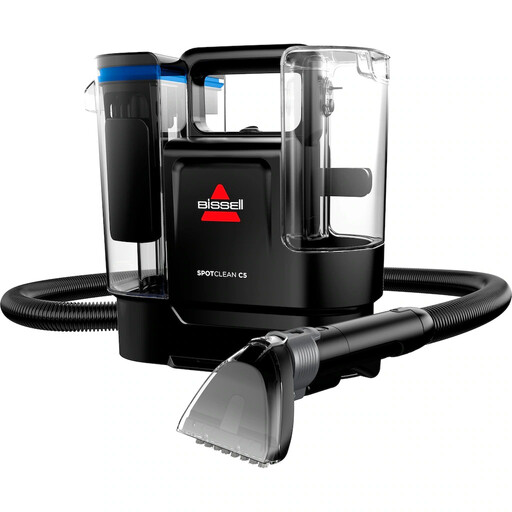
Why it suits this type of user: This model combines a compact design with a 1.7 m hose, separate tanks and a HydroRinse function for rinsing out the machine.
The separate self-cleaning tool helps with maintenance. The product specifications list 0.9 l of clean water, 0.8 l of dirty water and suction power of over 15 kPa.
Triple-Action system, HydroRinse tool and a 4.3 m mains cable, according to the product description.
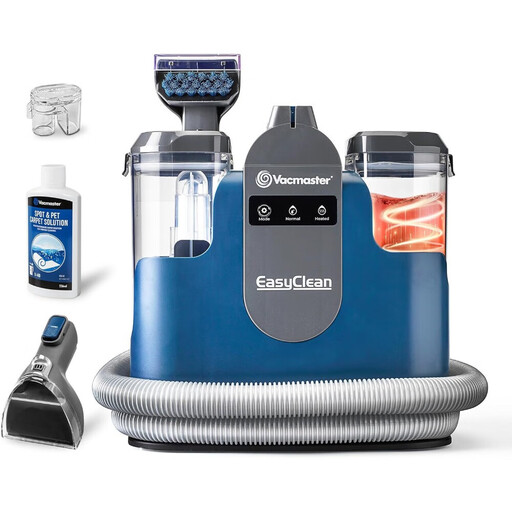
Why it suits this type of user: This machine offers a standard and a heated cleaning mode. With 1.6 l of clean water and 0.95 l of dirty water, it’s designed for repeated use on sofas, carpets, stairs and car seats.
The two cleaning modes make it clearer how to use the machine than a general steam function. Use the heated setting only on suitable textiles.
500 W motor, 1.8 m hose, heated cleaning and a self-cleaning attachment, according to the product description.
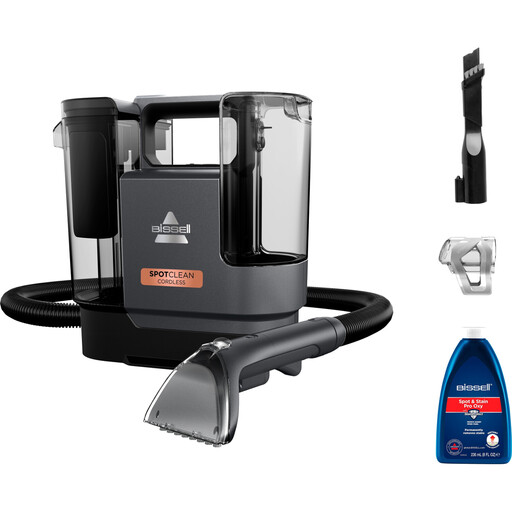
Why it suits this type of user: This cordless upholstery cleaner is ideal for quick jobs on stairs, car seats and individual stains when there isn’t a socket nearby.
The stated run time of 20 to 25 minutes gives you a clear idea of what the machine is intended for. A corded model is usually a better choice for large carpeted areas.
18 V lithium-ion battery, 0.9 l clean-water tank, 0.8 l dirty-water tank and HydroRinse tool, according to the product specifications.
We’ve put together a complete, regularly updated list of products that meet these strict selection criteria and fully comply with the safety regulations in force in the EU.
It depends on the material, the amount of water used, the room temperature, air circulation and suction power. Several slow suction-only passes without spraying more water will reduce residual moisture. Manufacturers can’t give one drying time that applies to every type of textile.
Yes, as long as the upholstery fabric is suitable for wet cleaning. Check the care label first and test on an inconspicuous area. Removable covers, leather and delicate coatings often need different care.
As well as electricity, you’ll need to factor in the cost of water, cleaning solution and, where applicable, replacement filters or accessories. Corded machines use electricity according to their power rating in watts; with cordless models, you’ll also need to consider charging time and the battery’s long-term capacity. Using the recommended amount of cleaning solution and cleaning the tanks after each use can help keep running costs down.