
Lieferung heute & morgen

Qualitätsgarantie

Willkommens-Angebote freischalten: KOSTENLOSE Lieferung | Bis zu 80 % RABATT | Kostenlose 30-Tage-JoyPlus-Testphase
App herunterladen
A carpet and upholstery cleaner should do more than spread dirt around: it should spray cleaning solution onto the fabric, work it into the fibres and extract the dirty water. For families, pet owners, car owners and households with several upholstered surfaces, the right machine can be more practical than buying separate products for carpets, sofas and car interiors.
Product names can sound more impressive than the technical specifications suggest. Before you buy, look out for these three common pitfalls.
A high power rating tells you how much energy the motor or heating element uses. Suction power, spray rate, nozzle design and airflow also matter when it comes to cleaning performance. A 1,300 or 1,700 W machine won’t automatically be a better choice for small stains or delicate upholstery.
A steam cleaner for fabrics uses high temperatures and doesn’t work like a traditional spray-extraction cleaner. Heat and moisture can damage delicate, bonded or non-water-resistant materials. Always check the care label before use and test the machine on an inconspicuous area.
A carpet cleaner will only stay hygienic over time if you empty and dry the dirty-water tank, hose, filter and brush after every use. Self-cleaning functions make this easier, but they don’t replace rinsing and thoroughly drying removable parts.
When removing stains from carpets, the combination of spraying, brushing and suction is key. Figures such as 13, 15 or 17 kPa can help you narrow down your options, but they aren’t the only things to consider. Look for a narrow upholstery nozzle, a controllable spray function and a short route from the fabric to the dirty-water tank.
A carpet washer, wet vacuum or spray-extraction cleaner is suitable for larger areas. A portable carpet cleaner is easier to handle on stairs and for individual stains, sofa cushions and car seats.
Separate clean- and dirty-water tanks prevent extracted water from being put back onto the fabric. Check the capacities and tank openings. Compact tanks are fine for occasional spills; larger tanks are more practical for several seats or a large carpet.
Hot water can help with certain types of dirt, but you should only use it within the temperature range specified by the manufacturer. If you’re choosing a steam cleaner, check carefully that it’s suitable for upholstery, mattresses, carpets and car seats. Not all materials are heat- or water-resistant. Always use cleaning products in accordance with the instructions.

Why it suits this type of buyer: This compact machine is designed for spot cleaning carpets, sofas, mattresses and car seats, and is easy to store away.
The 3-in-1 function combines spraying, brushing and suction. Separate tanks for 1.5 l of clean water and 0.8 l of dirty water keep the two apart.
15 kPa suction power, a 1.3 m hose and a 3 m power cable make it easier to tackle stains around the home and in your car.
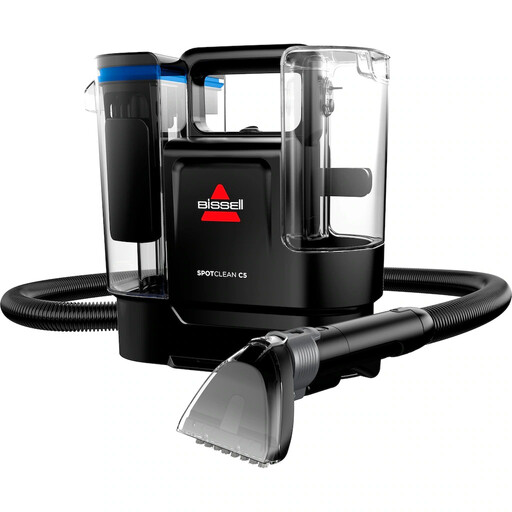
Why it suits this type of buyer: Its compact design, integrated 1.7 m hose and tools for cleaning and hose care make it a good fit for regular use around the home and in the car.
Separate 0.9 l and 0.8 l tanks, together with the HydroRinse tool, help you clean with control and care for the machine afterwards.
More than 15 kPa suction power, 400 W power consumption and a 4.3 m power cable give you clear specifications for cleaning upholstery and carpets.
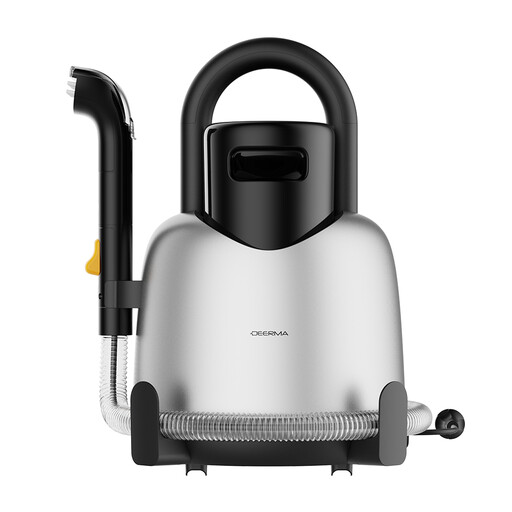
Why it suits this type of buyer: Three cleaning modes and five brush attachments let you tackle different jobs on fabrics and selected hard floors.
The steam, hot-water and room-temperature water modes let you choose an approach for the material in question. You should still check that the material is suitable first.
A 1.7 l clean-water tank, a 1.4 l dirty-water tank and 13 kPa suction power make it suitable for repeated cleaning tasks.

Why it suits this type of buyer: This handheld machine is designed for individual pet stains, spills and cleaning sofa or car-seat upholstery.
The instructions specify a maximum water temperature of 40 °C and recommend testing the machine on an inconspicuous area. This helps reduce the risk of using it on unsuitable materials.
A 600 W motor, 17 kPa suction power and separate tanks support wet cleaning of smaller fabric areas.
We’ve put together a complete, regularly updated list of products that meet these strict selection criteria and fully comply with the safety regulations in force in the EU.
If you have allergies, it’s also important to follow the manufacturer’s guidance on filters and cleaning products. A machine on its own does not provide medical treatment or guarantee hygiene.
Rinse the dirty-water tank, nozzle and hose after every use. Filters and brushes may need extra cleaning, depending on how dirty they are. Make sure all damp parts are completely dry before putting the machine away.
A carpet cleaner or carpet washer sprays liquid onto the fabric, works it into the fibres and extracts the dirty water. A steam cleaner loosens dirt with hot steam, but doesn’t necessarily collect the liquid in a separate dirty-water tank. The right option depends on the material and how dirty it is.
As well as electricity, you’ll need to budget for cleaning products, filters and, where necessary, replacement nozzles. Cordless models also need time to recharge; corded models can be used for longer without a charging break. Over time, tank care, using the correct amount of cleaning solution and the availability of spare parts all affect running costs.