
Lieferung heute & morgen

Qualitätsgarantie

Willkommens-Angebote freischalten: KOSTENLOSE Lieferung | Bis zu 80 % RABATT | Kostenlose 30-Tage-JoyPlus-Testphase
App herunterladen
A carpet and upholstery cleaner should do more than an ordinary vacuum cleaner: it sprays water or cleaning solution onto the fabric, then extracts the dirty water. This makes it useful for carpets, sofas, stairs, mattresses and car seats. However, unclear performance claims and unsuitable cleaning methods can quickly lead to the wrong purchase.
Motor power in watts tells you how much electricity the appliance uses, or its power consumption. On its own, it doesn’t tell you how much dirty water the carpet cleaner actually removes from the fabric. Airflow, nozzle design and the stated suction power in kPa are all relevant.
A carpet cleaner rated at 1,300 or 1,700 watts won’t necessarily be a better fit for your home than a more compact model rated at 500 or 600 watts.
A steam cleaner loosens dirt with hot steam. A wet cleaner, or spray extraction cleaner, sprays water or cleaning solution onto the surface and then sucks up the dirty liquid. The two types of appliance are designed for different tasks.
Depending on the manufacturer’s instructions, steam cleaners may also be suitable for hard floors, grout, windows or certain fabrics. For treating stains on sofas and carpets, a cleaner with spray and suction functions is often a better choice, as it collects dirty water in a separate tank.
Small tanks make an appliance easier to carry, but need to be refilled and emptied more often when cleaning larger areas. More importantly, you should clean and dry the dirty-water tank, hose and brush head thoroughly after every use. Otherwise, residue and unpleasant smells can build up.
Also check whether replacement filters, nozzles and cleaning solutions are available, and whether the tanks can be removed.
The figures in kPa are a useful way to compare similar types of appliance. Product specifications include 12 kPa for the ROUNY Portable Carpet Cleaner, 13 kPa for the Lubluelu V6 and 17 kPa for the OMESER C688A. However, these figures shouldn’t be considered in isolation. The nozzle, hose length, water delivery and ease of use also affect the results.
A 3-in-1 system that sprays, brushes and vacuums is useful for stubborn stains. First, lightly dampen the surface, then work over it with the cleaner and slowly extract the liquid.
A system with separate clean- and dirty-water tanks helps prevent extracted water from being sprayed back onto the fabric. According to the product specifications, the ROUNY Portable Carpet Cleaner has a 1.400 ml clean-water tank and a 1.200 ml dirty-water tank. The Bissell SpotClean has a capacity of 1,9 litres for clean water and 1,4 litres for dirty water.
A compact, portable carpet cleaner is enough for individual stains or car seats. If you regularly clean several sofa cushions, stair treads or larger carpets, you’ll benefit from larger tanks and a longer hose.
Before using the cleaner for the first time, check the care label on your carpet or upholstery. Not all fabrics are water-resistant. Test the cleaning solution on an inconspicuous area first, and follow the manufacturer’s instructions on temperature, detergent and contact time.
Basic safety rules also apply to electrical appliances: don’t immerse the main unit in water, unplug it before carrying out maintenance, and make sure children only use it under supervision. With steam cleaners, take particular care around hot surfaces and steam.
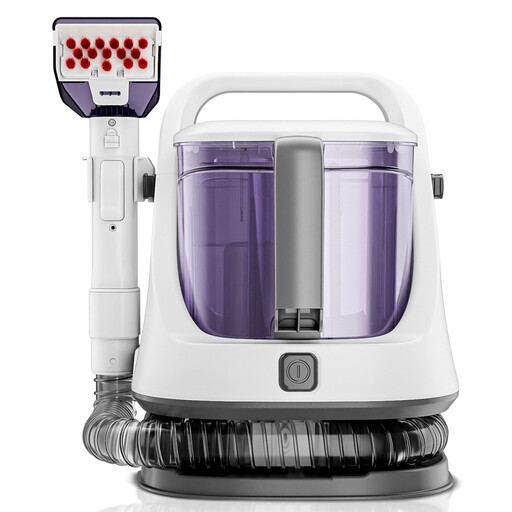
Why this product suits your needs: This compact cleaner is designed for occasional stains on sofas, carpets, stairs and car seats, and has separate water tanks.
The 1.400 ml and 1.200 ml tanks keep clean and dirty water separate. This makes the tank setup clearer than on appliances without separate containers.
12 kPa suction power, 650 W motor, 1,1 m hose and 3 m power cable, according to the product specifications.
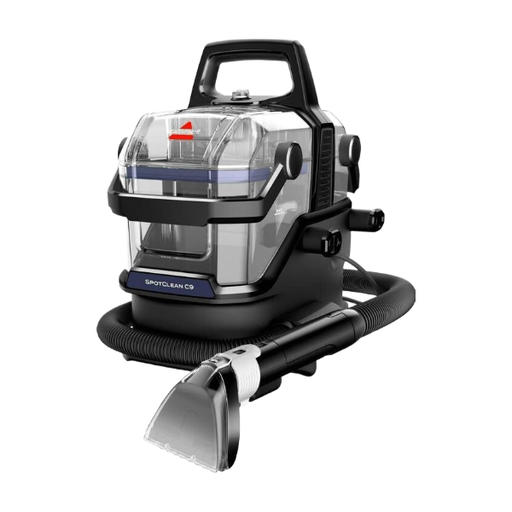
Why this product suits your needs: Designed for carpets and upholstery, with separate tanks, this cleaner is a good fit for homes where a range of fabric surfaces need regular cleaning.
The specifications list separate clean- and dirty-water tanks. This reduces the risk of accidentally continuing to clean with water that has already picked up dirt.
1,9-litre clean-water tank, 1,4-litre dirty-water tank and 400 W motor, according to the product description.
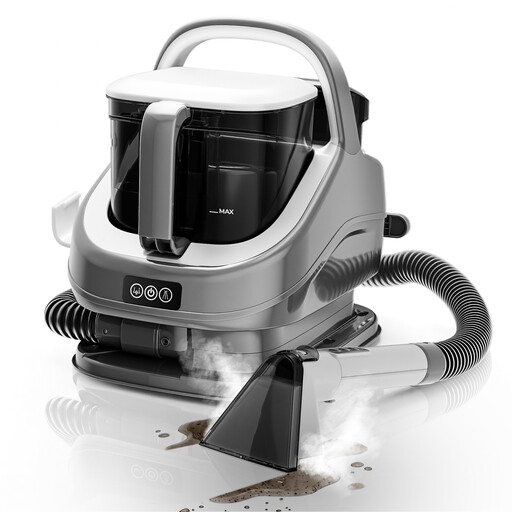
Why this product suits your needs: According to the product specifications, this cleaner offers cold-water, hot-water and steam modes, making it an option for homes with children, pets and a car.
The choice of cleaning modes means you don’t have to treat every surface at the same temperature. It’s still essential to check that the relevant fabric is suitable.
13 kPa suction power, 1.400 ml clean-water tank, 1.200 ml dirty-water tank and 3 m cable.
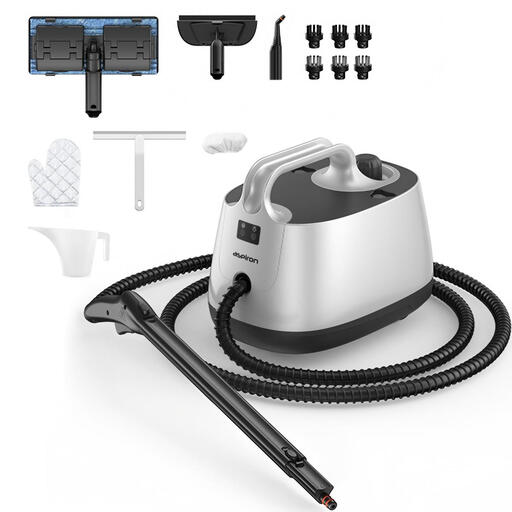
Why this product suits your needs: This cleaner is for anyone who wants to use accessories to clean floors, windows, grout and other surfaces, as well as fabrics.
Clearly identifying it as a steam cleaner helps avoid confusing it with a traditional carpet cleaner. A separate extraction cleaner is needed to collect dirty water.
1.500 watts, 4 bar, steam up to 145 °C according to the product specifications, plus 21 accessories.
We’ve put together a complete, regularly updated list of products that meet these strict selection criteria and the safety regulations in force in the EU.
Running costs include electricity, water and, where applicable, cleaning solution. Appliances with steam or hot-water functions may use more electricity. You should also check whether they require specialist cleaning products or replacement filters.
Its lifespan depends on how often you use it, how well you maintain it, how regularly you clean the filters and whether you store it correctly. Clean the tanks and brushes after every use, and let them dry completely. A blocked hose or a filter that stays damp can affect how well the cleaner works.
Yes, provided the manufacturer says it’s suitable for the surface and the material is water-resistant. Use only a small amount of liquid on mattresses and car seats. Test the cleaning method on a hidden area first and let the treated surface dry completely.